What sparked the historic student protests in France?
TL;DR
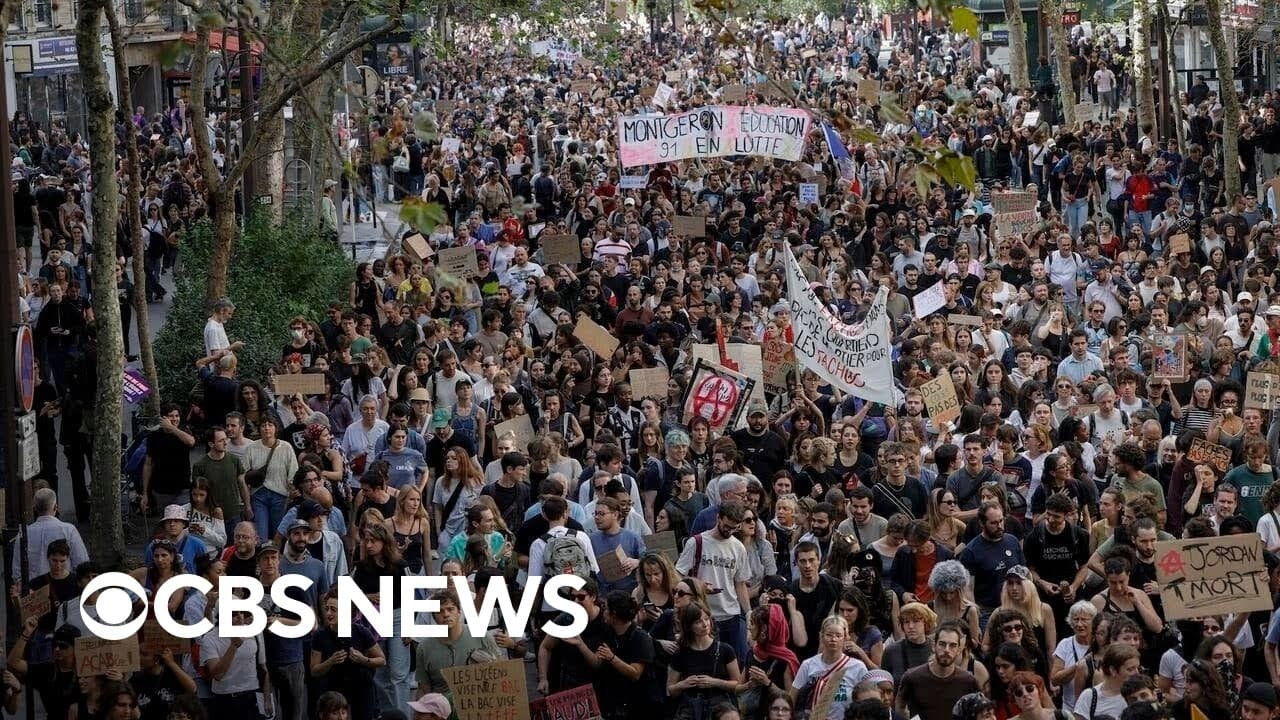
Protests surged across France over deteriorating school conditions, now in their third week, with large demonstrations and clashes with police. Authorities have detained over 5,000 people, including more than 4,000 teenagers, while the government remains in political deadlock without meaningful concessions.
Transcript
These students arrived to school early this morning only to block the entrance to their building. A third week of protests across France against poor school conditions in Sandon just right outside of Paris. High schools um see the ceilings falling apart. Uh water in the walls. Rats. Protesters have clashed with police causing damage and setting som... Read More
Key Insights
- The protests are driven by deteriorating school infrastructure described as ceilings falling, water in walls, and presence of rats in schools. This creates urgent safety and learning environment concerns for students and staff.
- The demonstrations are widespread and involve thousands of participants including a large teenage population, indicating broad student mobilization that transcends individual schools.
- Police response has included detentions that exceed five thousand, signaling a high-tension confrontation and a strong state effort to manage protests.
- The political context is pivotal, with the French government in deadlock ahead of presidential elections, which delays concessions that protesters seek.
- Protesters express persistent willingness to protest until their concerns are acknowledged, suggesting continued activity beyond a single day or week.
- The events are framed as part of a broader national conversation about public services and governance, with education funding and maintenance a central theme.
- Media coverage highlights both the scale of demonstrations and the intensity of clashes, underscoring the potential for further escalations.
- The narrative includes voices from protesters and onlookers, illustrating the emotional and social dimensions of student-led action.
Install to Summarize YouTube Videos and Get Transcripts
Explore YouTube Video Summarizer or Get YouTube Transcript Extractor
Questions & Answers
Q: A real search query question about the video (e.g. 'How to...', 'What is...', 'Why does...', 'When should...'). Question 1
What sparked the third week of protests in France and what are the main grievances cited by students and teachers? The protests erupted over poor school conditions including damaged ceilings, water in walls, and infestations, with participants demanding better school infrastructure and safety. The mobilization extends across many schools, showing broad concern about public education quality. The movement has faced police clashes and detentions, raising questions about how the government will respond and whether concessions will be offered as elections approach.
Q: What is the scale of police response to the protests?
The police have detained more than 5,000 people in relation to the protests, with over 4,000 of them teenagers. This indicates a significant law enforcement effort to manage large crowds and ongoing demonstrations. The high detention numbers reflect the seriousness with which authorities are treating the protests and highlight tensions between demonstrators and law enforcement. This scale of response suggests potential long-term implications for civil liberties and public order in the context of continued protests.
Q: What role do students play in the protests?
Students are central to the protests, with thousands of teenagers among the detainees and participants. Their involvement signals a robust youth-led movement focused on school conditions, safety, and learning environments. The presence of students in large numbers demonstrates the urgency of educational issues for families and communities, and their persistence suggests potential staying power in the protest movement.
Q: How is the government described in relation to the protests?
The government is described as mired in political deadlock ahead of presidential elections, with no meaningful concessions granted to protesters yet. This context implies a strategic impasse that can prolong protests and delay policy changes. The lack of concessions may fuel continued demonstrations and intensify calls for reforms in public services and education funding.
Q: What are the conditions described inside the schools involved in the protests?
Inside the schools, conditions are described as deteriorating with ceilings falling apart, water in the walls, and rats present. These details underscore safety and health concerns that can directly affect student learning and staff well-being. The vivid description helps explain why students and teachers mobilized to demand improvements and maintenance.
Q: What is the public sentiment toward police during the protests?
Public sentiment is mixed and dynamic, with expressions of frustration directed at authorities and moments of applause for demonstrators. The phrase Everybody hates the police in the transcript reflects a charged atmosphere and the polarized responses that can occur during large-scale protests. This tension can influence policy and future crowd management strategies.
Q: What does the description indicate about the scale and reach of the protests?
The description indicates a historic day with throngs marching across France and protests outside of Paris, suggesting a nationwide reach beyond isolated incidents. The involvement of students, teachers, and parents shows broad coalitions forming around the issue of school conditions, increasing the likelihood of sustained activity and visibility in national media and political discourse.
Q: What might be the implications for future presidential elections based on the protests?
The protests are occurring amid a government deadlock ahead of presidential elections, which could influence campaign rhetoric and policy promises regarding education funding and school maintenance. If concessions are not offered, protesters may increase mobilization or seek broader political alliances, potentially affecting voter sentiment and election outcomes as education and public services remain central issues.
Summary & Key Takeaways
-
A long-running protest movement in France targets school conditions as a driving issue, gathering students, teachers and parents for repeated marches and demonstrations.
-
The situation escalates with clashes between protesters and police and incidents of damage and fires at some schools.
-
The government remains gridlocked politically, failing to produce concessions that protesters seek while movement continues to mobilize across the country.
Read in Other Languages (beta)
Share This Summary 📚
Summarize YouTube Videos and Get Video Transcripts with 1-Click
Try YouTube Summary with ChatGPT & Claude or YouTube Transcript Generator
Explore More Summaries from CBS News 📚





Summarize YouTube Videos and Get Video Transcripts with 1-Click
Try YouTube Summary with ChatGPT & Claude or YouTube Transcript Generator