How to Save $10,000 on a Normal Income
TL;DR
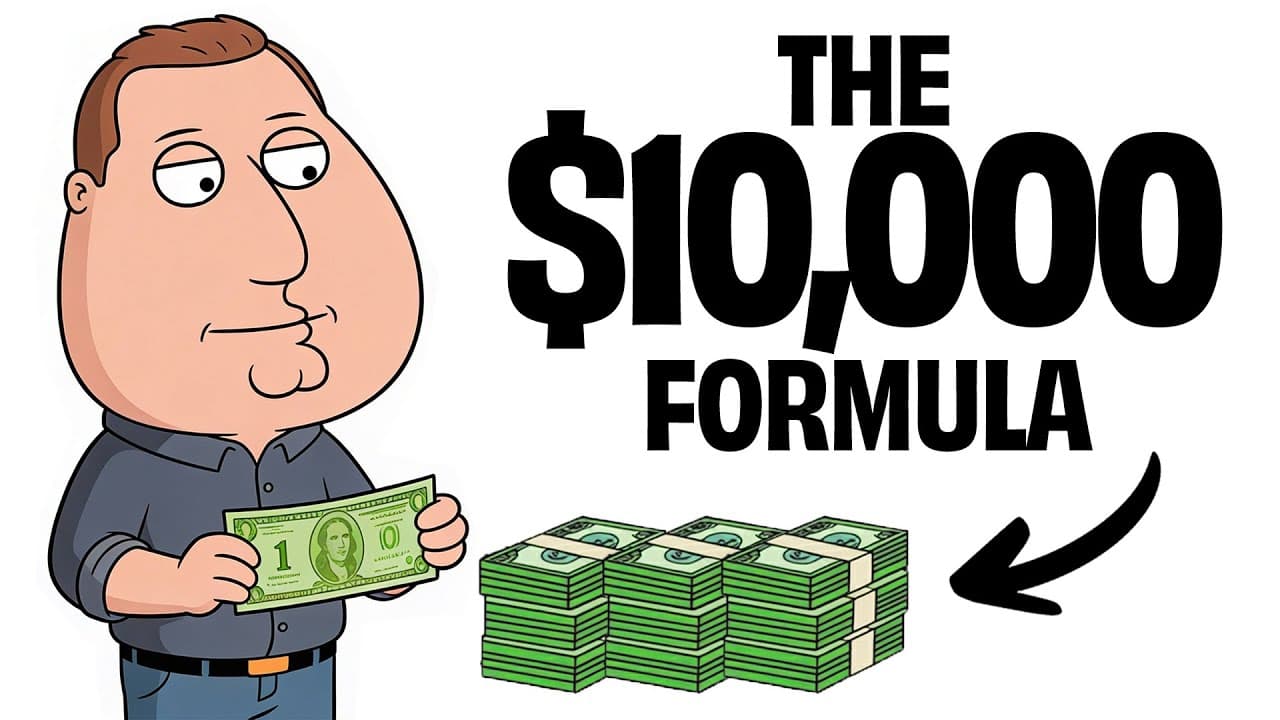
Automate savings on payday, separate spending from savings, and transfer any monthly surplus before temptation can influence the decision. Saving $10,000 in one year means setting aside $833 per month or $27.40 per day, while a concrete emotional reason and visible reminder can help daily choices feel like progress instead of deprivation.
Transcript
Most people who try to save $10,000 quit before they hit 3,000. Research shows that 90% of people who set ambitious savings goals abandon them within 6 months. The problem isn't willpower or income. It's that everyone's been taught to save money completely backwards. My name is Nick and I help people understand money, personal finance, and building... Read More
Key Insights
- Automation is the foundation of the savings method because it moves money on payday before the saver sees or spends it. The decision is made once during setup, reducing dependence on discipline, motivation, memory, and repeated manual transfers.
- The two-account structure is designed to separate daily spending from protected savings. One account covers rent, utilities, insurance, groceries, gas, and other expenses, while the second receives automatic savings and remains untouched by normal spending.
- Accurate spending estimates are based on reviewing the previous 3 to 6 months of transactions. This calculation helps determine how much the spending account needs for fixed and variable costs before an automatic savings amount is selected.
- The $10,000 target equals $833 per month or $27.40 per day over one year. Breaking the total into smaller units makes the goal feel less overwhelming and connects ordinary daily decisions with measurable progress toward the annual result.
- Present bias is the tendency to favor a smaller reward today over a larger future reward. The suggested countermeasure is to focus on having $10,000 in 12 months, reframing each saved amount as progress toward something concrete rather than money being lost.
- A meaningful reason for saving is more durable than saving merely because it seems responsible. The transcript recommends identifying an emotionally vivid purpose, such as family security, leaving a damaging job, helping someone, starting a business, or gaining retirement freedom.
- Visual reminders are used to make a future savings goal feel real in the present. A picture representing retirement, family support, or a future business can connect an immediate purchase decision with the deeper outcome the saver wants to achieve.
- Dopamine is described as driving purchases mainly during anticipation rather than ownership. The excitement of wanting an item can encourage an impulse purchase, but that feeling may disappear shortly after buying it, leaving the item ordinary or largely forgotten.
Install to Summarize YouTube Videos and Get Transcripts
Explore YouTube Video Summarizer or Get YouTube Transcript Extractor
Questions & Answers
Q: How can someone save $10,000 in one year?
Saving $10,000 in one year requires setting aside $833 per month, which the transcript also expresses as $27.40 per day. The recommended system automates a transfer on every payday, separates spending money from savings, and moves any remaining monthly surplus into savings. Modest spending changes can help close the daily gap without requiring complete social isolation or an extremely restrictive lifestyle.
Q: How should automatic savings transfers be organized?
The automatic system begins when a paycheck reaches the checking account. On that same day, the bank divides the money between a spending account and a separate savings account. The spending account handles fixed and variable expenses, while the savings account is protected from daily use. At month’s end, any money remaining in the spending account is automatically transferred into savings as an additional contribution.
Q: How do you calculate the right amount for a spending account?
Review transactions from the previous 3 to 6 months and calculate average monthly spending. Include fixed expenses such as rent, utilities, and insurance, along with variable costs such as groceries and gas. That average indicates how much the spending account needs. The remaining planned portion of each paycheck can then move automatically to the separate savings account on payday.
Q: Where should automatically saved money be directed?
Once money reaches savings, the transcript identifies three possible destinations. It can build an emergency fund covering 3 to 6 months of expenses, remain in a high yield savings account that earns interest, or flow into investment accounts intended to build long-term wealth. The appropriate destination depends on the saver’s goal, but the central principle is keeping savings separate from daily expenses.
Q: What daily spending changes can support a $10,000 goal?
The transcript suggests combining several moderate changes to approach $27 per day. Cooking dinner instead of ordering takeout may save $10 to $15, and brewing coffee instead of buying a $5 latte adds more. Other examples include canceling two rarely used streaming subscriptions, choosing a bus or subway instead of a ride share, and replacing one weekly bar night with time at home.
Q: How can present bias be overcome when saving money?
Present bias makes an immediate reward feel more valuable than a larger future benefit. The proposed response is not simply forcing greater concern for the future. Instead, focus on the concrete outcome of having $10,000 in 12 months. This mental frame changes the meaning of today’s $27.40 from deprivation into visible progress toward a specific, achievable destination.
Q: Why does an emotional reason improve savings consistency?
An emotional reason connects everyday choices to a personally meaningful outcome. Saving only because it seems responsible may provide weak motivation when an appealing purchase appears. A visceral purpose, such as protecting children from financial insecurity, helping parents, leaving a harmful job, starting a business, or gaining retirement freedom, can make the future benefit feel important enough to compete with immediate temptation.
Q: How can someone reduce impulse purchases while saving?
Recognize that much of the excitement surrounding a purchase occurs while anticipating ownership, not after acquiring the item. The transcript notes that a wanted purchase may feel satisfying briefly before becoming ordinary or forgotten. Keep a visible picture of the savings goal nearby so the future reward feels concrete when temptation appears, and rely on automatic transfers so saved money is already separated from spending funds.
Summary & Key Takeaways
-
The proposed system automatically divides each paycheck between separate spending and savings accounts on payday. The spending account covers fixed and variable expenses, while the savings account remains untouched. At each month’s end, any surplus in the spending account also moves automatically into savings, eliminating repeated decisions and reducing psychological friction.
-
A $10,000 annual target becomes more approachable when divided into $833 per month or $27.40 per day. The transcript suggests reaching that daily amount through several modest changes, including cooking at home, brewing coffee, canceling unused streaming subscriptions, using public transportation, and replacing one weekly bar visit with time at home.
-
Automation handles the mechanics, but motivation depends on making the future reward emotionally concrete. The saver should identify a visceral reason for wanting the money and keep a visible image of that goal nearby. This connects daily spending decisions to personal values and helps counter present bias, temptation, and short-lived anticipation around purchases.
Read in Other Languages (beta)
Share This Summary 📚
Summarize YouTube Videos and Get Video Transcripts with 1-Click
Try YouTube Summary with ChatGPT & Claude or YouTube Transcript Generator
Explore More Summaries from Nick Invests 📚




Summarize YouTube Videos and Get Video Transcripts with 1-Click
Try YouTube Summary with ChatGPT & Claude or YouTube Transcript Generator