How Will AI Transform Corporate Training?
TL;DR
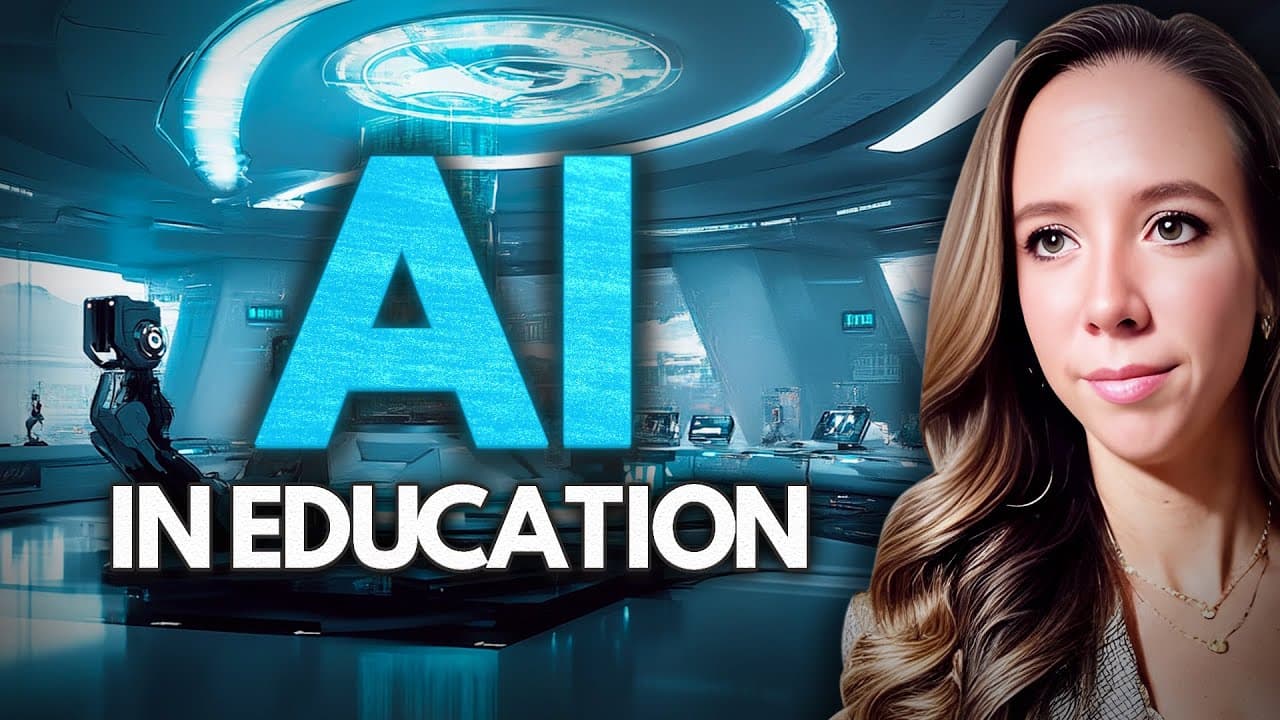
AI can deliver expert-designed training at scale while adapting to each learner’s pace, preferences, and comprehension. The proposed model keeps humans responsible for researching, testing, and validating the material, while AI handles personalized delivery, instant feedback, and continuous availability. Training professionals can remain valuable by becoming expert curators, AI training designers, learning experience architects, or performance coaches.
Transcript
Training and education as we know it is about to be completely disrupted. And unlike other industries being replaced by AI, this one might actually be better for it. What I'm about to show you isn't theory. It's happening right now. And the results are shocking even me. We are using AI to drive our training inside the labs. Check out a little examp... Read More
Key Insights
- Traditional corporate training has a reported 12% retention rate, according to the presentation. The stated reasons include standardized instruction, unsuitable pacing, weak connections to real applications, and an unengaging learning experience that causes employees to forget material quickly.
- AI-powered education is designed to adapt to each learner’s pace, style, and comprehension level in real time. It can personalize learning paths, adjust difficulty, provide immediate correction, remain available continuously, and serve millions of learners simultaneously.
- Human expertise remains the source of the curriculum in the proposed model. Julia researches emerging strategies, tests them in real business settings, writes the instructional material, guides its delivery, and updates it based on observed results, while AI distributes that knowledge.
- AI-assisted content generation can remain human-directed when the expert supplies the framework and judgment. The demonstrated Claude prompt evaluates breaking news by affected audiences, emotional impact, controversy potential, possible hooks, and likely objections to support Julia’s tested content process.
- AI-powered training is presented as costing under $100 per employee, compared with $1,500 to $3,000 for a traditional corporate program. The presentation also claims the AI model can produce results that are ten times better, although it does not define the measurement method.
- First Movers Labs reports completion rates above 85% while combining courses with real-time weekly calls led by a human AI integrator. Its system also examines course viewing, collects preferences through polling, and provides immediate, specific feedback through the platform.
- The most resilient training roles are expected to combine human judgment with AI delivery. The presentation identifies expert curators, AI training designers, learning experience architects, and performance coaches as roles positioned to create, structure, personalize, or help apply AI-delivered education.
- The practical automation advice is to begin with a minimal viable product and build one component at a time. A basic workflow can later incorporate image creation, human review, WordPress publishing, website functions, or social media posting without making the initial project overwhelming.
Install to Summarize YouTube Videos and Get Transcripts
Explore YouTube Video Summarizer or Get YouTube Transcript Extractor
Questions & Answers
Q: How will AI change corporate training?
AI will change corporate training by delivering expert-designed material through personalized learning paths instead of giving every employee the same fixed curriculum. The system can adapt pacing and difficulty, provide immediate feedback, remain continuously available, and support many learners simultaneously. Human experts still research, test, validate, write, and update the strategies that the AI delivers.
Q: Does AI-powered education replace human experts?
AI-powered education does not replace human expertise in the model presented. Human experts remain responsible for researching strategies, testing them in real business settings, writing the curriculum, validating its effectiveness, and updating it as results change. AI serves primarily as the delivery mechanism, helping distribute that expertise more personally and at a much larger scale.
Q: Why is traditional corporate training considered ineffective?
Traditional corporate training is described as ineffective because it often uses one curriculum, one pace, and limited connections to immediate practical work. The presentation reports a 12% retention rate and says 88% of training spending is wasted because people forget the material within a week. It attributes this outcome to standardized, poorly timed, and unengaging instruction.
Q: What are the reported benefits of AI tutors?
AI tutors can provide personalized learning paths, immediate feedback and correction, and difficulty adjustments based on a learner’s progress. They can remain available continuously with patience and scale to millions of learners at once. The central benefit is not independently generated expertise, but more responsive delivery of content that human experts have created, tested, and validated.
Q: How much can AI-powered corporate training cost?
The presentation says a traditional corporate training program costs between $1,500 and $3,000 per employee, while AI-powered training can cost under $100 per employee. It also claims results can be ten times better. These figures are presented as evidence of a major economic shift, although the transcript does not explain the underlying calculations or performance metric.
Q: Which training jobs are expected to remain valuable?
The training jobs expected to remain valuable are those that combine specialized human judgment with effective AI delivery. The presentation names expert curators who create and validate strategies, AI training designers who structure content, learning experience architects who create personalized journeys, and performance coaches who help learners apply knowledge to practical, real-world outcomes.
Q: How does First Movers Labs combine AI and human support?
First Movers Labs combines on-demand courses and AI-supported data with real-time weekly calls led by a human AI integrator. Its database examines which courses learners watch, while planned polling systems collect preferences and platform feedback is immediate and specific. The presentation reports completion rates above 85% and says human contact helps learners avoid feeling left behind.
Q: How should beginners build an AI automation workflow?
Beginners should start with the smallest viable version of the workflow and build its basic components one step at a time. A visual map can clarify how each stage connects to the next. After the core process works, the builder can add image generation, human review, WordPress publishing, website services, or social media posting as separate extensions.
Summary & Key Takeaways
-
Traditional corporate training is presented as expensive, poorly retained, and disconnected from practical application. The proposed alternative uses AI to personalize learning paths, adjust difficulty, provide immediate feedback, and serve many learners simultaneously, while human experts remain responsible for creating, testing, validating, and updating the underlying strategies and curriculum.
-
The First Movers approach combines on-demand courses, AI-supported personalization, polling, immediate course feedback, and real-time weekly calls with human AI integrators. The transcript reports completion rates above 85% inside its Labs and attributes engagement to practical content, responsive support, and a system designed to prevent learners from feeling left behind.
-
AI-powered education changes which training roles remain valuable rather than removing every human contribution. The roles expected to thrive include expert curators, AI training designers, learning experience architects, and performance coaches. Success requires understanding both sides of the model: credible human expertise and effective AI-based delivery at scale.
Read in Other Languages (beta)
Share This Summary 📚
Summarize YouTube Videos and Get Video Transcripts with 1-Click
Try YouTube Summary with ChatGPT & Claude or YouTube Transcript Generator
Explore More Summaries from Julia McCoy 📚





Summarize YouTube Videos and Get Video Transcripts with 1-Click
Try YouTube Summary with ChatGPT & Claude or YouTube Transcript Generator