How Did Edward VI Become England's Boy King?
TL;DR
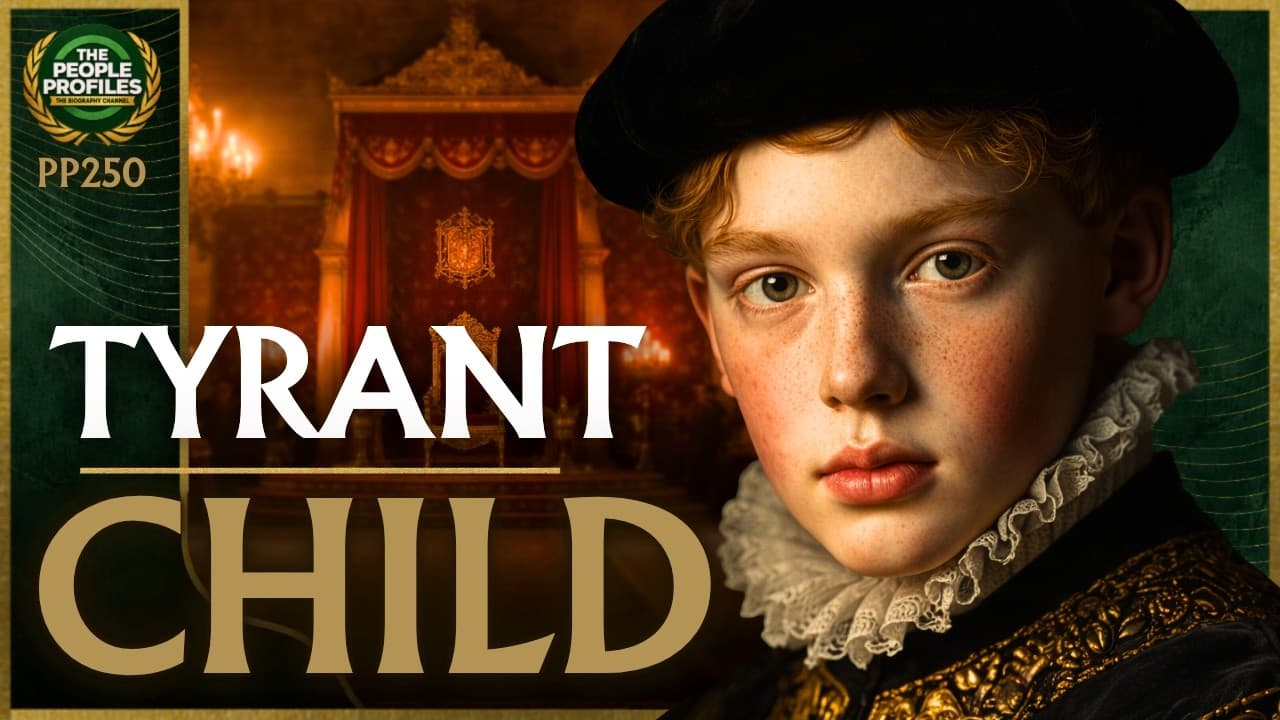
Edward VI became king at nine because Henry VIII's repeated efforts to secure a legitimate male heir produced only one surviving son. Edward received a tightly protected upbringing and a Renaissance Humanist education in languages, philosophy, politics, and rhetoric, while Henry's religious break with Rome and wars with Scotland created the turbulent political setting Edward inherited in 1547.
Transcript
The man known to history as Edward Tudor was born at Hampton Court Palace in London on the 12th of October 1537, he was baptised by archbishop Thomas Cranmer in the chapel of the palace on the 15th October and was proclaimed Duke of Cornwall. His father was an immense figure, Henry VIII, who ruled England for the better part of forty years from ... Read More
Key Insights
- Edward Tudor was born at Hampton Court Palace on 12 October 1537 and baptized by Archbishop Thomas Cranmer three days later. His birth gave Henry VIII the legitimate male heir he had pursued through years of marriage, religious disruption, and dynastic uncertainty.
- Jane Seymour was Henry VIII's third wife and Edward's mother. She endured a difficult labor lasting nearly three days and nights, never recovered from the birth, and died from complications on 24 October 1537, only twelve days after Edward was born.
- Henry VIII's desire for a legitimate son helped drive England's break with Rome. After failing to obtain a papal solution to his marriage, Henry declared himself Supreme Head of the Church of England, divorced Catherine of Aragon, and married Anne Boleyn.
- Edward's childhood was governed by unusually strict security because he was considered vital to the Tudor succession. Strangers could not see him, visitors below the rank of knight were excluded, and his servants were prohibited from visiting London because they might return carrying the plague.
- Edward's education followed the Renaissance Humanist curriculum intended for a royal ruler. Under Richard Cox and John Cheke, he studied Greek, Latin, grammar, philosophy, classical literature, political thought, and rhetoric through writers including Aesop, Plato, Aristotle, Cicero, and Quintilian.
- John Cheke was the most significant of Edward's tutors and was regarded as England's leading classical scholar of his time. As the first Regius Professor of Greek at Cambridge University, he helped revive English interest and scholarship in ancient Greek writers.
- The Treaty of Greenwich sought to arrange a marriage between Edward and Mary Stuart, the infant Queen of Scotland. Henry VIII hoped the union would produce sustained peace and eventually make Edward king of both England and Scotland, but the Scots soon rejected the agreement.
- Edward became King of England and Ireland at nine after Henry VIII died on 28 January 1547. Henry had produced no additional legitimate children after Jane Seymour's death, so the security of the Tudor regime rested heavily on his only legitimate son.
Install to Summarize YouTube Videos and Get Transcripts
Explore YouTube Video Summarizer or Get YouTube Transcript Extractor
Questions & Answers
Q: Why was Edward VI's birth so important to Henry VIII?
Edward's birth was important because Henry VIII believed the Tudor dynasty needed a legitimate male heir born within marriage. Henry's father had established Tudor rule with a tenuous claim after taking the crown from the Yorkist monarchs in 1485. Edward therefore represented a clear successor who could strengthen the dynasty's hold on England after years of uncertainty surrounding the succession.
Q: How did Henry VIII's search for a male heir change England?
Henry's search for a legitimate son contributed to major political and religious change. His desire to divorce Catherine of Aragon and marry Anne Boleyn led him to seek a papal dispensation, then break with Rome when his plans were frustrated. He declared himself Supreme Head of the Church of England, began tentative movement toward Protestantism, and acquired extensive church wealth across England, Wales, and Ireland.
Q: What happened to Edward VI's mother, Jane Seymour?
Jane Seymour gave birth to Edward at Hampton Court Palace on 12 October 1537 after a difficult labor lasting nearly three days and nights. She never recovered from the delivery and died from complications on 24 October, twelve days after his birth. Unlike several of Henry VIII's other wives, Jane was neither executed nor discarded, but died shortly after producing his desired son.
Q: How was Prince Edward protected during his childhood?
Edward lived under strict controls intended to protect the Tudor heir from malicious people, accidents, and disease. Access depended on social rank, no stranger was permitted to see him, and nobody below the rank of knight could enter his presence. His servants were also forbidden from visiting London because they might bring back the plague, while senior household officers supervised his safety and daily surroundings.
Q: What education did Edward VI receive as a prince?
Edward received a Renaissance Humanist education designed to prepare a royal prince for government. Richard Cox and John Cheke taught him Greek, Latin, grammar, philosophy, and rhetoric. His reading included Aesop, Dionysius, Cato, Plato, Aristotle, Cicero, and Quintilian. Through these works, Edward studied classical literature, political philosophy, persuasive speaking, and intellectual traditions considered appropriate for a future king.
Q: Who were Edward VI's childhood friends?
Edward's closest companions included Henry and Charles Brandon, sons of the first Duke of Suffolk. He also grew up with Thomas Butler and Barnaby Fitzpatrick, sons of Irish lords. Butler and Fitzpatrick were being raised as English gentlemen as part of Henry VIII's effort to anglicize Irish nobles, expecting them to return as adults and reshape their lordships along English lines.
Q: Why was Edward VI expected to marry Mary Queen of Scots?
The Treaty of Greenwich, agreed on 1 July 1543, proposed a future marriage between Edward and Mary Stuart, who had become Queen of Scotland after her father's death. Henry VIII hoped the union would secure lasting peace and eventually unite the crowns under Edward. The Scots soon withdrew from the terms, prompting the conflict later called the Rough Wooing against Scotland and its French ally.
Q: How did Edward VI become king at nine years old?
Edward became king when Henry VIII died on 28 January 1547 at the age of fifty-five after suffering several health complications. Henry had never produced another legitimate child after Jane Seymour's death, despite marrying three more times. As his only legitimate son and designated successor, nine-year-old Edward inherited the crowns of England and Ireland, along with the burden of preserving Tudor rule.
Summary & Key Takeaways
-
Edward Tudor was born at Hampton Court Palace on 12 October 1537 to Henry VIII and Jane Seymour. His birth fulfilled Henry's long pursuit of a legitimate male successor, but Jane died from complications twelve days later after a difficult labor that had lasted nearly three days and nights.
-
Edward grew up under intense protection in royal households around London. Lady Margaret Bryan supervised his care, while Richard Cox and John Cheke directed an education rooted in Renaissance Humanism. He studied Greek, Latin, grammar, philosophy, rhetoric, and classical writers, preparing him for an anticipated long reign over England.
-
Henry VIII's policies shaped Edward's inheritance before the prince could govern. The break with Rome, early movement toward Protestantism, conflict with Scotland, and failed marriage arrangement with Mary Stuart created lasting instability. When Henry died on 28 January 1547, nine-year-old Edward became King of England and Ireland.
Read in Other Languages (beta)
Share This Summary 📚
Summarize YouTube Videos and Get Video Transcripts with 1-Click
Try YouTube Summary with ChatGPT & Claude or YouTube Transcript Generator
Explore More Summaries from The People Profiles 📚
Summarize YouTube Videos and Get Video Transcripts with 1-Click
Try YouTube Summary with ChatGPT & Claude or YouTube Transcript Generator