Why Are Young Men Losing Purpose and Opportunity?
TL;DR
Young men are losing purpose, connection, and opportunity as in-person childhood weakens, stabilizing institutions fade, and smartphones, social media, and gambling apps exploit youthful impulsivity. The proposed response is to restore real-world guardrails, mentorship, meaningful groups, and economic opportunity while treating the problem as a generational challenge that men and women should address together.
Transcript
The algorithms love really positioning men unfairly. Well, there was that meme a while ago, wasn't there? Would you rather run into a bear or a man in the woods? Uh, which I managed to avoid commenting on, but it was exactly this line because most women said they'd prefer to run into a bear uh than than a man. You're tracing out a trend in which bo... Read More
Key Insights
- The crisis facing young people is an intergenerational problem involving the economy, technology, family life, education, housing, law, and business practices. Treating these pressures only as a conflict between men and women obscures the broader distribution of resources and opportunities across generations.
- The Intergenerational Compact is a tentative collaborative project intended to combine three partial areas of expertise into a more complete explanation of the obstacles facing young people. Its premise is that no single perspective adequately captures the economic, technological, social, and institutional changes involved.
- Young men and young women are spending political energy blaming each other for challenges that also arise from an unfair economy, an inaccessible housing market, and an inadequate education system. The discussion presents cooperation between the sexes as more productive than mutual accusation.
- Young adulthood is especially vulnerable to impulsive behavior because impulse control continues developing into the mid-20s. Earlier institutions, mentors, peers, rules, and norms acted as guardrails, balancing individual freedom and youthful experimentation against choices that could cause lasting damage.
- Smartphones created a qualitative change in companies' ability to reach young people. Unlike one-way television advertising, internet-connected phones can interrupt users with push notifications and collect extensive information about their preferences, giving potentially predatory businesses far greater influence.
- A loss of meaning among American high school seniors began before COVID. Agreement with statements that life felt useless or meaningless remained near 9% from the 1990s through 2010 or 2011, then doubled over the following five to eight years.
- Virtual social life often lacks stable structure and enduring group membership. Young people can move among many shifting online groups, while the collapse of in-person childhood removes settings that previously supplied connection, identity, social learning, and a stronger sense of belonging.
- Mobile sports gambling is presented as a serious threat to boys and young men. The discussion connects its rise to youthful sensation seeking, weakened social guardrails, smartphone access, and companies capable of using personal data and constant digital contact to encourage risky choices.
Install to Summarize YouTube Videos and Get Transcripts
Explore YouTube Video Summarizer or Get YouTube Transcript Extractor
Questions & Answers
Q: Why are young men losing purpose and opportunity?
Young men are facing several overlapping pressures rather than one isolated cause. The discussion identifies weakening real-world institutions, the collapse of in-person childhood, unstable virtual groups, difficult labor and housing markets, and technologies designed to capture attention or encourage risk. Together, these changes can reduce mentorship, belonging, economic progress, and the sense that adult life offers a meaningful path forward.
Q: What is the proposed Intergenerational Compact?
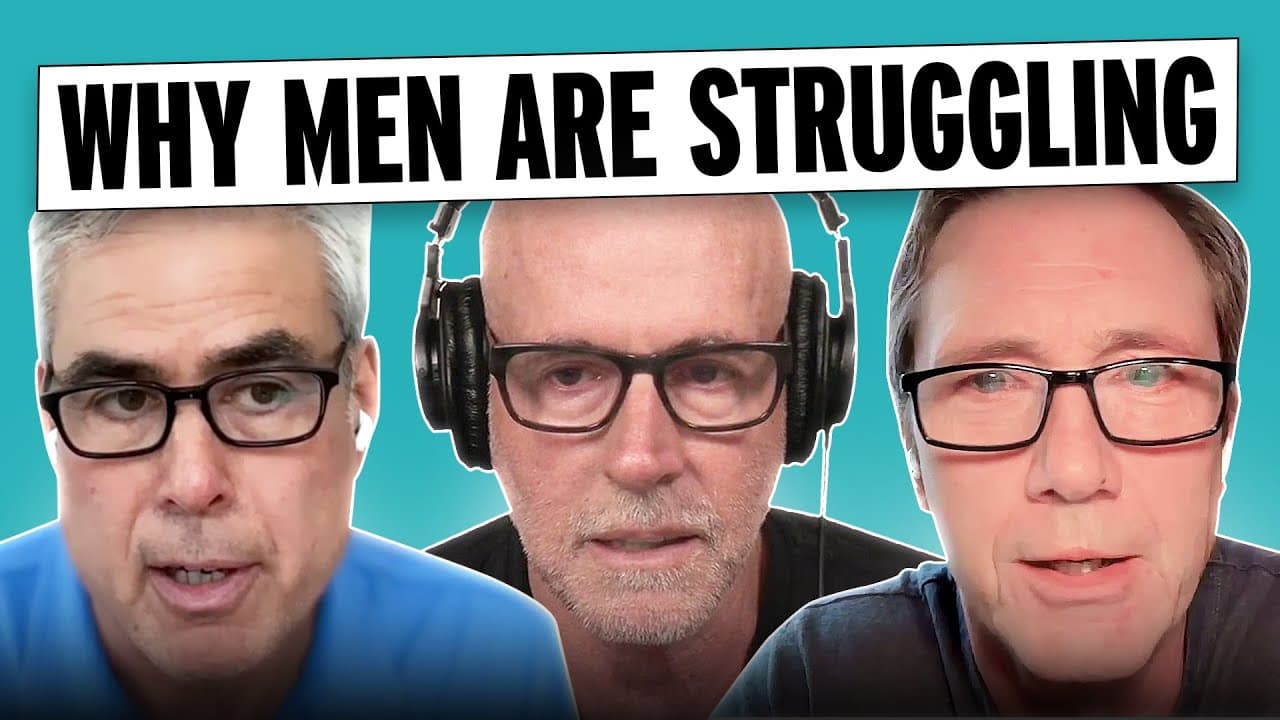
The Intergenerational Compact is the tentative name for a collaboration among Scott Galloway, Jonathan Haidt, and Richard Reeves. It is intended to combine their expertise on young people, technology, gender, economics, and social institutions. The project seeks a comprehensive account of how changes in the economy, family life, law, education, business practices, and technology have created obstacles for younger generations.
Q: How did smartphones change companies' influence over children?
Smartphones changed marketing from a largely one-way system into a continuous and personalized relationship. Young people began carrying internet-connected computers that could interrupt them through push notifications and record large amounts of information about what they liked. According to the discussion, this shift in the early 2010s greatly increased the power of companies willing to exploit attention, preferences, impulses, and vulnerabilities.
Q: Why are boys and young men vulnerable to gambling apps?
Boys and young men are described as especially exposed because youthful sensation seeking remains strong while impulse control continues developing into the mid-20s. Gambling apps enter an environment where institutions and social norms provide fewer guardrails than before. Smartphone access, notifications, personal preference data, and the weakening of real-world mentorship can make risky behavior continuously available and easier for companies to encourage.
Q: How did institutions once protect young men from harmful impulses?
Institutions once helped socialize young men through peers, mentors, rules, norms, and structured expectations. These guardrails did not eliminate freedom or the enjoyment associated with youth. Instead, they balanced experimentation against the risk that impulsive choices would become seriously damaging. The discussion argues that the social deinstitutionalization of young adulthood has left more young men without comparable structure, supervision, or support.
Q: Why is the crisis of young people framed as a generational issue?
The crisis is framed as generational because younger people face insufficient investment in education, difficulty entering the housing market, and labor-market struggles, while resources are distributed toward older people. Gender conflict can distract from these shared conditions. Young men and women may gain more by standing together for a fairer economy, better housing, and stronger education than by treating each other as the primary cause of their problems.
Q: How is virtual social life connected to declining meaning?
Virtual life can place young people in shifting groups without the stable structure, enduring membership, and shared purpose associated with real-world communities. The discussion connects this transition to survey results among American high school seniors. Agreement that life felt useless or meaningless stayed near 9% from the 1990s through 2010 or 2011, then doubled during the following five to eight years, before COVID.
Q: How can society respond to the crisis facing boys and men?
The proposed direction is to rebuild purpose, connection, opportunity, and protective guardrails. That includes restoring in-person childhood, stable groups, mentorship, meaningful institutions, and real-world rites of passage while addressing education, housing, and employment barriers. The discussion also calls for scrutiny of social media, gambling apps, and other businesses that exploit youthful impulses, alongside renewed cooperation between men and women.
Summary & Key Takeaways
-
Jonathan Haidt, Richard Reeves, and Scott Galloway frame the difficulties facing young people as an intergenerational problem involving education, housing, employment, technology, family life, law, and business practices. Their proposed collaboration, tentatively called the Intergenerational Compact, aims to combine their areas of expertise into a more complete account of these connected changes.
-
The discussion argues that young adulthood once had stronger institutions, mentors, peers, rules, and social norms to balance freedom with protection from damaging impulses. As those guardrails weakened, smartphones gave technology companies continuous access to young people, extensive preference data, and push notifications that can capture attention and encourage risky behavior.
-
The participants connect the crisis among boys and young men to lost in-person childhood, unstable online groups, gambling apps, difficult labor and housing markets, and declining meaning. They argue that blaming the other gender misidentifies a broader generational failure and prevents young men and women from working together for fairer institutions, opportunities, and support.
Read in Other Languages (beta)
Share This Summary 📚
Summarize YouTube Videos and Get Video Transcripts with 1-Click
Try YouTube Summary with ChatGPT & Claude or YouTube Transcript Generator
Explore More Summaries from The Prof G Pod – Scott Galloway 📚






Summarize YouTube Videos and Get Video Transcripts with 1-Click
Try YouTube Summary with ChatGPT & Claude or YouTube Transcript Generator