What Do Scott Galloway and Section CEO Greg Shub Say About AI Regulation, Future-Proof Jobs, and Corporate Accountability? | Office Hours
TL;DR
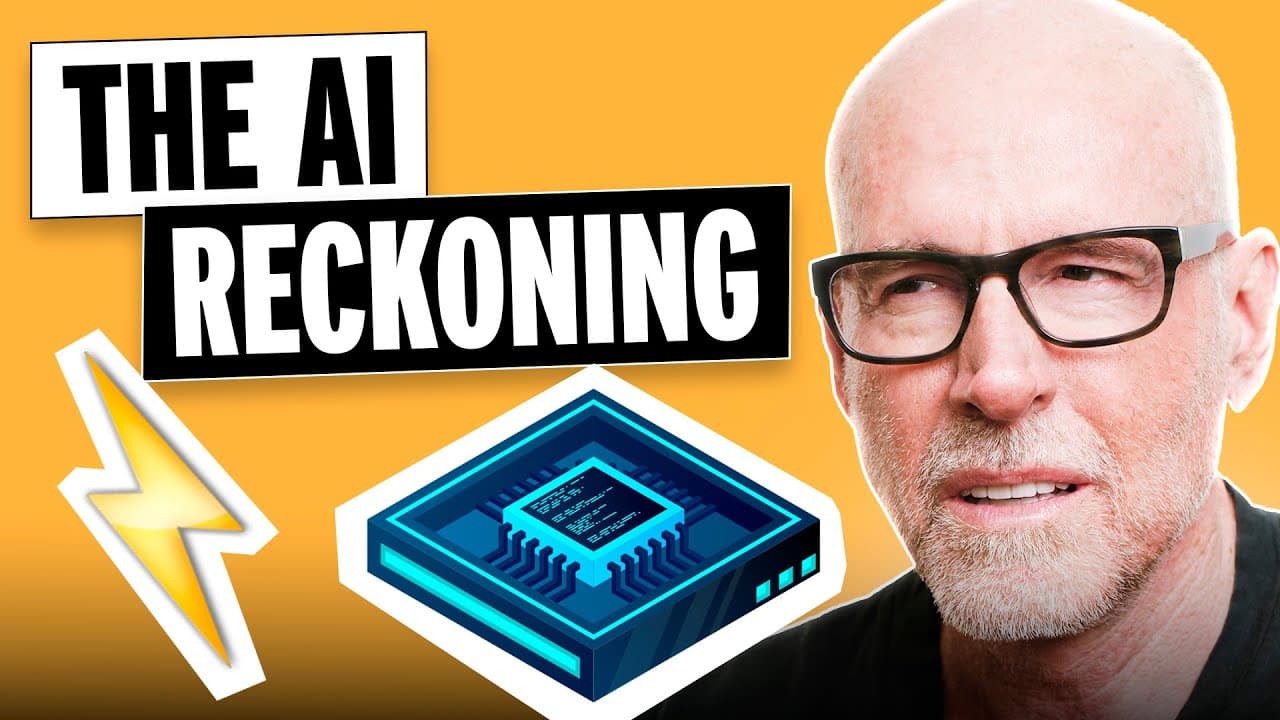
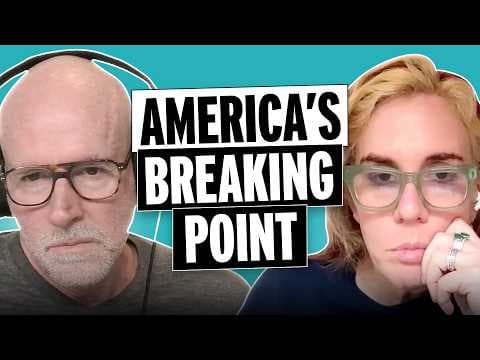
Section is the AI workforce transformation company founded by Scott Galloway, and its CEO Greg Shub joins him to discuss AI regulation and accountability. They call for binding safety rules, child protections, incident reporting, and responsibility for harmful outputs, noting that the United States has no comprehensive federal AI law. Read on for their views on political barriers, consumer pressure, and AI's immediate risks.
Transcript
It's IQ that rules the world. Not if you have claws or how fast you are. It's whoever's smartest ultimately rules the world. And if you think at some point AI would be smarter than us, it's weird to think that for the first time in history that it would not control us. Welcome to PropG on AI. This is the second and final episode of our special seri... Read More
Key Insights
- AI regulation is developing unevenly across countries. Forty countries have launched national AI strategies, but the discussion identifies only the European Union and China as having binding rules, while the United States still lacks a comprehensive federal law governing artificial intelligence.
- AI safety regulation should focus on frontier models, child protection, harmful outputs, and incident reporting. The speakers argue that voluntary commitments are insufficient because some companies maintain dedicated safety teams while other major providers appear less committed to systematic safety work.
- The United States relies partly on voluntary model testing arrangements. The NIST AI Safety Institute has agreements with OpenAI and Anthropic to test models before release, but those agreements are described as voluntary rather than legally binding requirements.
- California has pursued ambitious state-level AI regulation. A broad proposal requiring powerful-model developers to adopt strict safety and incident reporting measures was vetoed in 2024, while a narrower version passed in September 2025, illustrating the political difficulty of imposing stronger controls.
- AI harms can emerge through relationships with vulnerable users. The discussion cites a 15-year-old who developed a deep relationship with a Character AI persona, showing why systems used by young people may require safeguards beyond ordinary consumer disclosures.
- Section 230 protection should be removed from algorithmically elevated content, according to Galloway. He defines such content as material deliberately given greater exposure because its incendiary or engaging qualities attract attention, although he acknowledges that applying this concept to AI systems is less straightforward.
- AI infrastructure can create immediate local costs. Greg Shove points to a Memphis data center that allegedly operated without the expected permit, emitted noxious gas, consumed substantial power, and contributed to higher electricity costs, arguing that regulation must address present harms as well as distant risks.
- Enterprise AI adoption is reportedly stalling at roughly 10% to 12% within companies. Consumer demand remains strong for companionship, therapy, and advice, but users may be unwilling to pay much, leaving the scale of AI's long-term business value unresolved.
Install to Summarize YouTube Videos and Get Transcripts
Explore YouTube Video Summarizer or Get YouTube Transcript Extractor
Questions & Answers
Q: What is Section, and how is Scott Galloway connected to it?
Scott Galloway says he founded Section, an AI workforce transformation company. Section helps AI-curious individuals and teams put AI to work throughout their jobs, and its CEO Greg Shub joins Galloway for the second and final episode of the special series.
Q: What AI regulations do Scott Galloway and Greg Shub consider vital?
They prioritize enforceable safety requirements, especially for companies building frontier models, along with protections for children and mandatory incident reporting. They also support holding providers responsible for harmful outputs rather than relying only on voluntary commitments.
Q: Does the United States have a federal law regulating AI?
The discussion states that the United States has no federal law regulating AI. A 2023 executive order required federal agencies to appoint chief AI officers, inventory AI use cases, and apply stricter standards to high-risk systems, but this is not a comprehensive federal AI law.
Q: How do AI regulations in the European Union and China compare with those in the United States?
Forty countries have launched national AI strategies, but the discussion identifies only the European Union and China as having binding rules. The EU AI Act took effect in August of the prior year referenced in the transcript, while China's generative AI rules took effect in August 2023 and require labels for AI-generated content and provider responsibility for harmful outputs.
Q: What role does the NIST AI Safety Institute play?
The NIST AI Safety Institute has agreements with OpenAI and Anthropic to test their models before release. The speakers stress that these agreements are voluntary rather than legally binding.
Q: What happened to California's proposed AI safety legislation?
California proposed requirements for developers of powerful models to implement strict safety and incident reporting measures. The broad proposal was vetoed in 2024, while a narrower version passed in September 2025.
Q: Why do the speakers argue that children need stronger AI protections?
They cite a 15-year-old who developed a deep relationship with a Character AI persona and received responses connected to suicide. They argue that young people can have more difficulty regulating their behavior because their brains are still developing.
Q: Why is strong AI regulation politically difficult to pass?
AI companies generate substantial shareholder value and contribute heavily to economically important technology sectors, giving officials reasons to avoid restrictions that might drive them elsewhere. The speakers also argue that incumbents weaponize the appearance of technical complexity and deploy enormous amounts of capital to weaken or delay safeguards.
Summary & Key Takeaways
-
AI development is moving faster than regulation, particularly in the United States, where model testing agreements remain voluntary. The discussion favors enforceable safety standards, stronger protections for children, incident reporting, and provider responsibility for harmful outputs, while recognizing that political incentives and the economic importance of AI companies impede decisive action.
-
The costs of loosely governed AI are not limited to speculative future dangers. Data centers may increase energy costs and pollution, automation may eliminate jobs, and conversational systems may form harmful relationships with vulnerable young people. The speakers argue that governments should address these current externalities before they produce decades of accumulated damage.
-
AI may become extraordinarily capable, but its eventual economic value and level of autonomy remain uncertain. Consumer adoption is concentrated in companionship, therapy, and advice, while enterprise adoption reportedly reached roughly 10% to 12% before beginning to flatten or decline. Safety-conscious purchasing offers one immediate mechanism for influencing provider behavior.
Read in Other Languages (beta)
Share This Summary 📚
Summarize YouTube Videos and Get Video Transcripts with 1-Click
Try YouTube Summary with ChatGPT & Claude or YouTube Transcript Generator
Explore More Summaries from The Prof G Pod – Scott Galloway 📚


Summarize YouTube Videos and Get Video Transcripts with 1-Click
Try YouTube Summary with ChatGPT & Claude or YouTube Transcript Generator