How Could AI Data Centers Operate in Space?
TL;DR
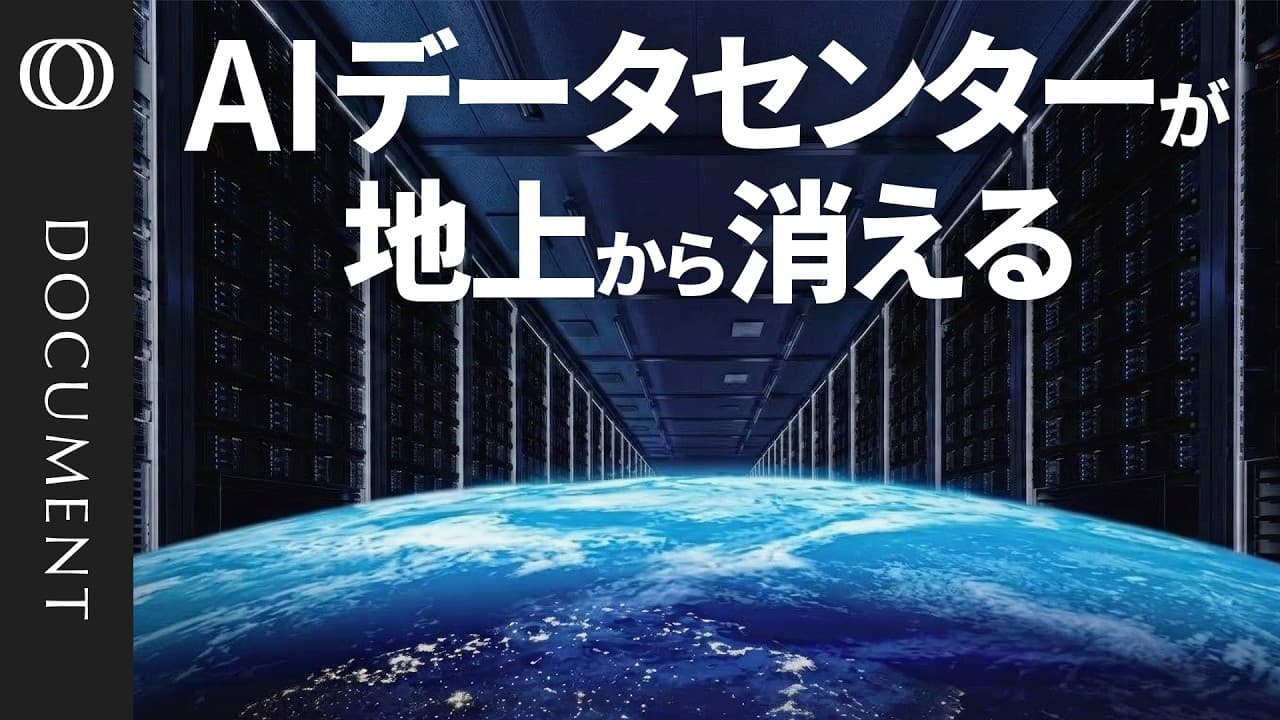
Space-based AI data centers could ease pressure on terrestrial electricity, land, water, and cooling by using orbital solar power and networked satellites. Making them practical requires lightweight deployable solar arrays, radiation-tolerant chips, radiators, collision-avoidance propulsion, high-bandwidth laser links, and much cheaper launches, with all these technologies working together reliably.
Transcript
When you ask AI [music] to answer a question, generate an image, or write a line of code, somewhere, a machine kicks into gear. A neural network [music] of high-performance computing in data centers that consume huge swaths of land. There are now thousands of them around the world and they're getting harder to sustain. These AI [music] data centers... Read More
Key Insights
- AI data centers are approaching an energy wall because their computing equipment and cooling systems consume enormous amounts of power. Global data-center electricity demand is expected to double by 2030 and could represent one-tenth of all electricity consumed on Earth by 2050.
- StarCloud 1 demonstrated that a terrestrial Nvidia H100 processor can operate in orbit after engineering work on radiation tolerance, shielding, and thermal control. The small satellite circles Earth roughly every 90 minutes, but it remains a prototype rather than a complete orbital data center.
- Orbital computing works by sending requests from Earth through laser links to AI chips aboard solar-powered satellites. Large numbers of interconnected satellites could process complex workloads collectively and return results to Earth in milliseconds, creating a distributed computing network above the planet.
- Perovskite solar cells are cheaper, lighter, and more flexible than the silicon-based panels described in the transcript. Their chemical ink can be coated onto a surface and crystallized in a vacuum, allowing panels to be rolled for launch and unfurled after reaching orbit.
- Thermal management is a central obstacle because space has no air or water to carry heat away from processors. Orbital computers therefore require spacecraft radiators and systems that pull heat away from the chips while operating alongside large solar arrays and other equipment.
- Laser communication can deliver more than one thousand times the bandwidth of traditional radio-frequency systems. Inter-satellite laser links are especially suitable because they travel through a vacuum without interference from air, rain, or clouds, while satellite-to-ground links connect the orbital network with users.
- Fully reusable rockets could reduce launch costs by 50 to 100 times if they can deploy satellites, land intact, and relaunch with minimal refurbishment. StarCloud estimates a break-even launch cost near $500 per kilogram, while Starship is designed to reach $10 to $20 per kilogram.
- Orbital computing has become a strategic competition involving private companies and national programs. StarCloud has filed for 88,000 satellites, SpaceX has discussed up to one million for an AI data-center project, and China has launched 12 of a planned 2,800 computing satellites.
Install to Summarize YouTube Videos and Get Transcripts
Explore YouTube Video Summarizer or Get YouTube Transcript Extractor
Questions & Answers
Q: Why are companies considering AI data centers in space?
Companies are considering orbital data centers because terrestrial AI infrastructure requires enormous amounts of electricity, land, water, and cooling. Demand continues to accelerate even as these constraints become harder and more expensive to manage. Space offers no terrestrial land restrictions or permitting battles and provides access to abundant solar energy, although major engineering and economic barriers still need to be solved.
Q: How would an AI data center in space work?
An orbital data center would receive a prompt or computing request from Earth through a laser link. AI chips inside solar-powered satellite buses would process the request, while interconnected satellites would cooperate on larger workloads. The network would then transmit the results back to Earth, potentially within milliseconds. This model depends on reliable power, cooling, propulsion, and high-bandwidth communications.
Q: What did the StarCloud 1 satellite demonstrate?
StarCloud 1 demonstrated that an Nvidia H100 chip, described as the most powerful processor deployed in space, could operate in orbit. Engineers developed thermal management, radiation tolerance, and shielding for the terrestrial-grade hardware. The satellite is about the size of a small refrigerator and completes an orbit in roughly 90 minutes, but it is only a prototype, not a full data center.
Q: Why are perovskite solar cells useful in space?
Perovskite solar cells could support orbital computing because they are described as cheaper, lighter, and more flexible than conventional silicon-based panels. They can be made by coating chemical ink onto a surface and crystallizing it in a vacuum. Their flexibility allows panels to be rolled into a compact configuration for launch and later unfurled to cover a much larger area in orbit.
Q: How would space-based computers release their heat?
Space-based computers cannot rely on surrounding air or water to carry heat away because they operate in a vacuum. A spacecraft must therefore include a system that draws heat away from its processors and transfers it to radiators. Thermal control must function together with power generation, communications, orbital propulsion, and radiation protection, making the overall design a tightly coordinated engineering challenge.
Q: Why are laser links important for orbital computing?
Laser links could carry the enormous data volumes required between satellites and between orbit and Earth. The system uses the same basic kind of laser found inside fiber-optic cables but sends it through free space. It can offer more than one thousand times the bandwidth of traditional radio-frequency communications, while inter-satellite links avoid interference from air, rain, and clouds.
Q: How could reusable rockets make orbital data centers viable?
Reusable launch vehicles could sharply reduce the cost of placing computing hardware, solar arrays, radiators, and communications equipment into orbit. Falcon 9 has already changed launch economics through partial reuse, while Starship aims to return intact and fly again with minimal refurbishment. The transcript says full reuse could lower costs by 50 to 100 times, which may bring them below StarCloud's estimated break-even threshold.
Q: Who is competing to build computing infrastructure in space?
The competition includes StarCloud, SpaceX, Blue Origin, Axiom Space, Relativity Space, Singaporean researchers and startups, and China's state-backed program. StarCloud has filed for 88,000 satellites, while SpaceX has discussed as many as one million for its project. China has launched 12 satellites toward a planned 2,800-satellite constellation focused initially on processing and filtering data in orbit.
Summary & Key Takeaways
-
AI data centers consume enormous amounts of electricity for computing and cooling, while also requiring substantial land and water. With global data-center electricity use expected to double by 2030 and potentially reach one-tenth of worldwide consumption by 2050, companies are exploring orbital computing as an alternative infrastructure model.
-
A functional orbital data center would combine AI chips, huge deployable solar arrays, thermal radiators, low-power propulsion, and laser communications. Perovskite solar cells could reduce launch mass because they are lightweight, flexible, and rollable, while laser links could provide more than one thousand times the bandwidth of traditional radio-frequency systems.
-
Falling launch costs could determine whether orbital computing becomes commercially viable. Companies and governments are pursuing different paths, from StarCloud's prototype and proposed 88,000-satellite network to China's planned 2,800-satellite computing constellation. Ground facilities are unlikely to disappear soon, but more computing could gradually shift into orbit.
Read in Other Languages (beta)
Share This Summary 📚
Summarize YouTube Videos and Get Video Transcripts with 1-Click
Try YouTube Summary with ChatGPT & Claude or YouTube Transcript Generator
Explore More Summaries from TBS CROSS DIG with Bloomberg 📚






Summarize YouTube Videos and Get Video Transcripts with 1-Click
Try YouTube Summary with ChatGPT & Claude or YouTube Transcript Generator