Why Does Thinking for Yourself Feel So Lonely? Kant and Nietzsche on Intellectual Freedom
TL;DR
Thinking for yourself feels lonely because questioning inherited certainties can threaten your peace, relationships, and sense of belonging. Drawing on Kant’s concept of intellectual minority and Nietzsche’s critique of the herd, the video argues that freethinkers face resentment because they expose how fragile collective beliefs can be. Read on to understand why independent thought carries this cost and how its loneliness can become a passage to freedom.
Transcript
Have you ever felt disconnected from the world around you? Not just out of place at parties or in groups, but truly disconnected. As if there were a veil between you and the rest of the people. As if you could see things that no one else seems to notice. Lies hidden beneath beautiful words. conventions repeated as absolute truths, ideas that no one... Read More
Key Insights
- Intellectual minority, in Kant's terms, is the condition where adults live like grown-up children, unable to use their own understanding without the guidance of another person. It stems not from stupidity but from fear of the loneliness that free thought brings.
- Kant's call 'Sapere aude' — dare to know — means more than seeking information. It requires the courage to doubt everything, including oneself, and the willingness to lose the certainties that once made you feel secure.
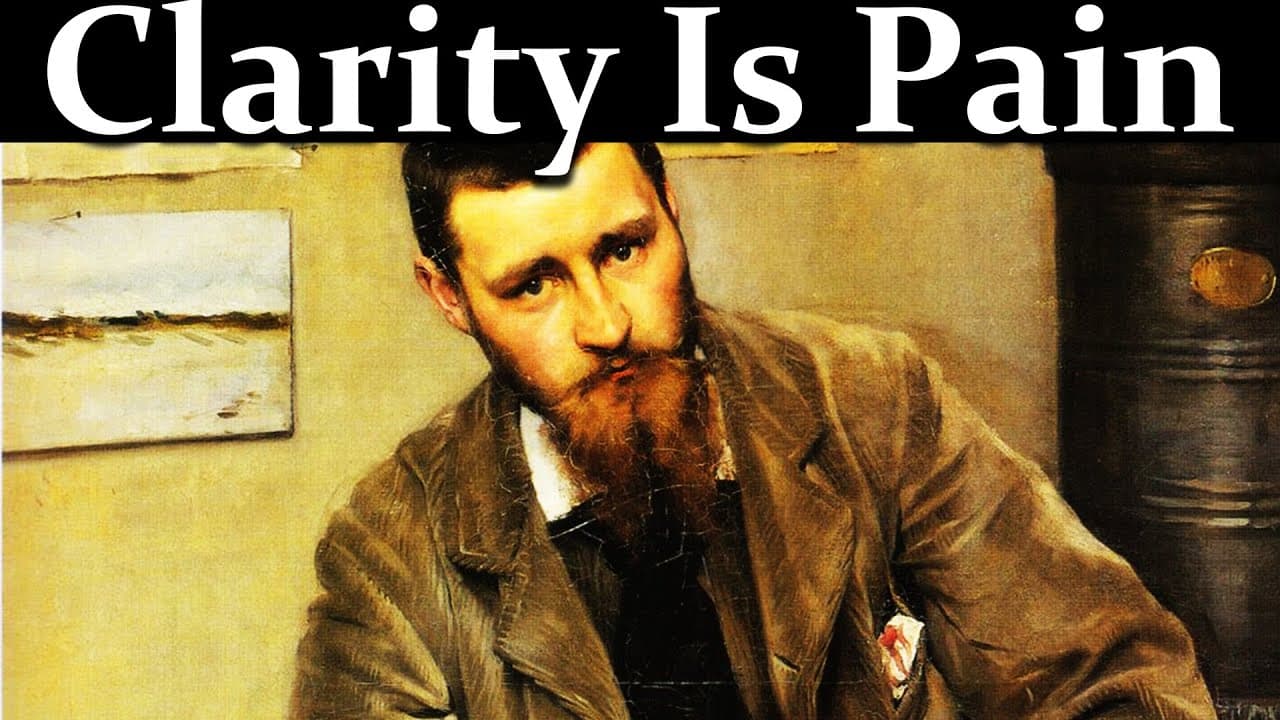
- The greatest tragedy of human existence is not ignorance but the ability to think deeply in a world that punishes, ridicules, and isolates those who dare to do so. Clarity itself becomes a source of anguish.
- Nietzsche argued that people avoid free thought not from laziness but from resentment. The mere existence of an autonomous thinker exposes the intellectual cowardice of the masses, acting like a mirror reflecting their weakness.
- The herd's morality does not merely want obedience to rules; it wants genuine belief in them. If one person begins to think, others may follow, and the shared house of cards of certainties could collapse.
- The freethinker is often seen as an enemy of order and a threat to peace. Society defends its illusions through jokes, exclusion, censorship, and attacks disguised as humor or morality.
- The loneliness of the thinker is not physical isolation but the impossibility of finding an echo for their own questions. Each layer of truth unveiled distances them further from ordinary people.
- Admitting that religion, moral values, and social conventions may be human constructions would mean facing an existential abyss. Few have the stomach to accept that what gives life meaning could be mere narrative.
Install to Summarize YouTube Videos and Get Transcripts
Explore YouTube Video Summarizer or Get YouTube Transcript Extractor
Questions & Answers
Q: Why does thinking for yourself feel so lonely?
Thinking independently can separate you from people who accept inherited beliefs without questioning them. The video describes this loneliness as the inability to find an echo for your questions, especially when voicing doubts risks conflict, rejection, friendships, family, or your place in society.
Q: What did Kant mean by intellectual minority?
Kant’s intellectual minority is the condition in which adults remain unable to use their own understanding without another person’s guidance. The video says this dependence comes not from stupidity but from fear of the uncertainty, responsibility, and loneliness that independent thought can bring.
Q: What does Kant’s “dare to know” require?
“Dare to know” means having the courage to use your own understanding and doubt everything, including yourself. According to the video, doing so can put your peace, relationships, sense of belonging, and comforting certainties at risk.
Q: Why do people prefer to let others think for them?
Letting others decide what is right, wrong, true, or false feels comfortable and avoids the burden of moral responsibility. The video says people are shaped from a young age to obey ready-made formulas, while questioning them can bring reprimand, conflict, or rejection.
Q: Why does Nietzsche say the herd resents freethinkers?
The video presents Nietzsche’s view that a freethinker exposes the intellectual cowardice of the majority simply by thinking autonomously. By revealing that accepted certainties may be fragile constructions, the thinker becomes a target of resentment and an enemy of the herd.
Q: What is the greatest tragedy of human existence according to the video?
The greatest tragedy is not ignorance but the ability to think deeply in a world that punishes, ridicules, and isolates those who do so. The resulting anguish is described as the pain of clarity in a society that prefers its illusions to remain intact.
Q: How does society react to people who challenge accepted beliefs?
The video says independent thought is often treated as rebellion, while the person questioning dominant ideas may be punished or isolated. Freethinkers can be hated and rejected because their questions threaten the collective certainties that give others comfort.
Q: Can the loneliness of independent thought lead to freedom?
Yes, the video argues that the loneliness of reason and knowledge does not have to become a prison. It can become a passage to the freedom to be yourself without bowing your head or needing to fit in, and courageous thought may also inspire others to question for themselves.
Summary & Key Takeaways
-
The video opens with the feeling of disconnection experienced by those who see lies hidden beneath beautiful words and conventions repeated as absolute truths. This clarity brings a strange mix of insight and loneliness, because the more you understand the world, the more you realize you live surrounded by illusions others refuse to shatter.
-
Kant's concept of intellectual minority describes adults who let others decide what is right, wrong, true, or false. From a young age we are shaped to obey rather than question. Daring to know means risking peace, relationships, and belonging, which is why most people prefer the comfort of borrowed certainties.
-
Nietzsche adds that society does not merely avoid thinking but actively hates those who think. Resentment turns the freethinker into a target for ridicule and exclusion. The result is a deep existential loneliness, the price Nietzsche accepted as inseparable from authentic freedom and true intellectual nobility.
Read in Other Languages (beta)
Share This Summary 📚
Summarize YouTube Videos and Get Video Transcripts with 1-Click
Try YouTube Summary with ChatGPT & Claude or YouTube Transcript Generator
Explore More Summaries from Psyphoria 📚

Summarize YouTube Videos and Get Video Transcripts with 1-Click
Try YouTube Summary with ChatGPT & Claude or YouTube Transcript Generator