How to Improve Your Eye Health and Prevent Vision Loss
TL;DR
To improve eye health and prevent vision loss, ensure regular eye exams starting from infancy, especially if any issues arise. Spending time outdoors and getting exposure to natural light can help reduce the risk of nearsightedness. Incorporating eye exercises, proper nutrition, and eye safety practices also contribute significantly to maintaining optimal vision.
Transcript
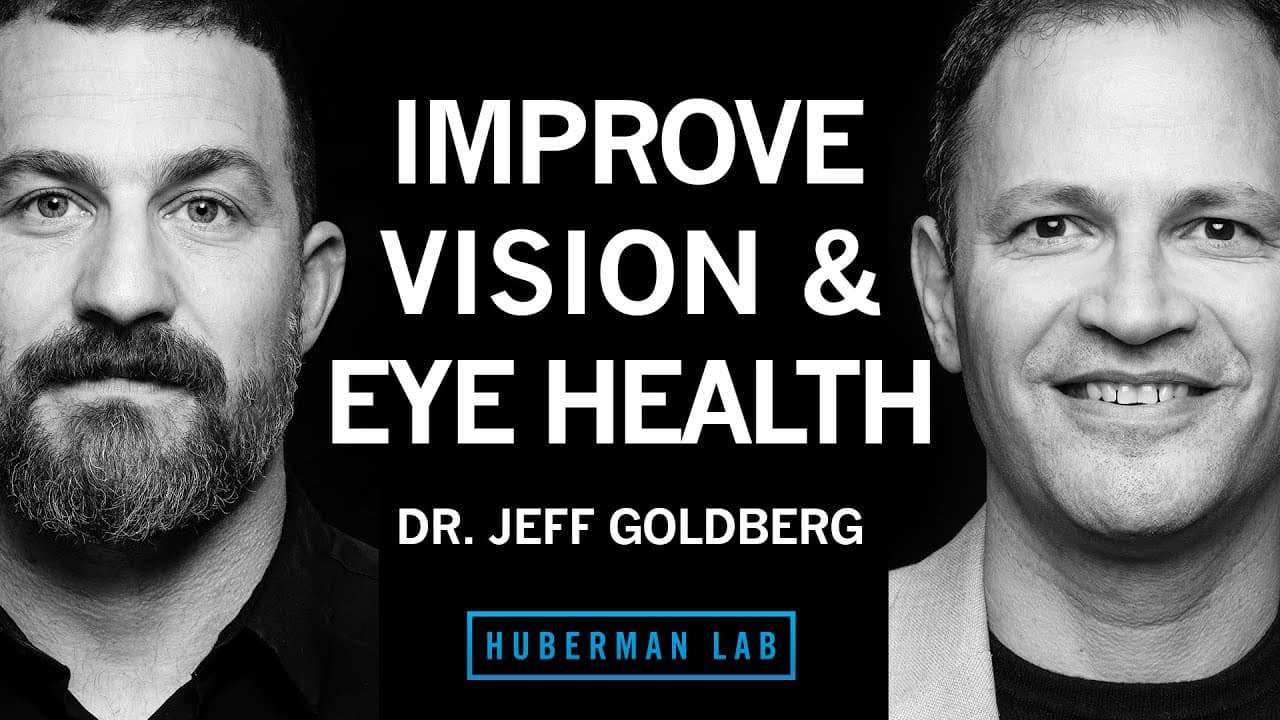
welcome to the huberman Lab podcast where we discuss science and science-based tools for everyday life I'm Andrew huberman and I'm a professor of neurobiology and Ophthalmology at Stanford School of Medicine today my guest is Dr Jeffrey Goldberg Dr Jeffrey Goldberg is the chair of the Department of Ophthalmology at Stanford University School of Med... Read More
Key Insights
- 😃 Eye safety and protection against eye trauma, especially during activities like metal grinding or gardening, are vital for maintaining eye health.
- 😃 Regular eye exams, including eye pressure checks, should be considered to detect potential eye diseases like glaucoma, even in the absence of symptoms.
- 😃 Good eye hygiene, such as eyelid and lash cleaning, helps prevent conditions like blepharitis.
- 😃 Rubbing the eyes occasionally does not pose significant harm, but excessive eye rubbing may indicate an underlying issue and should be evaluated by an eye care provider.
- 😒 The use of readers or glasses appropriate for near and distance vision can enhance visual comfort and should be utilized without hesitation.
- 🌃 Driving at night can be more challenging due to reduced contrast and visual fatigue, which may benefit from corrective lenses for night driving.
- ⌛ The progression of myopia can be influenced by both near work and outdoor lighting exposure, with spending time outdoors potentially slowing down its development. However, further research is needed to determine the precise dosage of outdoor time required.
- 😃 Optometrists and ophthalmologists both play crucial roles in eye care, with optometrists providing primary eye care and managing common eye conditions, while ophthalmologists can perform surgeries and manage more complex cases.
- 😃 Adults generally need routine eye exams if they experience symptoms, have a family history of eye diseases, or as they age.
- 🫠 Presbyopia, the natural age-related decline in near vision accommodation, often requires the use of reading glasses or corrective lenses for close-up activities.
Install to Summarize YouTube Videos and Get Transcripts
Explore YouTube Video Summarizer or Get YouTube Transcript Extractor
Questions & Answers
Q: How early should a child undergo an eye exam, and how regularly should eye exams be done?
Every newborn receives an initial eye exam to check for normal red reflexes. Throughout childhood, routine eye exams are not necessary unless the child shows signs of eye problems or risk factors for certain conditions. Screening exams for amblyopia, refractive errors, and strabismus are often done in school-aged children.
Q: Can eye misalignment in children be corrected if caught early?
Yes, early detection and treatment of eye misalignment in children are crucial. The brain relies on aligning the eyes properly to develop proper vision. If left untreated, misalignment can lead to amblyopia (lazy eye), which may result in permanent vision loss. Treatments include patching the stronger eye to encourage the weaker eye to become stronger and realigning the eyes with surgery, if necessary.
Q: How does near work and indoor lighting affect the development of myopia?
While prolonged near work and limited outdoor time have been associated with myopia development, recent studies suggest that outdoor lighting may play a more significant role. Spending time outdoors exposes the eyes to full-spectrum lighting, potentially slowing myopia progression. The optimal dosage of outdoor time for myopia prevention is still being studied.
Q: Is it harmful to use reading glasses or magnifiers to aid near vision?
While some studies suggest that relying on reading glasses may accelerate dependence on them, the psychological benefits of clear vision often outweigh any potential disadvantages. It is recommended to use the appropriate prescription or reading glasses to ensure optimal vision and reduce eye strain.
Key Insights:
- Eye safety and protection against eye trauma, especially during activities like metal grinding or gardening, are vital for maintaining eye health.
- Regular eye exams, including eye pressure checks, should be considered to detect potential eye diseases like glaucoma, even in the absence of symptoms.
- Good eye hygiene, such as eyelid and lash cleaning, helps prevent conditions like blepharitis.
- Rubbing the eyes occasionally does not pose significant harm, but excessive eye rubbing may indicate an underlying issue and should be evaluated by an eye care provider.
- The use of readers or glasses appropriate for near and distance vision can enhance visual comfort and should be utilized without hesitation.
- Driving at night can be more challenging due to reduced contrast and visual fatigue, which may benefit from corrective lenses for night driving.
- The progression of myopia can be influenced by both near work and outdoor lighting exposure, with spending time outdoors potentially slowing down its development. However, further research is needed to determine the precise dosage of outdoor time required.
- Optometrists and ophthalmologists both play crucial roles in eye care, with optometrists providing primary eye care and managing common eye conditions, while ophthalmologists can perform surgeries and manage more complex cases.
- Adults generally need routine eye exams if they experience symptoms, have a family history of eye diseases, or as they age.
- Presbyopia, the natural age-related decline in near vision accommodation, often requires the use of reading glasses or corrective lenses for close-up activities.
- The balance between eye muscle exercise and providing clear vision should be considered, and individuals should consult eye care providers for personalized recommendations.
Summary & Key Takeaways
-
The podcast episode features a conversation between a neurobiologist and an ophthalmologist, discussing a wide range of topics related to eye health and vision maintenance.
-
They cover the benefits and drawbacks of corrective lenses, including contact lenses and eyeglasses.
-
The experts discuss the importance of sunlight for maintaining and improving vision, as well as the risk of cataract development.
-
Various tools and exercises for improving vision are explored, including LASIK surgery and behavioral vision tasks.
-
The conversation also delves into topics such as dry eye, nutritional approaches for better vision, and the prevention and treatment of diseases like glaucoma and macular degeneration.
Read in Other Languages (beta)
Share This Summary 📚
Summarize YouTube Videos and Get Video Transcripts with 1-Click
Try YouTube Summary with ChatGPT & Claude or YouTube Transcript Generator
Explore More Summaries from Andrew Huberman 📚
Summarize YouTube Videos and Get Video Transcripts with 1-Click
Try YouTube Summary with ChatGPT & Claude or YouTube Transcript Generator