How Can Small YouTubers Stand Out and Grow?
TL;DR
YouTube is crowded, but creators can still grow by becoming recognizable, building a repeatable production system, and improving through sustained practice. Instead of copying established channels, develop consistent visual branding, commit a realistic number of hours each week, divide that time among specific creative skills, and evaluate progress after three to six months rather than expecting immediate results.
Transcript
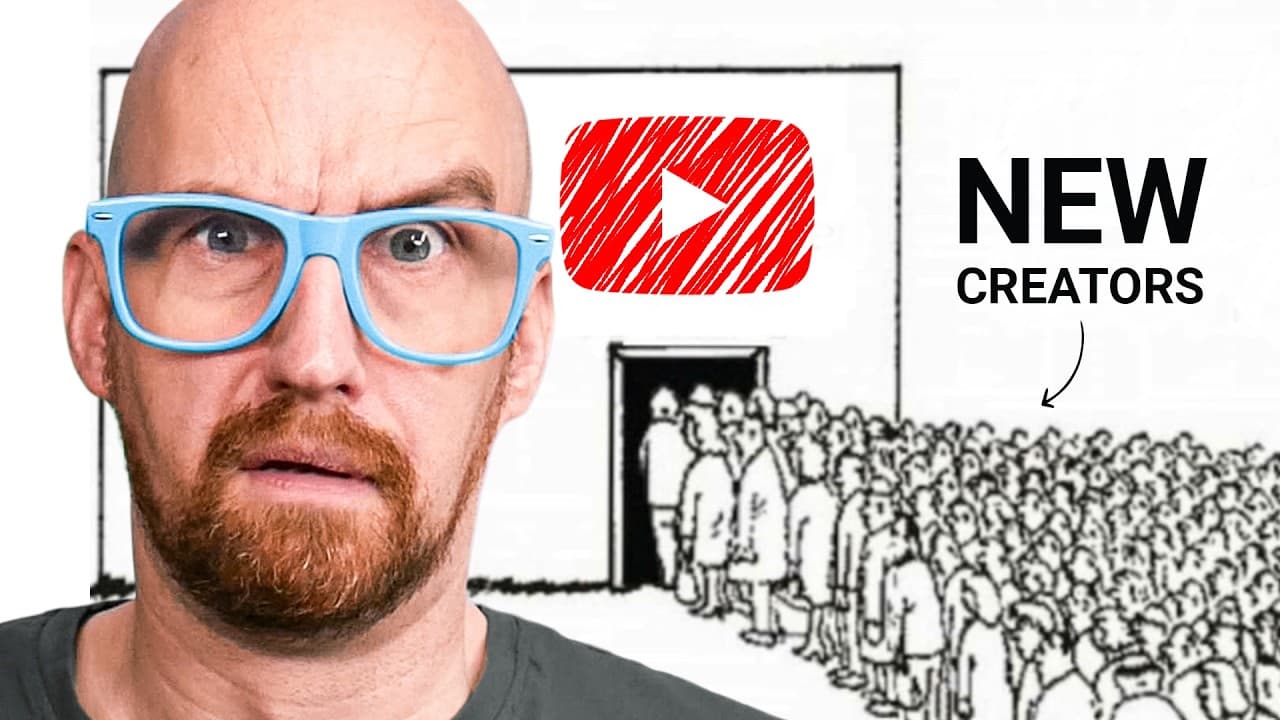
If you're grinding away for hours at a time on each video and yet your views still look like this, you're probably starting to wonder to yourself, is YouTube finally saturated? Let's find out, shall we? With thousands of new channels popping up every day and creators like Mr. beast dropping more money on a single video than we'll ever see in a life... Read More
Key Insights
- YouTube is highly competitive, with over 20 million videos reportedly uploaded every day in 2025. Established creators and once-small niches also face increasing pressure, so simply producing a technically competent video no longer guarantees that viewers will discover or choose it.
- YouTube is not presented as dead because audience demand is also growing. The platform reportedly reached 12% of all TV streaming watch time, while viewers are watching for longer, which means increased competition exists alongside a large opportunity for creators who differentiate themselves.
- The central growth question is whether a channel does enough to stand out, not whether YouTube has become saturated. A crowded platform rewards recognizable creators because viewers already have abundant alternatives and tend to remain with channels they know and trust.
- Direct copying is dangerous because generic channels offer no compelling reason to replace familiar alternatives. Taking inspiration and adapting it can be valuable, but repeating the same formats, subjects, and presentation as numerous competitors makes a small channel easier to overlook.
- A unique brand is a practical method for becoming recognizable and difficult to replace. Callaway is presented as an example, gaining over 150,000 subscribers in six months while competing in content marketing through distinctive visual presentation and consistent channel packaging.
- Consistent thumbnail design builds familiarity across repeated viewer encounters. Callaway uses black, white, and a bright accent color, maintains the same font, and shows his face in every thumbnail, creating a recognizable presentation that helps previous viewers identify his work.
- A sustainable YouTube routine should resemble a realistic part-time job. Creators should commit only the weekly time they can maintain, then allocate that time among idea generation, research, scripting, filming, editing, and thumbnail creation instead of waiting for inspiration.
- YouTube success usually involves delayed gratification because early videos may lack quality and improved videos may still take time to gain traction. The recommended approach is to follow a consistent schedule for three to six months before deciding whether the effort is producing meaningful progress.
Install to Summarize YouTube Videos and Get Transcripts
Explore YouTube Video Summarizer or Get YouTube Transcript Extractor
Questions & Answers
Q: Is YouTube too saturated for small creators?
YouTube is crowded, but the source argues that it is not too saturated for small creators to grow. More than 20 million videos were reportedly uploaded every day in 2025, yet YouTube also captured 12% of all TV streaming watch time. The opportunity remains substantial, but creators must give viewers a clear reason to choose their channels over familiar alternatives.
Q: How can a small YouTube channel stand out?
A small channel can stand out by developing a recognizable brand rather than directly copying successful competitors. The recommended elements include consistent colors, one recurring font, clean thumbnail design, and recognizable visual features such as the creator's face. These choices help viewers identify the channel quickly and make its presentation feel distinct within a crowded niche.
Q: Why does copying successful YouTube channels hurt growth?
Copying successful channels too closely makes a new creator appear interchangeable with existing options. Viewers are described as creatures of habit, so they are likely to stay with creators they already know when a new channel offers the same subjects, formats, and presentation. Inspiration is useful, but it should be transformed into something that reflects the creator's own brand.
Q: What makes YouTube thumbnail branding consistent?
Consistent thumbnail branding uses a limited visual system across multiple uploads. The example in the source relies mainly on black, white, and a bright accent color, usually blue, while keeping the same font and showing the creator's face in every thumbnail. Repetition creates familiarity, allowing previous viewers to recognize the channel when YouTube recommends another video.
Q: How much time should a creator spend on YouTube each week?
A creator should commit only the amount of weekly time that can be maintained honestly and consistently. The source contrasts a sustainable five hours every week with spending 20 hours during a short burst and then doing nothing for months. Available time should be divided among individual tasks such as research, scripting, filming, editing, and thumbnail creation.
Q: How can creators build a repeatable YouTube workflow?
Creators can build a repeatable workflow by establishing scheduled routines for each part of production instead of working only when inspiration appears. They can add sessions to a calendar, set notifications, or connect channel work to a recurring daily event. A checklist, friend, partner, family member, or coach can provide accountability and help sustain progress.
Q: How long should a YouTube strategy be tested?
A YouTube schedule should generally be followed for three to six months before its success is judged. Results are usually delayed because creators first need time to improve their video-making skills, and better videos may still take time to gain traction. At one video per week, that testing period produces roughly 12 to 25 videos for evaluation.
Q: Why should creators treat YouTube like a part-time job?
Treating YouTube like a part-time job encourages deliberate practice, realistic scheduling, and repeatable production habits. Hobby-style participation often depends on spare time or temporary inspiration, which makes output inconsistent. A job-like approach assigns regular hours to specific creative skills, establishes accountability, and supports the sustained effort required while results remain delayed.
Summary & Key Takeaways
-
YouTube has intense competition, with more than 20 million videos reportedly uploaded every day in 2025 and established creators also experiencing lower view counts. However, the platform captured 12% of all TV streaming watch time, indicating that growing competition is accompanied by substantial viewer demand and longer viewing activity.
-
Small channels often disappear into crowded niches because they copy successful creators too closely. Inspiration can be useful, but generic execution gives viewers no reason to leave familiar channels. A distinctive brand, including recognizable colors, consistent fonts, clean thumbnails, and recurring visual elements, can make a creator feel familiar and irreplaceable.
-
Sustainable growth requires treating a channel like a part-time job with realistic weekly commitments, defined production tasks, and accountability. Consistently working five hours each week is better than completing 20 hours in a brief burst and then stopping. Creators should follow their system for three to six months before judging its effectiveness.
Read in Other Languages (beta)
Share This Summary 📚
Summarize YouTube Videos and Get Video Transcripts with 1-Click
Try YouTube Summary with ChatGPT & Claude or YouTube Transcript Generator
Explore More Summaries from vidIQ 📚
Summarize YouTube Videos and Get Video Transcripts with 1-Click
Try YouTube Summary with ChatGPT & Claude or YouTube Transcript Generator