Is the HUME Band Accurate and Worth Buying?
TL;DR
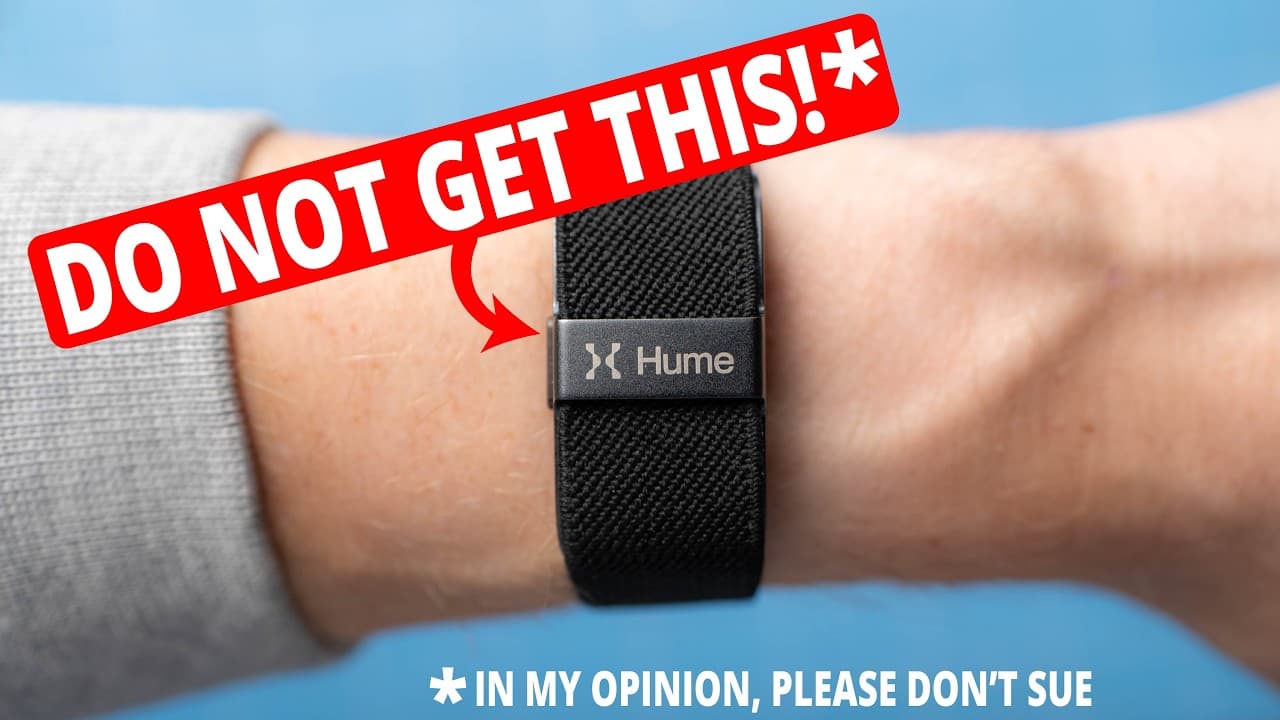
The HUME Band is not recommended because its sleep-stage tracking performed poorly, its data could not be properly exported, and the reviewer found serious credibility concerns in its marketing. Despite costing $249 to $250, the hardware appeared nearly identical to a much cheaper AliExpress band, while its deep, light, and REM sleep agreement with the reference device was only about 40% to 50%.
Transcript
This is the worst wearable I've ever tested. And that's not because the measurements it takes aren't reliable. Though, as you will see, these also aren't that great. And yes, in this video, I will show you the actual test results of the Yumb Band. The reason I think the Yume band is the worst wearable I've ever tested is because Yume sells its hard... Read More
Key Insights
- The HUME Band is not recommended by the reviewer because its weak sleep tracking, premium price, inaccessible data, and questionable marketing collectively outweigh any potential value offered by its app or algorithms.
- The HUME Band costs approximately $249 to $250, while the reviewer found what appeared to be essentially identical hardware on AliExpress for a fraction of that price and suspected the product was dropshipped with a custom app.
- The company's scientific credibility is questioned because its website allegedly used stock-image models as scientists, assigned two different stock photos to the same John Cardiff PhD identity, and attributed a seemingly nonexistent book called The Longevity Blueprint to him.
- The sleep-stage test used a Zmax EEG headband as the reference device, which the reviewer described as a silver-standard reference designed for sleep staging and used in several scientific studies.
- Deep-sleep agreement was about 50%, while roughly 40% of reference-detected deep sleep was classified as light sleep by the HUME Band, indicating substantial confusion between sleep stages.
- Light-sleep and REM-sleep agreement were each about 40%, with light sleep frequently labeled as deep sleep, REM sleep, or awake time, and much of the reference REM sleep confused with light sleep.
- The recorded sleep patterns appeared unrealistic because similar deep, light, and REM cycles seemed repeatedly copied, even though REM sleep would normally increase and deep sleep decrease across the night, according to the reviewer.
- Data access is severely limited because the app has no detailed export function, forcing manual conversion from screenshots. After the reviewer requested his information, the company reportedly told him to capture screenshots instead of supplying a proper copy.
Install to Summarize YouTube Videos and Get Transcripts
Explore YouTube Video Summarizer or Get YouTube Transcript Extractor
Questions & Answers
Q: Is the HUME Band worth buying for sleep tracking?
The HUME Band is not worth buying for sleep tracking based on the reviewer's initial test. Across three usable nights, it achieved only about 50% agreement for deep sleep and around 40% for light and REM sleep against a Zmax EEG reference. Its patterns also appeared unrealistic, detailed data could not be exported, and the device costs approximately $249 to $250.
Q: How accurate is the HUME Band at tracking sleep stages?
The HUME Band showed poor sleep-stage accuracy in the reviewer's comparison. About 50% of deep sleep identified by the reference was also labeled deep sleep by the band. Agreement for light sleep and REM sleep was only around 40%. The band frequently confused deep sleep with light sleep and mixed light or REM sleep with several other stages.
Q: How was the HUME Band sleep tracking tested?
The reviewer compared the HUME Band with a Zmax EEG headband, a device specifically designed for sleep-stage tracking and used in several scientific studies. He obtained three nights with usable data from both devices. Because the HUME app offered no export function, he manually converted the band's sleep-stage records from screenshots before calculating agreement and comparative metrics.
Q: Why does the HUME Band's sleep graph look unrealistic?
The reviewer's example graph showed several highly similar cycles progressing from deep sleep to light sleep and then REM sleep. He described them as resembling repeated copy-and-paste patterns with only possible movement-based adjustments. The cycles did not show the expected progression he discussed, where REM sleep increases and deep sleep decreases as the night advances.
Q: Can users export detailed data from the HUME Band?
The reviewer could not find a way to export detailed HUME Band data. He had to reconstruct sleep stages manually from screenshots of the app, which limited his analysis to three nights. When he requested a copy of his detailed data, the company reportedly replied that he should take screenshots, a response he said did not satisfy how data access should work.
Q: Why does the reviewer question HUME's scientific claims?
The reviewer found evidence suggesting that people presented as scientists on HUME's website were stock-image models. He also found the same John Cardiff PhD identity associated with two different pictures from the same stock-image website. HUME allegedly claimed that Cardiff wrote The Longevity Blueprint, but the reviewer could not find evidence that the book existed.
Q: How does the HUME Band compare with other sleep trackers?
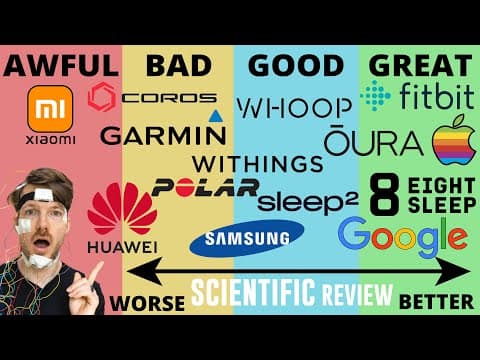
The HUME Band ranked near the bottom of the reviewer's comparison chart and was the worst device he had tested since 2025 by average sensitivity. It also ranked worst among his tested devices for two additional sleep-science metrics, weighted average sensitivity and Cohen's kappa. His stronger performers included Apple Watch, Pixel watches, Oura Ring, Whoop Strap, and Eight Sleep Pod.
Q: Why does the reviewer suspect the HUME Band is overpriced?
The reviewer paid for the HUME Band himself and noted that it sells for approximately $249 to $250. He found hardware on AliExpress that appeared essentially identical and was offered for a fraction of that price, with shipping from more or less the same location. He therefore suspected that HUME was selling inexpensive hardware at a premium with a customized app.
Summary & Key Takeaways
-
The reviewer considers the HUME Band the worst wearable he has tested, based on both performance and business-practice concerns. The device costs about $249 to $250, yet its hardware appears nearly identical to a cheaper AliExpress product. The company also allegedly presented stock-image models as scientists and promoted a seemingly nonexistent book.
-
Sleep tracking was compared with a Zmax EEG headband across three usable nights. Agreement was about 50% for deep sleep and roughly 40% for both light and REM sleep. The band frequently confused stages, produced unrealistic patterns, and ranked at or near the bottom across several comparative sleep-tracking metrics.
-
Accessing detailed data was another major problem. The app offered no export function, forcing the reviewer to reconstruct sleep stages manually from screenshots. When he requested his data, the company reportedly suggested taking screenshots. Based on performance, transparency, marketing, and price, the reviewer advises consumers and influencers against the product.
Read in Other Languages (beta)
Share This Summary 📚
Summarize YouTube Videos and Get Video Transcripts with 1-Click
Try YouTube Summary with ChatGPT & Claude or YouTube Transcript Generator
Explore More Summaries from The Quantified Scientist 📚

Summarize YouTube Videos and Get Video Transcripts with 1-Click
Try YouTube Summary with ChatGPT & Claude or YouTube Transcript Generator