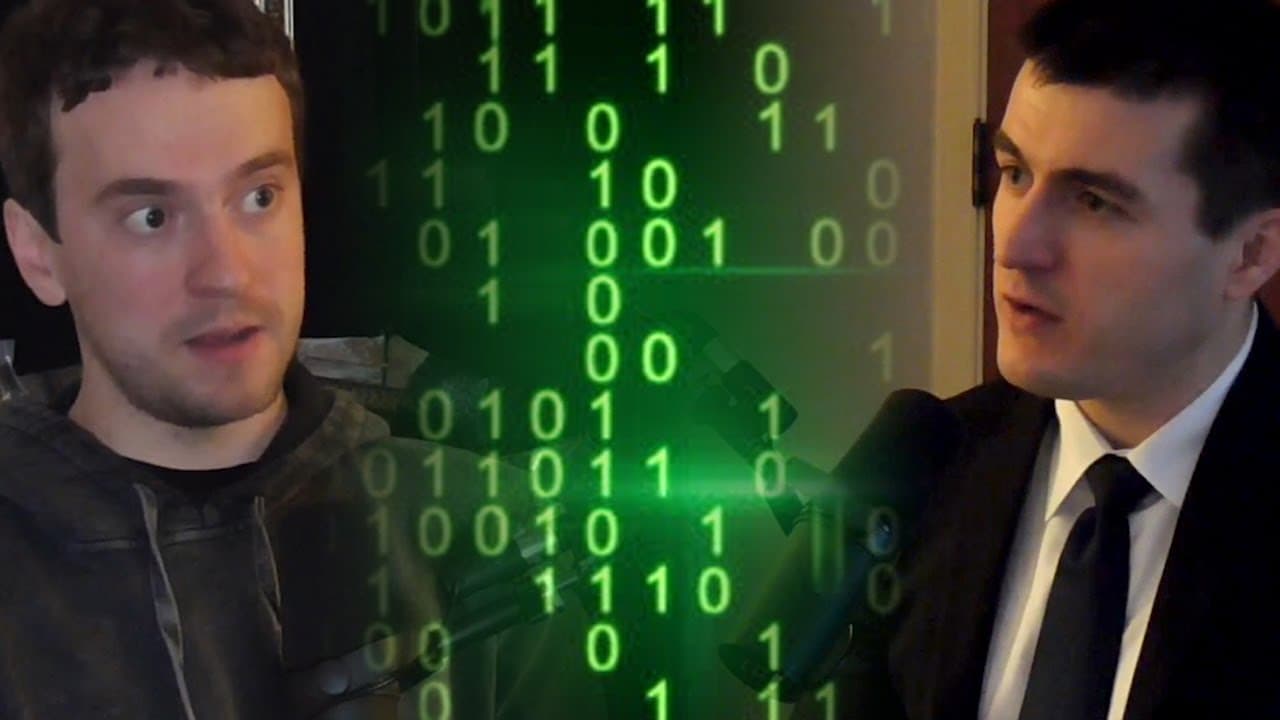
Are We Living in a Simulation? with George Hotz and Lex Fridman | AI Podcast Clips
TL;DR
Yes, we might be living in a simulation designed to be unfalsifiable, meaning it's difficult or impossible to prove its existence. Since it's a closed system, any attempts to verify or exploit it could be futile, prompting discussions about how our understanding of reality might shape future narratives.
Transcript
do you think we're living in a simulation yes but it may be unfalsifiable what do you mean by unfalsifiable so if the simulation is designed in such a way that they did like a formal proof to show that no information can get in and out and if their hardware is designed to for the anything in the simulation to always keep the hardware in spec it may... Read More
Key Insights
- 👍 We may be living in a simulation, but its nature makes it impossible to prove or exploit.
- 💨 Simulations could be designed in a way that guarantees correctness, similar to dependently typed languages.
- 📏 The complexity and size of the universe suggest that the simulation may have simple fundamental rules.
- 🤔 Restructuring the way we think about the simulation can lead to new narratives and ideas for exploration.
- 🔇 Moving towards virtual reality could offer enhanced living experiences, but it is not a primary focus for the speaker.
- 🎙️ More videos with George Hotz:
Install to Summarize YouTube Videos and Get Transcripts
Explore YouTube Video Summarizer or Get YouTube Transcript Extractor
Questions & Answers
Q: What is the concept of an unfalsifiable simulation, and why is it impossible to prove whether we are in one or not?
An unfalsifiable simulation is one where no information can get in or out, making it impossible to provide any evidence for or against its existence. If the simulation is designed as a closed system, it becomes challenging to prove or disprove its existence.
Q: Can a simulation be designed using a language like dependently typed, where correctness is guaranteed?
Yes, if the simulation is written in a language like dependently typed, where code that compiles is correct by definition, it is possible to create a simulation with guaranteed correctness.
Q: Is it possible for a simulation to have a scheduled end date, and what implications does this have?
Yes, a simulation with a scheduled end date is possible. This implies that the simulation has a predetermined duration, and its rules and processes may be simpler than the complexity observed in the universe.
Q: In what ways can the concept of hacking a simulation be approached?
The speaker's talk on escaping the simulation was not focused on practical methods of hacking, but rather on restructuring our narrative and thinking about exploring possibilities outside of the simulation. It encourages a shift in thinking and considering breakthrough ideas.
Key Insights:
- We may be living in a simulation, but its nature makes it impossible to prove or exploit.
- Simulations could be designed in a way that guarantees correctness, similar to dependently typed languages.
- The complexity and size of the universe suggest that the simulation may have simple fundamental rules.
- Restructuring the way we think about the simulation can lead to new narratives and ideas for exploration.
- Moving towards virtual reality could offer enhanced living experiences, but it is not a primary focus for the speaker.
- The speaker emphasizes gratitude for the positive aspects of life rather than comparing oneself to others in a zero-sum manner.
Summary
In this video, the speaker discusses the idea of living in a simulation and the possibility of it being unfalsifiable. They explore the concept of simulations being designed as closed systems, with no information able to enter or exit, making it impossible to prove whether we are in a simulation. The speaker also talks about the potential for simulations to be written in a language where code correctness is guaranteed, and the complexity of the universe computer. They then shift the discussion towards hacking a simulation and the implications of escaping it. The speaker suggests that changing the rhetoric around simulations and exploring ways to escape them could lead to breakthrough ideas and a new narrative for mankind. They touch on ideas of exploration in space and virtual reality, expressing an interest in physically moving to a virtual reality world.
Questions & Answers
Q: What do you mean by unfalsifiable when it comes to living in a simulation?
If a simulation is designed to be a closed system where no information can enter or exit, and the hardware is maintained in a way that keeps it within specifications, it becomes impossible to prove whether we are in a simulation or not.
Q: Could there be different types of simulations?
It is possible that there are three potential worlds we could be in - a simulation that can be exploited, a simulation that cannot be exploited, and a simulation that cannot be detected (similar to well-designed virtual machines).
Q: Can all complicated systems have ways in and out?
While it is often true that complicated systems have vulnerabilities, it is not necessarily the case for all systems. The speaker mentions their own experience in hacking and learning about independently typed languages that guarantee correctness through type-checking, suggesting that simulations could be designed in a similar way.
Q: Could a simulation have a scheduled end date?
Yes, if a simulation has an end date determined by factors such as entropy, it does not necessarily have to be Turing complete. Complexity and correctness proofs may not be necessary for a simulation that is bound to end.
Q: How simple or complex could the universe computer be?
While the universe may be incredibly large, the fundamental rules governing it could be relatively simple. The speaker suggests that the complexity lies in the size and scale of the universe, not necessarily in the intricacy of its underlying rules.
Q: What was the speaker's talk about escaping a simulation?
The talk was not about the practical aspects of actually escaping a simulation, but rather focused on restructuring the narrative of "us-versus-them" in relation to technology. The speaker believes that if the rhetoric shifts towards thinking about being in a simulation and how to escape it, it could lead to positive changes.
Q: How can thinking in terms of being in a simulation inspire breakthrough ideas?
By considering the possibility of being in a simulation, people may start thinking more creatively and critically about their current situation. This could inspire new ideas and solutions for problems, leading to progress and growth as a species.
Q: What are some alternatives to the space exploration narrative?
The speaker suggests the need for new postmodern narratives that can replace the traditional space exploration narrative. They express hopes for alternative narratives that can capture the imagination and drive progress in the modern world.
Q: What are the speaker's thoughts on virtual reality?
The speaker mentions being fascinated by virtual reality and states a desire to physically move to a virtual reality world. They compare the quality of virtual apartments to real-world apartments, expressing a preference for the virtual world.
Q: Do you have fundamental gratitude towards the virtual world?
Yes, the speaker expresses gratitude towards the virtual world and believes that the benefits and conveniences it offers, such as a touch-activated dishwasher, can be appreciated regardless of whether others have access to the same amenities.
Takeaways
The video explores the idea of living in a simulation and the challenges of proving or disproving its existence. It highlights the potential simplicity of the underlying rules governing a simulation and discusses the concept of hacking and escaping simulations. The speaker emphasizes the need for a shift in rhetoric to foster new narratives and ideas. Additionally, they express an interest in virtual reality and the possibilities it offers. Overall, the video prompts us to question our reality and consider alternative perspectives that could lead to transformative breakthroughs.
Summary & Key Takeaways
-
The speaker believes we are living in a simulation that is designed to be unfalsifiable, making it impossible to prove whether we are in a simulation or not.
-
The simulation may be running in a well-designed virtual machine, making it undetectable and explorable, similar to virtual machines in computing.
-
The possibility of hacking the simulation is discussed, with the emphasis on thinking about restructuring our narrative and exploring avenues for escape.
Read in Other Languages (beta)
Share This Summary 📚
Summarize YouTube Videos and Get Video Transcripts with 1-Click
Try YouTube Summary with ChatGPT & Claude or YouTube Transcript Generator
Explore More Summaries from Lex Fridman 📚

Summarize YouTube Videos and Get Video Transcripts with 1-Click
Try YouTube Summary with ChatGPT & Claude or YouTube Transcript Generator