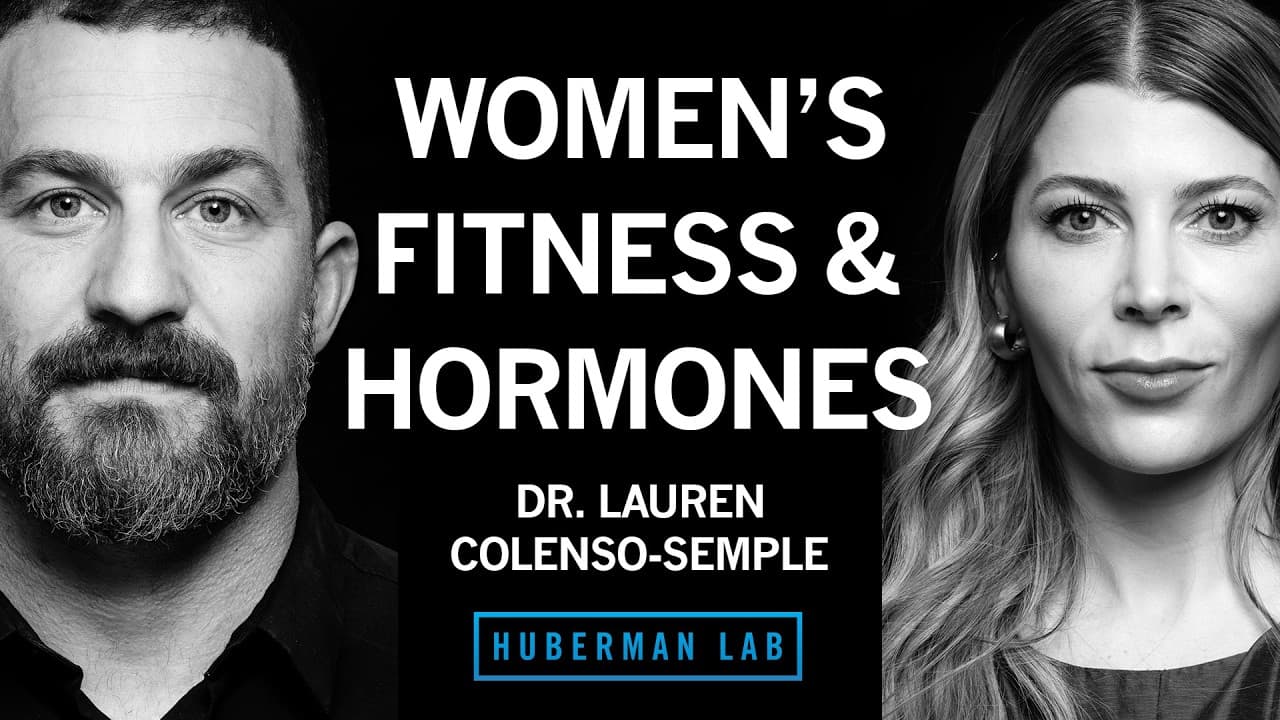
How to Optimize Fitness Training for Women
TL;DR
Women can follow similar exercise protocols as men, focusing on resistance training to build muscle and strength. Hormonal differences do not necessitate distinct training programs. It's important to train progressively and consistently, regardless of menstrual cycle phases. Nutrition and fitness goals should guide training decisions, with a focus on overall health and longevity.
Transcript
As a woman, if I honestly thought there were things we should do differently to optimize our results, of course, I would be doing them myself and telling other women to do them, too. The narrative that women need a sexspecific program or nutrient timing guidance or a particular intensity of exercise or rep range or all of it. It makes women feel li... Read More
Key Insights
- Men and women respond similarly to exercise, and both can follow similar training protocols.
- Hormonal fluctuations in women do not require major changes in exercise routines.
- Resistance training is essential for women to build muscle and strength, supporting overall health.
- Women should focus on progressive overload in their training to see continuous improvement.
- Cardiovascular exercise can be incorporated based on personal goals and preferences.
- The menstrual cycle should not dictate exercise routines; listen to your body and adjust as needed.
- Nutrition plays a crucial role in achieving fitness goals, with protein intake supporting muscle growth.
- Creatine supplementation can be beneficial for women engaging in regular resistance training.
Install to Summarize YouTube Videos and Get Transcripts
Explore YouTube Video Summarizer or Get YouTube Transcript Extractor
Questions & Answers
Q: How should women structure their resistance training?
Women should focus on full-body workouts 2-3 times a week, targeting all major muscle groups. Each session should include 2-4 sets per muscle group, with reps ranging from 6-12. Progressive overload is key, so gradually increase weights or reps over time. Rest intervals should be around 2 minutes between sets.
Q: Do women need to change their training during their menstrual cycle?
No, women do not need to change their training based on menstrual cycle phases. Hormonal fluctuations do not significantly impact exercise performance or adaptations. Women should focus on how they feel and adjust workouts if experiencing symptoms, but consistency is more important than cycle phase.
Q: What role does nutrition play in women's fitness?
Nutrition is crucial for achieving fitness goals. Adequate protein intake supports muscle growth and recovery. Women should focus on overall daily protein intake rather than timing. Carbohydrates can provide energy for workouts, but the composition of pre-workout meals is not critical for most resistance training sessions.
Q: Is creatine beneficial for women who exercise?
Yes, creatine can be beneficial for women engaging in regular resistance training. It can enhance performance by allowing for extra reps or reduced sprint times. The recommended dose is 5 grams per day. Creatine is safe and well-studied, with no significant side effects for healthy individuals.
Q: How should women incorporate cardiovascular exercise?
Cardiovascular exercise should be based on personal fitness goals and preferences. It can be done on rest days or after resistance training sessions. High-intensity interval training (HIIT) is time-efficient and can improve cardiovascular fitness. The interference effect is minimal unless performing high volumes of both endurance and strength training.
Q: What are the benefits of resistance training for women?
Resistance training helps women build muscle, increase strength, and improve overall health. It supports bone density, reduces fall risk, and helps maintain a healthy body composition. It also provides a sense of empowerment through progression and visible results, counteracting age-related muscle loss.
Q: Should women train fasted or fed?
Training fasted or fed should be based on personal preference. There is no significant difference in fat loss or muscle gain between fasted and fed training. Some women may feel more energetic training fed, while others prefer fasted sessions. The key is consistency and choosing what feels best.
Q: How do hormonal contraceptives affect women's exercise adaptations?
Hormonal contraceptives, particularly combined oral contraceptive pills, do not significantly affect strength, hypertrophy, or power adaptations from exercise. While individual experiences may vary, the overall impact on exercise performance and muscle growth is minimal, allowing women to train effectively while using contraceptives.
Summary & Key Takeaways
-
Women can effectively use resistance training to build muscle and strength, similar to men. Hormonal differences do not necessitate distinct training programs, as both genders respond similarly to exercise. Consistency and progressive overload are key to achieving fitness goals.
-
Cardiovascular exercise can complement resistance training, but should be tailored to personal fitness goals and preferences. There is no need to adjust training based on menstrual cycle phases, but women should listen to their bodies and adjust as needed.
-
Nutrition is crucial, with protein intake supporting muscle growth. Supplements like creatine can be beneficial for women engaging in regular resistance training, enhancing performance and muscle development.
Read in Other Languages (beta)
Share This Summary 📚
Summarize YouTube Videos and Get Video Transcripts with 1-Click
Try YouTube Summary with ChatGPT & Claude or YouTube Transcript Generator
Explore More Summaries from Andrew Huberman 📚



Summarize YouTube Videos and Get Video Transcripts with 1-Click
Try YouTube Summary with ChatGPT & Claude or YouTube Transcript Generator