Should Startups Prioritize Growth or Profitability?
TL;DR
Startups should prioritize growth as it is the key indicator of product-market fit and differentiates them from small businesses. Profitability must be supported by a clear, realistic narrative that explains how it will improve at scale, rather than relying on the assumption that growth will automatically fix margins.
Transcript
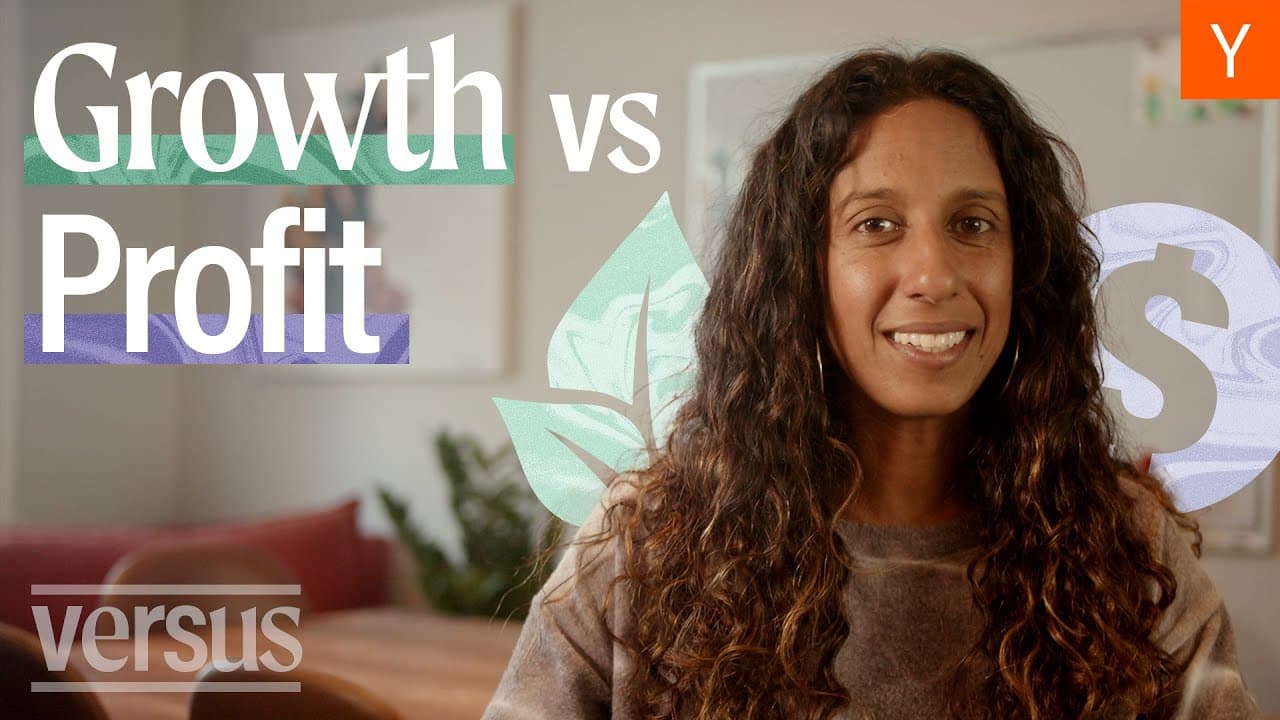
hey everyone i'm divya and i'm a visiting partner here at yc i'm a two-time yc founder so i've done two startups been through yc twice over the last 16 years and today i'm here to talk a little bit about growth versus profitability startup is all about growth feeling really good about the nature the profitability for this company let's compare the ... Read More
Key Insights
- 📈 Growth is the signal of product-market fit and differentiates a startup from a small business. It shows that you've created something valuable that people are willing to pay for.
- 💰 Profitability needs to be plausible at any stage of your company. Don't rely on scale alone to fix margins, but rather demonstrate a compelling story of how your business will be profitable at scale.
- 📊 De-risking your profitability story is important, especially as you approach an IPO. Continually update your model, ask hard questions, and factor in real-world scenarios and edge cases to ensure sound assumptions.
- 💡 Seek feedback from experienced individuals who can poke holes in your profitability plan and point out potential pitfalls. Don't have a blindly optimistic view, but rather address challenges and build them into your story.
- 🔁 Continuously invest in growth and prioritize it over profitability, particularly in the early stages of your company.
- 💪 Build a track record for growth by consistently increasing your user base and revenue. Growth is what differentiates a startup and allows for reinvestment in innovation.
- 💪 Demonstrate growth through concrete numbers. Showing tangible growth is more convincing than any other factor in proving product-market fit.
- 💼 As a founder, it is important to balance growth and profitability. While growth is crucial, it should not come at the expense of sustainable profitability in the long run.
Install to Summarize YouTube Videos and Get Transcripts
Explore YouTube Video Summarizer or Get YouTube Transcript Extractor
Questions & Answers
Q: Should a startup focus on growth or profitability?
Growth should receive most of the startup’s resources because it demonstrates product-market fit and shows that people want and will pay for the product. Profitability still needs to be plausible, supported by a clear explanation of how margins will improve over time.
Q: Why is growth the true signal of product-market fit?
Growth means a startup has created something that many people want and are willing to pay for. Other indicators may suggest product-market fit, but the speaker says nothing can substitute for growth shown in the company’s numbers.
Q: How does growth distinguish a startup from a small business?
A small business may serve a few happy customers, earn margins, and continue operating steadily. A startup consistently grows its user base and revenue while reinvesting profits into innovation and keeping its expanding user base happy.
Q: What growth evidence should a startup demonstrate?
A startup should show growth directly in its numbers and build a consistent track record of increasing users and revenue. The speaker emphasizes that no proxy is as convincing as tangible growth itself.
Q: What does plausible profitability mean for a startup?
Plausible profitability means presenting a compelling and specific story about how the business will become profitable at scale. Founders should demonstrate how margins will work rather than claiming that greater scale will automatically fix them.
Q: How can a seed-stage startup support its profitability story?
At the seed stage, founders can use back-of-the-envelope math, real-world scenarios, or a couple of simulations. They may also demonstrate profitability in one market or within a subset of the user base, then explain how that result can scale.
Q: When does the burden of proving profitability increase?
The burden of proof rises as the company grows. De-risking the profitability story becomes increasingly important as the startup approaches an IPO.
Q: How should founders strengthen their profitability model?
Founders should ask hard questions, seek feedback from someone experienced with a similar business, and investigate what could go wrong. They should continually update the model, test its assumptions, account for messy real-world edge cases, and show margin growth over time.
Summary & Key Takeaways
-
Growth is the ultimate indicator of product-market fit and sets startups apart from small businesses.
-
Profitability needs a plausible and well-defined narrative of how the business will be profitable at scale, rather than relying on assumptions of growth to fix margins.
-
De-risking the story about profitability becomes more crucial as a company approaches an IPO.
Read in Other Languages (beta)
Share This Summary 📚
Summarize YouTube Videos and Get Video Transcripts with 1-Click
Try YouTube Summary with ChatGPT & Claude or YouTube Transcript Generator
Explore More Summaries from Y Combinator 📚






Summarize YouTube Videos and Get Video Transcripts with 1-Click
Try YouTube Summary with ChatGPT & Claude or YouTube Transcript Generator