What Are Brain-Computer Interfaces and Their Future?
TL;DR
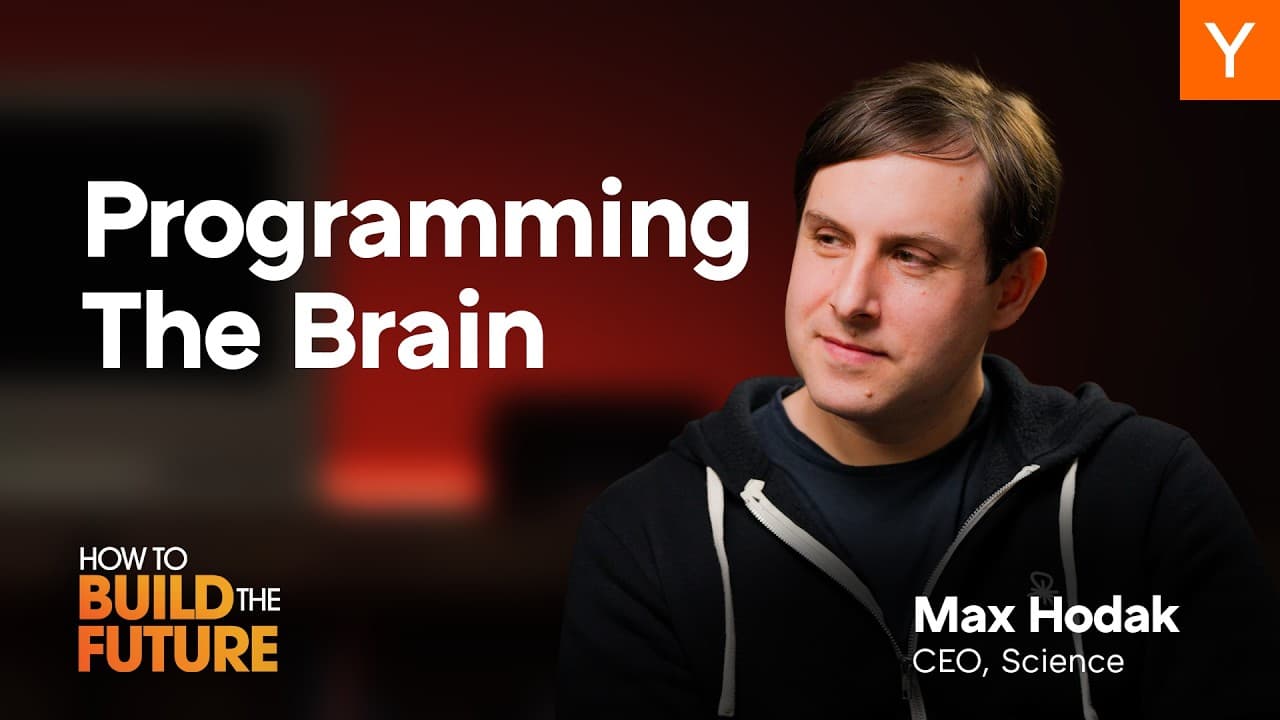
Brain-computer interfaces (BCIs) are poised to revolutionize healthcare by restoring lost functions such as vision and hearing, and potentially enhancing human capabilities. Max Hodak discusses the development of BCIs, including a retinal prosthesis that enables blind individuals to see, and the broader implications for medicine and human-machine integration.
Transcript
I think it is very possible that the first people to live to a thousand are alive right now. It still takes some suspension of disbelief because I think biotech has just been so incremental. One of the things that's so exciting about what's happening now is that no longer really feels so incremental to me. I think that BCI we're going to come to se... Read More
Key Insights
- BCIs are not a single product but a category like pharmaceuticals, with various applications and types of probes.
- Science's retinal prosthesis can restore vision by bypassing damaged rods and cones, using a small implanted chip.
- Neuroplasticity allows the brain to adapt to new inputs, making BCIs effective even in adults.
- Current BCIs primarily restore lost functions, but future developments may enhance human capabilities beyond natural limits.
- Biohybrid BCIs involve living neurons to form connections with the brain, potentially offering ultra-high bandwidth communication.
- The brain processes information through a small number of cranial and spinal nerves, which can be considered its API.
- AI advancements are informing neuroscience, revealing similarities in how both systems process information.
- Future BCIs may integrate with AI to create conscious machines or enhance human cognition and longevity.
Install to Summarize YouTube Videos and Get Transcripts
Explore YouTube Video Summarizer or Get YouTube Transcript Extractor
Questions & Answers
Q: How do brain-computer interfaces restore vision?
Brain-computer interfaces (BCIs) restore vision by bypassing damaged retinal cells with a small implanted chip. This chip, placed under the retina, works with glasses equipped with a camera and laser projector. The glasses capture images and project them onto the chip, which stimulates the retinal cells, allowing the brain to perceive visual signals. This method circumvents the need for functional rods and cones, enabling vision restoration in individuals who have lost these cells.
Q: What is the role of neuroplasticity in BCIs?
Neuroplasticity plays a crucial role in brain-computer interfaces (BCIs) by enabling the brain to adapt to new inputs and learn to process them effectively. Even in adulthood, the brain remains plastic, allowing it to form new connections and integrate signals from BCIs. This adaptability is essential for BCIs to restore lost functions, such as vision or motor control, as the brain can adjust to and interpret the artificial stimuli provided by these interfaces.
Q: Why are BCIs considered similar to pharmaceuticals?
Brain-computer interfaces (BCIs) are considered similar to pharmaceuticals because they represent a broad category of solutions, each designed for specific applications and conditions. Like drugs, BCIs are not a one-size-fits-all product; instead, they encompass various types of probes and technologies tailored to address different medical needs. This diversity allows BCIs to target specific neural pathways or functions, much like how different drugs are developed for distinct diseases or symptoms.
Q: How do biohybrid BCIs differ from traditional BCIs?
Biohybrid BCIs differ from traditional BCIs by incorporating living neurons into the interface, allowing for biological connections with the brain. This approach aims to create ultra-high bandwidth communication between the brain and external devices, potentially enabling more complex interactions and enhancements. Unlike traditional BCIs, which rely on electrodes or other non-biological components, biohybrid BCIs use engineered neurons to form natural connections, offering a more integrated and potentially more effective interface.
Q: What insights from AI are informing neuroscience?
Insights from artificial intelligence (AI) are informing neuroscience by revealing similarities in how both systems process information. AI models, particularly those used in image and language processing, exhibit neural representations that resemble those in the human brain. This convergence suggests that AI can provide valuable models for understanding brain functions, helping neuroscientists decode complex neural processes and develop more effective brain-computer interfaces (BCIs).
Q: How might BCIs and AI merge to enhance human capabilities?
BCIs and AI might merge to enhance human capabilities by integrating AI's computational power with the brain's processing abilities. This synergy could lead to advanced cognitive enhancements, allowing humans to access information or perform tasks with unprecedented speed and accuracy. Additionally, BCIs could facilitate direct brain-to-brain communication or interaction with AI systems, potentially leading to new forms of human-machine collaboration and even the development of conscious machines.
Q: What are the potential future applications of BCIs?
Potential future applications of brain-computer interfaces (BCIs) include restoring lost functions like vision and hearing, enhancing cognitive abilities, and enabling direct brain-to-brain communication. BCIs may also facilitate seamless interaction with AI systems, leading to new forms of human-machine collaboration. As technology advances, BCIs could play a role in extending human lifespan and improving quality of life by addressing age-related decline or enhancing mental and physical capabilities beyond natural limits.
Q: How do BCIs interact with the brain's 'API'?
BCIs interact with the brain's 'API' by tapping into the cranial and spinal nerves that carry sensory and motor signals. These nerves act as the brain's interface with the external world, transmitting information to and from the brain. BCIs can stimulate or record signals from these nerves, allowing them to restore or enhance functions by providing artificial inputs or decoding neural activity. This interaction enables BCIs to integrate seamlessly with the brain's natural processing pathways.
Summary & Key Takeaways
-
Brain-computer interfaces (BCIs) are advancing rapidly, with applications ranging from restoring lost senses to potentially enhancing cognitive abilities. Max Hodak discusses the development of a retinal prosthesis that allows blind patients to see by bypassing damaged retinal cells. This technology exemplifies the broader potential of BCIs to transform healthcare and human-machine interaction.
-
BCIs are diverse, with different types of probes and applications, much like pharmaceuticals. Current BCIs focus on restoring lost functions, such as vision and hearing, but future developments may enhance human capabilities. Biohybrid BCIs, which use living neurons to form connections with the brain, could offer ultra-high bandwidth communication, further integrating humans and machines.
-
AI advancements are informing neuroscience, revealing parallels in information processing. The brain's interface, consisting of cranial and spinal nerves, acts as its API, with BCIs tapping into this to restore or enhance functions. Future BCIs might merge with AI to create conscious machines or extend human lifespan, fundamentally reshaping medicine and human potential.
Read in Other Languages (beta)
Share This Summary 📚
Summarize YouTube Videos and Get Video Transcripts with 1-Click
Try YouTube Summary with ChatGPT & Claude or YouTube Transcript Generator
Explore More Summaries from Y Combinator 📚






Summarize YouTube Videos and Get Video Transcripts with 1-Click
Try YouTube Summary with ChatGPT & Claude or YouTube Transcript Generator