How to be Genuinely Authentic - Carl Jung (Jungian Philosophy)
TL;DR
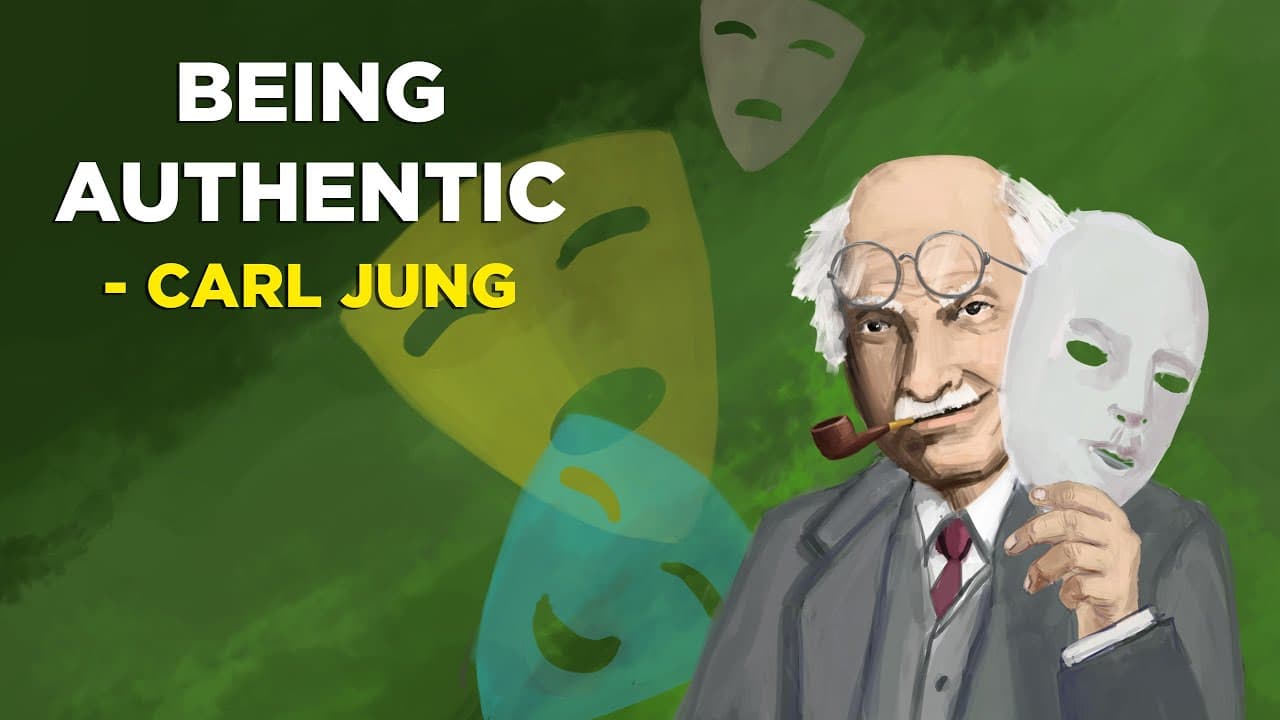
Carl Jung's theory of archetypes explores the persona, shadow, anima/animus, and self to achieve authenticity.
Transcript
Carl Jung was a Swiss psychiatrist and psychoanalyst and together with Sigmund Freud and Alfred Adler, Jung was one of the founders of psychoanalysis or the so-called ‘modern depth psychology’. In spite of being highly praised by Freud, Jung departed from his teachings, eventually founding his own school of psychology called ‘analytical psychology’... Read More
Key Insights
- 🤳 Jungian psychology emphasizes exploring the unconscious aspects of the psyche for self-discovery.
- 😷 The persona acts as a social mask that individuals present to the world.
- 🤳 Integrating the shadow-self involves accepting repressed traits and desires for authenticity.
- 🪡 The anima/animus represents contrasexual aspects that need to be acknowledged and balanced.
- 🤳 The self is the center of the psyche, representing wholeness and potential for individual growth.
- 🤳 Achieving authenticity involves exploring and integrating archetypes like the persona, shadow, anima/animus, and self.
- 🤳 Individuation is a process of self-discovery and integration of archetypes for personal growth.
Install to Summarize YouTube Videos and Get Transcripts
Explore YouTube Video Summarizer or Get YouTube Transcript Extractor
Questions & Answers
Q: What are the key archetypes in Jungian psychology?
The key archetypes in Jungian psychology are the persona, shadow, anima/animus, and self, which represent different aspects of the psyche that need to be explored for individuation.
Q: How does the persona function in human interactions?
The persona acts as a social mask, representing how an individual presents themselves to the world and plays a role in concealing the true nature of the individual in different social situations.
Q: Why is it important to integrate the shadow-self?
Integrating the shadow-self involves acknowledging and accepting repressed traits and desires, which allows individuals to embrace their authentic selves and avoid negative consequences of repression.
Q: What is the significance of the self in Jungian psychology?
The self is the center of the psyche and encompasses both conscious and unconscious aspects, representing wholeness and balance within an individual that can be achieved through exploring and integrating archetypes.
Summary & Key Takeaways
-
Carl Jung founded analytical psychology, emphasizing the unconscious aspects of the psyche.
-
Jung's theory includes archetypes like the persona, shadow, anima/animus, and self for individuation.
-
To achieve authenticity, individuals must explore, integrate, and balance these archetypes within themselves.
Read in Other Languages (beta)
Share This Summary 📚
Summarize YouTube Videos and Get Video Transcripts with 1-Click
Try YouTube Summary with ChatGPT & Claude or YouTube Transcript Generator
Explore More Summaries from Philosophies for Life 📚



Summarize YouTube Videos and Get Video Transcripts with 1-Click
Try YouTube Summary with ChatGPT & Claude or YouTube Transcript Generator