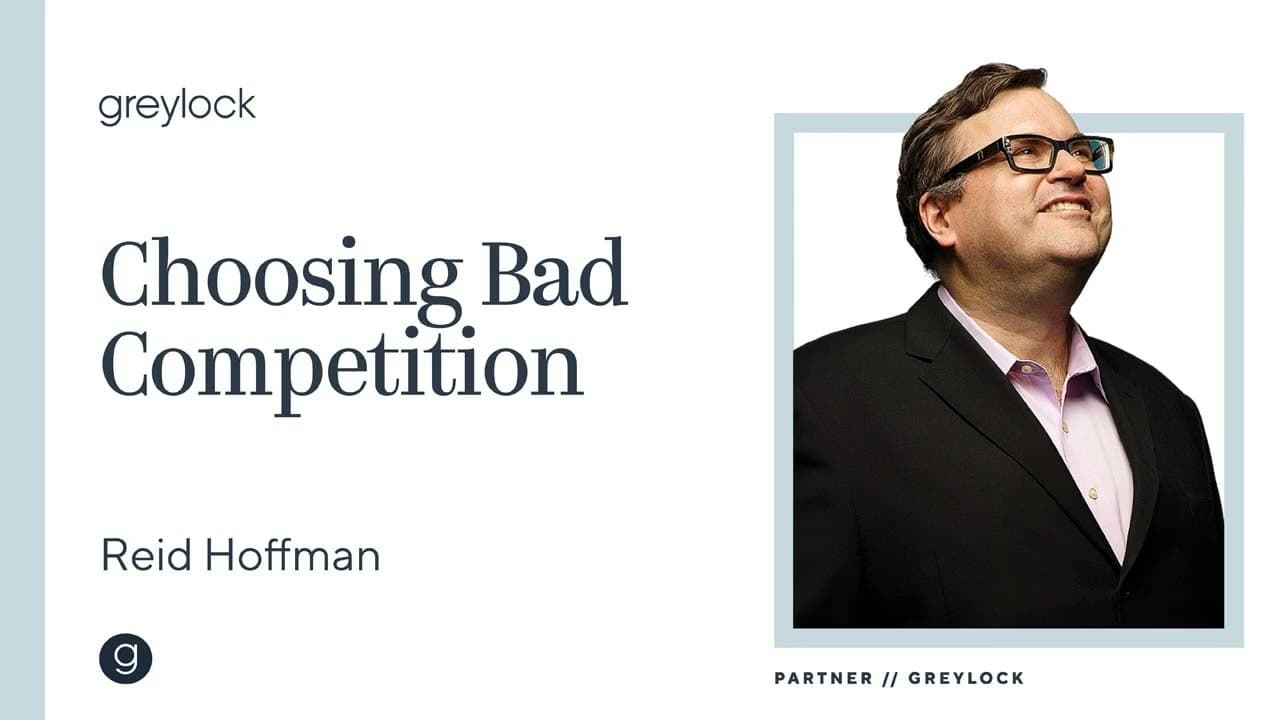
Reid Hoffman | Choosing Bad Competition
TL;DR
Choosing a field with bad competition is often preferable because it indicates valuable market opportunities where competitors may be incompetent or unwilling to innovate. This approach allows entrepreneurs to leverage gaps in the market, as seen with disruptors like Richard Branson and Elon Musk, who capitalize on industries that other players neglect due to outdated practices or lack of vision.
Transcript
hi i'm chris yay the co-author of blitzkealing and i'm here again with my co-author and old friend reid hoffman the co-founder of linkedin and investor at greylock partners today marks the start of a new series for this podcast in which we're going to explore what you have characterized as some of the fundamental laws of entrepreneurship these are ... Read More
Key Insights
- 🦡 Bad competition often signifies valuable market opportunities that others have overlooked.
- 🦡 Recognizing change and being willing to adapt are crucial in choosing a field with bad competition.
- ❓ Successful entrepreneurs like Richard Branson and Elon Musk have applied this strategy to disrupt industries and offer innovative solutions.
- ✋ Bad competition can exist in a variety of industries, not just high-tech startups.
- 📶 Evaluating the strengths and weaknesses of competitors is essential in navigating the competitive landscape.
- 👋 In some cases, pivoting or exiting the market entirely may be the best strategic decision.
- 🐕🦺 Choosing a field with bad competition requires a deep understanding of the market, customer needs, and the ability to offer superior products or services.
- 🎙️ More videos with Reid Hoffman:
Install to Summarize YouTube Videos and Get Transcripts
Explore YouTube Video Summarizer or Get YouTube Transcript Extractor
Questions & Answers
Q: What is the difference between bad competition and no competition?
Bad competition refers to competitors who are either incompetent or fail to innovate, while no competition means a completely untapped market. Both scenarios present valuable opportunities for entrepreneurs.
Q: How does recognizing bad competition help in choosing the right field?
Bad competition signals a gap in the market, where existing players are failing to meet customer needs or using outdated technology. This allows entrepreneurs to enter the field and offer superior products or services.
Q: Can bad competition exist in industries outside of high-tech startups?
Yes, bad competition can be found in various industries, including retail, hospitality, and manufacturing. Identifying areas with bad competition is crucial in determining the right market to enter.
Q: What are some characteristics of bad competition?
Bad competition can include competitors in locations with limited consumer demand, industries with outdated technology, and companies that are reluctant to innovate or change their business models.
Summary
In this video, Chris Yeh and Reid Hoffman discuss the first law of entrepreneurship - choosing a field with bad competition. They explore why it's better to have bad competition than no competition, the different types of bad competition, and how successful entrepreneurs like Richard Branson and Elon Musk have applied this law in their careers. They also discuss the strengths and weaknesses of this approach and what to do if good competitors emerge.
Questions & Answers
Q: Why is it better to have bad competition than no competition?
Bad competition usually indicates that there is recognition of a valuable market area with demand for a product or service. No competition may mean a green field opportunity, but it's rare to find such areas that have not been recognized by anyone. Having bad competition ensures that the market is valuable and that there is potential demand for your product or service.
Q: How can bad competition be characterized in different industries?
In retail, bad competition can be defined by finding a valuable location that is not being targeted by competitors. In the restaurant industry, bad competition might mean choosing a niche or specialty that is overlooked by others. Similarly, in the tech industry, bad competition can be revealed by recognizing a demand for a valuable product or service that is not being fulfilled adequately by existing competitors.
Q: What are the characteristics of bad competition in terms of technological progress?
Bad competition can also refer to competitors who are not keeping up with technological advancements and are still using outdated methods or products. By capitalizing on newer technologies and innovation, entrepreneurs can offer better products or services that meet evolving demands.
Q: How can entrepreneurs identify bad competition in their chosen field?
Entrepreneurs can identify bad competition by evaluating the market, recognizing whether competitors are focused on the past or showcasing laziness or incompetence, and assessing whether they are locked into old patterns of thinking or internal competition. Recognizing the inability of competitors to adapt to change is a key indicator of bad competition.
Q: What makes bad competition different from good competition?
Bad competition does not necessarily mean that the people involved are incompetent or lazy. It is more about their inability to recognize and embrace change. Good competition, on the other hand, comprises competitors who are agile, innovative, and quick to adapt to new market dynamics. Good competition is tough competition that can pose challenges to entrepreneurs.
Q: How did Richard Branson apply the concept of bad competition?
Richard Branson applied the idea of bad competition by maintaining a fresh mind and constantly questioning the status quo. He identified areas where existing products or services were lacking and focused on making them more fun and innovative. He recognized the need to differentiate himself and created a niche by providing unique and enjoyable experiences in industries like airlines and music.
Q: How did Elon Musk implement the concept of bad competition?
Elon Musk chose to compete in industries where competitors had become complacent and failed to embrace technological advancements. He focused on areas with bad competition, such as aerospace and electric cars, and brought in new technologies, talent, and strategies to outperform existing competitors. His ability to recruit passionate individuals and recognize the direction of technological change set him apart.
Q: What are the strengths and weaknesses of Elon Musk's approach to bad competition?
Elon Musk's strengths lie in his ability to recognize the need for change and attract talented individuals who share his vision. He understands new technological trends and their integration into products, services, and business operations. However, his weaknesses can emerge when dealing with competitors who have a stronger market position, better technology, or superior go-to-market strategies. In such cases, evaluating the competitive space and making strategic decisions become vital.
Q: What should entrepreneurs do if good competitors emerge in their chosen field?
When faced with good competition, entrepreneurs need to assess their competitive position and develop a clear strategy for success. This may involve continued competition with a focus on innovation, merging with competitors, pivoting their business, or even exiting the market entirely. It is essential to have a strong understanding of the competitive landscape and the ability to adapt your approach as needed.
Q: How can entrepreneurs know when to call it quits or pivot in the face of good competition?
Entrepreneurs need to understand their investment thesis and evaluate if their competitive advantage is sustainable in the face of good competition. If it becomes apparent that the competitive landscape is too challenging or if there are better opportunities in other areas, they may choose to pivot their business or exit the market. Making informed decisions based on strategic assessment is crucial in these situations.
Q: What role does human capital play in responding to good competition?
Human capital, comprising talented individuals, plays a crucial role in responding to good competition. Entrepreneurs need to recruit and retain top talent who can contribute to the company's success and help navigate the competitive landscape. Having a strong team that can adapt, innovate, and execute is a significant competitive advantage in the face of good competition.
Takeaways
Choosing a field with bad competition is a fundamental law of entrepreneurship. Bad competition indicates recognition of a valuable market area with demand for a product or service. It is preferable to no competition as it ensures the market's value. Bad competition can be characterized by competitors who fail to adapt to technological advancements, overlook changes in the market, or are locked into old patterns. Successful entrepreneurs like Richard Branson and Elon Musk have applied this law by identifying areas for improvement and offering innovative and differentiated products or services. When faced with good competition, entrepreneurs must evaluate their competitive position, adapt their approach, and make strategic decisions that align with their investment thesis. The ability to attract and retain top talent is crucial in responding to good competition.
Summary & Key Takeaways
-
Choosing a field with bad competition allows entrepreneurs to recognize valuable market opportunities that others have overlooked.
-
Bad competition can include markets that are untapped or underserved, as well as industries stuck in outdated technologies and practices.
-
Successful entrepreneurs like Richard Branson and Elon Musk have applied this strategy by identifying areas with bad competition and offering innovative, customer-centric solutions.
Read in Other Languages (beta)
Share This Summary 📚
Summarize YouTube Videos and Get Video Transcripts with 1-Click
Try YouTube Summary with ChatGPT & Claude or YouTube Transcript Generator
Explore More Summaries from Greymatter Podcast (Audio) 📚






Summarize YouTube Videos and Get Video Transcripts with 1-Click
Try YouTube Summary with ChatGPT & Claude or YouTube Transcript Generator