What Are the Secrets to Building a Breakthrough Start-Up?
TL;DR
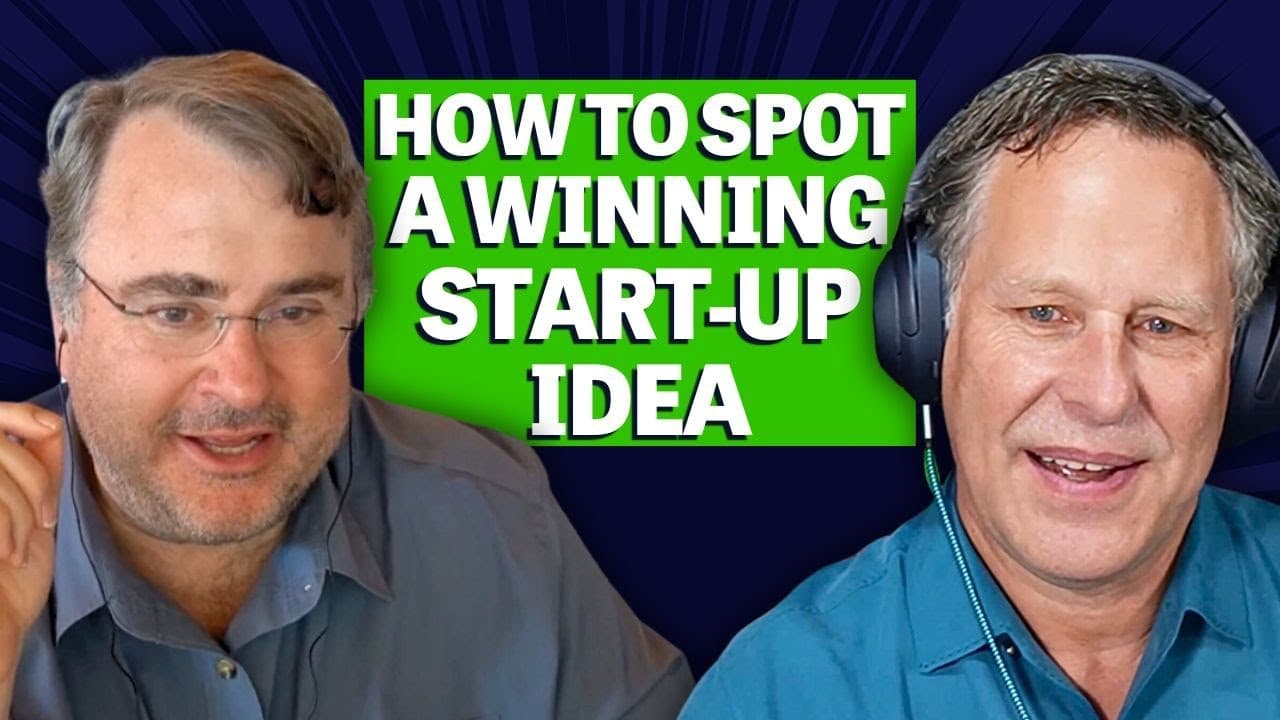
To build a successful start-up, founders must be adaptable and willing to pivot beyond their initial product ideas. Visionary leaders who can identify future trends and break existing patterns have a first-mover advantage. Creating unique and polarizing concepts is essential for innovation, as a great founder's insight matters more than the first iteration of a product.
Transcript
so the investor in me just has to ask so you've done this detailed analysis about what are the things that you would learn from seed investing you know in a whole wide variety of interesting things whether it's the you know awesome Toby lka and Shopify to Brian chesky and and Airbnb and so uh what are what are those those tips that you might offer ... Read More
Key Insights
- Successful start-ups often pivot from their initial product concept, adapting based on market feedback and emerging trends. This flexibility allows them to find the right product-market fit over time.
- Founders with a deep, authentic connection to future trends are more likely to succeed. Their ability to foresee and adapt to future changes gives them a first-mover advantage.
- Pattern-breaking, rather than pattern-matching, is crucial for innovation. Start-ups must challenge existing norms and create unique offerings that stand out in the market.
- A great founder's insight is more important than the initial product. Investors should focus on the founder's vision and ability to navigate future challenges.
- Start-ups should aim to polarize opinions with their ideas. If everyone likes the concept, it may not be innovative enough to disrupt the market.
- Pattern-matching can introduce bias, preventing people from recognizing transformative potential. Entrepreneurs must break free from habitual thinking to innovate successfully.
- The future is already present but unevenly distributed. Founders who can identify and leverage these future trends have a competitive edge.
- Start-ups need to force a choice rather than a comparison. They should offer something so distinct that it can't be easily compared to existing solutions.
- More videos with Reid Hoffman / Mike Maples:
Install to Summarize YouTube Videos and Get Transcripts
Explore YouTube Video Summarizer or Get YouTube Transcript Extractor
Questions & Answers
Q: What is the main takeaway regarding start-up product evolution?
Successful start-ups often evolve beyond their initial product concept. This evolution is crucial as it allows them to adapt based on market feedback and emerging trends, ultimately finding the right product-market fit. Entrepreneurs should focus on flexibility and adaptability, rather than being overly attached to their original ideas.
Q: Why is a founder's connection to future trends important?
A founder's connection to future trends is vital because it provides them with a first-mover advantage. By understanding and anticipating future changes, they can navigate challenges and opportunities more effectively, ensuring their start-up remains relevant and competitive in a rapidly changing market.
Q: What is the difference between pattern-matching and pattern-breaking?
Pattern-matching involves recognizing and following established norms and patterns, which can introduce bias and limit innovation. In contrast, pattern-breaking is about challenging existing norms and creating unique, transformative ideas that stand out in the market. Successful start-ups often adopt a pattern-breaking mindset to achieve disruptive innovation.
Q: Why is a founder's insight more important than the initial product?
A founder's insight is more important than the initial product because it reflects their vision and ability to navigate future challenges. Investors should focus on the founder's potential to adapt and innovate, rather than the current state of the product, as successful start-ups often pivot and evolve over time.
Q: How should start-ups approach idea development?
Start-ups should aim to create ideas that polarize opinions. If everyone likes the concept, it may not be innovative enough to disrupt the market. By offering something distinct and incomparable to existing solutions, start-ups can carve out a unique space and attract early adopters who are passionate about the new offering.
Q: What role does pattern-matching play in innovation?
While pattern-matching is a natural cognitive process, it can hinder innovation by introducing bias and limiting the ability to recognize transformative potential. Entrepreneurs must break free from habitual thinking and challenge existing norms to create truly innovative solutions that stand out in the market.
Q: How can start-ups leverage future trends?
Start-ups can leverage future trends by identifying and capitalizing on emerging opportunities before they become mainstream. This requires a deep understanding of the market and the ability to anticipate changes, allowing founders to position their start-up advantageously and gain a competitive edge.
Q: What should start-ups aim for in their market positioning?
Start-ups should aim to force a choice rather than a comparison in their market positioning. By offering something so distinct that it can't be easily compared to existing solutions, they can create a unique value proposition that attracts a dedicated customer base and sets them apart from competitors.
Summary & Key Takeaways
-
The podcast discusses how successful start-ups often evolve beyond their original product ideas, emphasizing the importance of adaptability and visionary leadership. Founders need to have a strong connection to future trends to succeed.
-
Mike Maples, Jr. highlights the difference between pattern-matching and pattern-breaking mindsets, advocating for start-ups to challenge existing norms to achieve transformative innovation.
-
Reid Hoffman and Mike Maples, Jr. explore the significance of a founder's insight and vision over the initial product, stressing the importance of creating unique, polarizing ideas that stand out in the market.
Read in Other Languages (beta)
Share This Summary 📚
Summarize YouTube Videos and Get Video Transcripts with 1-Click
Try YouTube Summary with ChatGPT & Claude or YouTube Transcript Generator