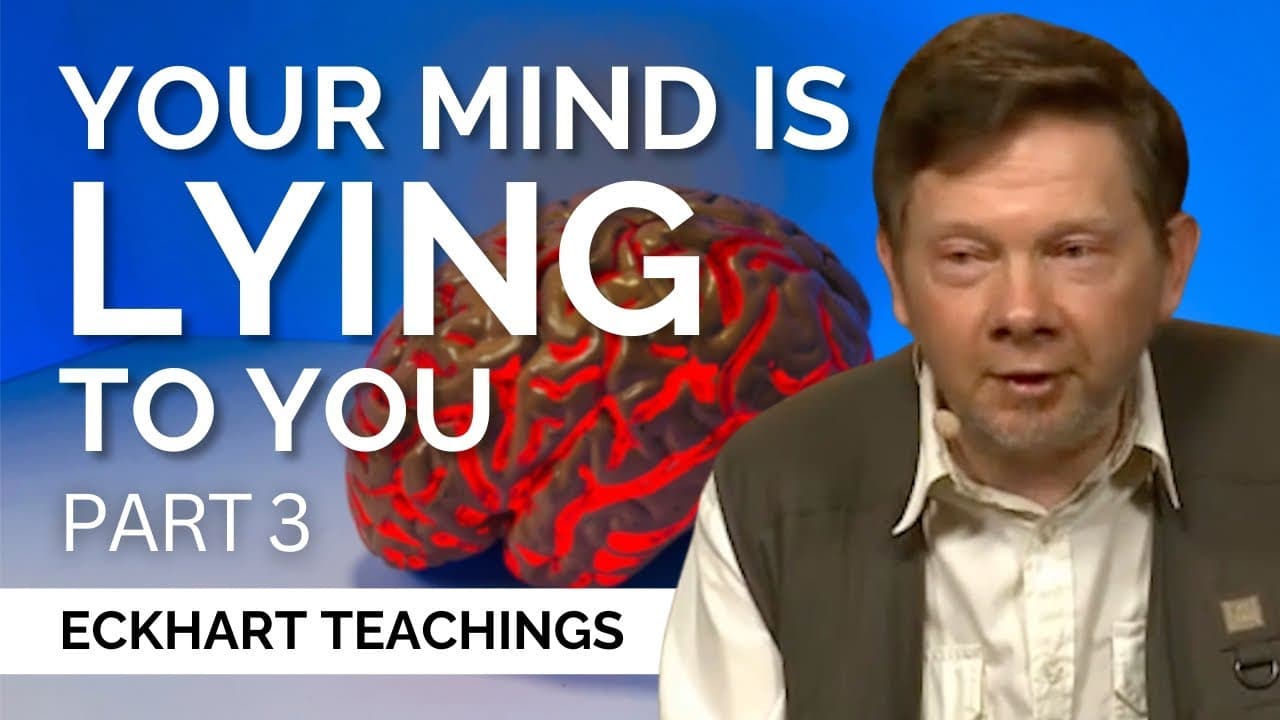
How Does the Mind Distort Perception? | Eckhart on Discovering Reality (Part 3)
TL;DR
The mind distorts perception by replacing direct experience with automatic labels, opinions, judgments, and conditioned interpretations. Eckhart suggests practicing attention without unnecessary naming while observing nature, washing your hands, making tea, or waiting at a red light; even looking into a dog’s eyes may interrupt thought for a few seconds. Read on for practical ways to experience ordinary moments with greater presence and less mental resistance.
Transcript
But you can actually perceive more deeply without immediately attaching a mental label to your perceptions. And this is I've quoted before the beautiful line from Krishna Morty uh who said if you teach a child the moment if you the moment you teach a child the name of that bird, he will never see that bird again. And there's a deep truth in that. B... Read More
Key Insights
- Mental concepts can obscure reality by replacing direct perception with names, interpretations, and ideas. Once the mind identifies something through a familiar label, a person may stop seeing its living particularity and instead experience only the concept already stored through conditioning.
- Conditioned interpretation is often immediate and unquestioned. Whatever appears in consciousness can trigger an automatic opinion or judgment that feels true, even though it reflects learned mental patterns rather than an open perception of the present situation.
- Judgment can prevent genuine encounters with other people. When the mind rapidly assigns a mental label to someone, it responds to its concept of that person rather than meeting the person directly as they are in the present moment.
- Nature is a useful starting point for practicing deeper perception because it does not stimulate conceptual exchange in the same way people often do. Attending to a tree's stillness and rooted presence can help quiet naming and reveal a more direct form of awareness.
- Contact with a dog can briefly interrupt thinking because the animal approaches without a conceptual opinion or judgment. Looking into the dog's eyes and sensing its being may awaken a person's own awareness of being, although dependence on animals is not the purpose of the practice.
- Presence is attention without unnecessary narration. Saying, "Now I am washing my hands," merely adds another thought, while directly noticing the water's temperature, the soap, and its smell turns the activity into a quiet sensory experience.
- Ordinary activities can serve as vehicles for presence when they are performed with alert attention. Making tea illustrates how an external ritual differs from genuine awareness, since someone can master every visible movement while remaining absorbed in thought.
- The desire to be elsewhere is a recurring mind pattern that makes present circumstances seem like obstacles. Waiting at a red light offers an opportunity to notice the surroundings instead of resisting the stop, complaining internally, or imagining a preferable place and activity.
Install to Summarize YouTube Videos and Get Transcripts
Explore YouTube Video Summarizer or Get YouTube Transcript Extractor
Questions & Answers
Q: How does the mind distort your perception of reality?
The mind immediately interprets what enters consciousness through conditioned concepts, opinions, and judgments. These mental labels can obscure direct perception, so you experience your concept of an object, situation, or person instead of encountering it openly.
Q: Why can naming something prevent you from seeing it clearly?
A name can become a substitute for continued attention, causing the concept to obscure the reality it describes. The transcript illustrates this with the idea that once a child learns the name of a bird, the child may cease to see the bird directly and instead perceive the familiar label.
Q: How do mental labels affect encounters with other people?
An immediate judgment can turn another person into a fixed mental concept. When you accept that conditioned interpretation as unquestionable truth, you respond to your idea of the person rather than meeting the person as they are.
Q: Why does Eckhart recommend starting presence practice with nature?
Nature is easier to observe because it does not stimulate conceptual thinking in the same way human interaction can. Looking at a tree without immediately naming it may help you sense its stillness and how deeply rooted in being it appears.
Q: How can looking into a dog’s eyes interrupt thinking?
A welcoming dog has no conceptual opinion or judgment about you, so perceiving it may briefly free you from mental interpretation. The transcript says this interruption can last three, four, or five seconds, during which sensing the dog’s being may awaken awareness of your own.
Q: How can washing your hands become a presence practice?
Give the activity direct attention without mentally narrating what you are doing. Notice the warmth or coolness of the water, the feeling of the soap, and its smell; this ordinary activity can then become an interval of stillness.
Q: How can making tea be used to practice presence?
Attend fully to each part of making tea, such as the kettle beginning to boil, preparing the tea, and pouring the water. The purpose is not merely to master the ritual’s external movements, because someone can perform them correctly while remaining absorbed in thought.
Q: What can you practice while waiting at a red light?
After stopping, look at the light and take in everything around you as alert presence. Instead of resisting the delay or wishing to be somewhere else, use each red light as an opportunity to pause unnecessary thinking until the light changes.
Summary & Key Takeaways
-
Conceptual thinking can prevent direct contact with reality because the mind immediately names, interprets, and judges whatever enters consciousness. People may consequently encounter their conditioned ideas about objects and other people instead of perceiving them openly. Releasing unnecessary labels allows perception to arise from a quieter and deeper level of awareness.
-
Nature and animals can make presence easier because they do not confront people with conceptual opinions or judgments. A still tree or a welcoming dog may briefly interrupt thought and awaken an awareness of being. However, lasting presence should be practiced deliberately rather than made dependent on contact with animals or particular surroundings.
-
Everyday activities provide practical opportunities to develop nonconceptual awareness. Washing hands, making tea, and stopping at a red light can become intervals of alert stillness when sensations receive attention without interpretation. Repeated practice also exposes the persistent mental pattern of wanting to be elsewhere, doing something else, or living under different circumstances.
Read in Other Languages (beta)
Share This Summary 📚
Summarize YouTube Videos and Get Video Transcripts with 1-Click
Try YouTube Summary with ChatGPT & Claude or YouTube Transcript Generator
Explore More Summaries from Eckhart Tolle 📚



Summarize YouTube Videos and Get Video Transcripts with 1-Click
Try YouTube Summary with ChatGPT & Claude or YouTube Transcript Generator