How Good Is Google Veo 3 for AI Video Creation?
TL;DR
Google Veo 3 can generate compelling video, synchronized speech, scene transitions, focus changes, and audio from a single prompt. Its output substantially exceeded the creator's initial expectations, but the $250 monthly subscription, limited credits, unreliable text rendering, model switching, policy restrictions, and frustrating Flow interface make experimentation expensive and cumbersome.
Transcript
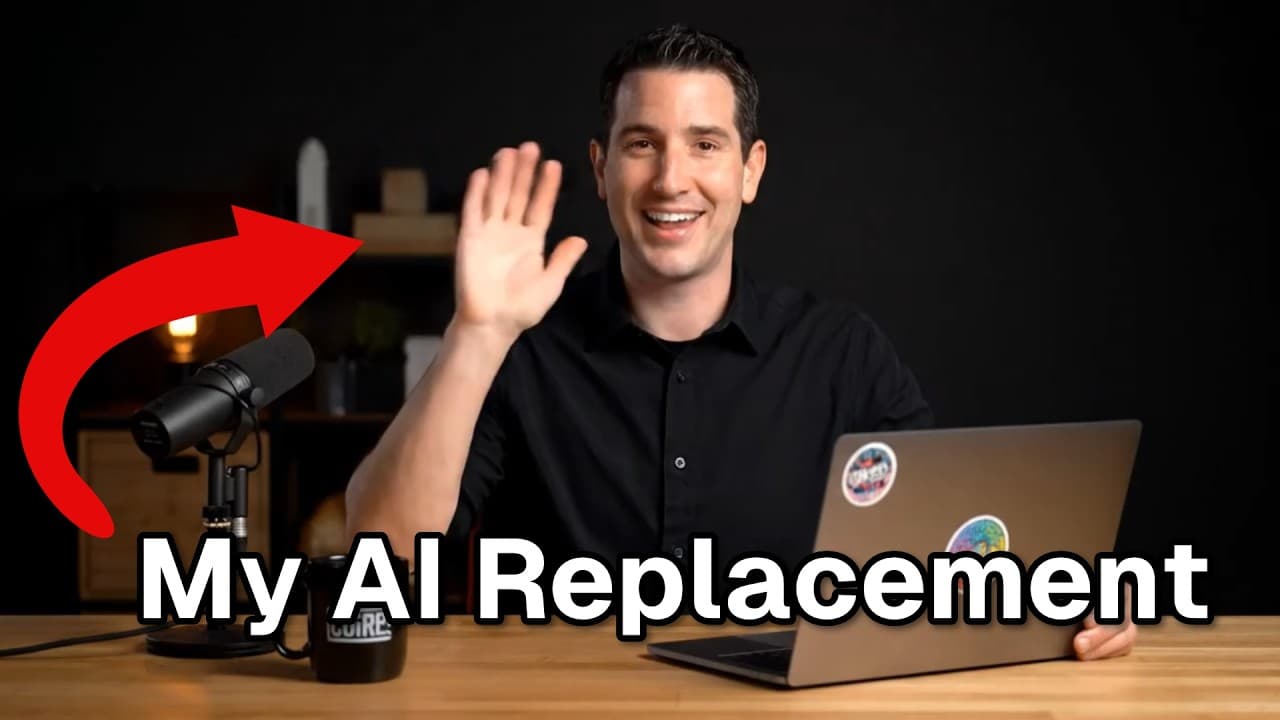
I just did a video about Google IO, but I missed something. I thought the video model was mediocre. I was wrong. Pretty nuts for a oneshot, right? Like, I just generated that trivially. It still costs 250 bucks a month to use any of this right now. And the UI is garbage and it's annoying as hell to use. But the quality of what you can get out of V3... Read More
Key Insights
- Veo 3 can create coordinated visuals and audio in a single generation, including synchronized speech, scene transitions, shifting focus, text effects, and plausible hands. These combined capabilities made its output feel substantially more compelling than video-only results.
- Veo 3 ranked at the top of the Artificial Analysis video-generation leaderboard discussed by the creator. The comparison benchmark covered video without audio because the evaluators had not previously tested another model capable of generating video and audio together.
- Veo 3 costs 50 cents per second for video without audio and 75 cents per second when audio is included. The video-only price matches the previous model, while synchronized audio introduces an additional cost for each generated second.
- The $250 subscription provides 1,200 credits, and one generation can consume 150 credits. Because users commonly request two outputs simultaneously, unsuccessful prompts, policy failures, or unnoticed model changes can quickly consume the available experimentation budget.
- Veo 3 is unreliable when asked to render substantial text. Short text may work, but longer promotional wording can be incorrect, and the model may generate subtitles even when the prompt specifically instructs it not to include them.
- Flow repeatedly resets the selected generation quality and can fall back to Veo 2. Users must verify the model immediately before submission because choosing frames, ingredients, extensions, or other features may trigger compatibility changes that are easy to overlook.
- Flow's upload policy rejected the creator's normal and upside-down photographs but accepted an image after his face was blurred. The resulting generation still changed his appearance, omitted requested audio, and supplied subtitles despite contrary instructions.
- The Flow scene builder does not provide audio playback for clips inside that view. Users must return to another view to hear unwanted sounds, then navigate back to edit or extend the sequence, adding friction to an already inconsistent workflow.
Install to Summarize YouTube Videos and Get Transcripts
Explore YouTube Video Summarizer or Get YouTube Transcript Extractor
Questions & Answers
Q: How good is Google Veo 3 at generating AI videos?
Google Veo 3 can produce compelling one-shot videos with several coordinated elements. In the creator's tests, it transitioned between scenes, shifted a subject into and out of focus, synchronized speech with facial movement, rendered requested text with an effect, and generated credible hands. These results caused him to reverse his earlier assessment that the model was mediocre.
Q: Can Google Veo 3 generate synchronized audio and video?
Google Veo 3 can generate video and audio together, including spoken dialogue synchronized with a character's face. The creator considered audio a major reason the results felt more compelling. Artificial Analysis evaluated its leaderboard performance without audio because it had not previously benchmarked another model that could generate video and audio simultaneously in this way.
Q: How much does Google Veo 3 video generation cost?
Veo 3 is priced at 50 cents per second for video without audio, matching the price of the previous model. Generation with audio costs 75 cents per second. Access described in the transcript requires a $250 monthly subscription, which includes 1,200 credits, and an individual generation can consume 150 credits.
Q: Why can Veo 3 credits run out quickly?
Veo 3 experimentation consumes credits rapidly because each generation can cost 150 credits from the 1,200 credits included with the $250 subscription. Users also commonly create two results for each prompt. Failed generations, repeated attempts, upload problems, and accidental fallbacks to Veo 2 can therefore spend credits without producing the intended result.
Q: Is Google Veo 3 reliable at rendering text?
Google Veo 3 is not consistently reliable at rendering text. One demonstration successfully produced a short requested phrase with a visual effect, but another attempt generated promotional wording poorly. The creator recommends giving it only a small amount of text. The model may also insert subtitles even when the prompt explicitly says not to include them.
Q: Why does Google Flow switch from Veo 3 to Veo 2?
Google Flow switches models when a selected feature is incompatible with Veo 3, and it also resets quality choices after submissions. Frames-to-video, ingredients-to-video, and clip-extension workflows can trigger compatibility messages or fallback behavior. Users must repeatedly confirm the highest-quality Veo 3 option with experimental audio before submitting, or they may spend credits on an unintended model.
Q: What problems does the Google Flow interface have?
Google Flow makes Veo 3 difficult to use because model and quality selections reset, compatibility warnings do not clearly identify the relevant settings, and the homepage can make generated work difficult to locate. The scene builder also lacks audio playback, forcing users to leave that view to inspect sounds before returning to edit or extend a clip.
Q: Why might Google Flow reject an uploaded portrait?
Google Flow rejected the creator's portrait as a possible policy violation, including after the image was rotated upside down. A photograph found by searching for a random person was accepted, and the creator's own image worked only after his face was blurred. Even then, the generated result altered his appearance and failed to follow requested audio and subtitle instructions.
Summary & Key Takeaways
-
Veo 3 produced surprisingly convincing results from simple prompts, including coordinated scene changes, controlled focus, synchronized facial movement and speech, rendered text effects, and credible hands. The creator reversed his earlier negative assessment after conducting more experiments and seeing the model lead Artificial Analysis's video-generation leaderboard.
-
The model remains expensive to explore. Video costs 50 cents per second without audio and 75 cents per second with audio. The $250 subscription supplies 1,200 credits, while individual generations can consume 150 credits. Failed attempts and unintended fallbacks to Veo 2 can therefore waste a meaningful portion of the allowance.
-
Google's Flow interface creates substantial friction by resetting quality selections, switching incompatible features to other models, hiding relevant settings, and preventing audio playback inside the scene builder. Upload filters also rejected the creator's photograph until his face was blurred, while generations sometimes ignored instructions about audio, subtitles, identity, and appearance.
Read in Other Languages (beta)
Share This Summary 📚
Summarize YouTube Videos and Get Video Transcripts with 1-Click
Try YouTube Summary with ChatGPT & Claude or YouTube Transcript Generator
Explore More Summaries from Theo - t3․gg 📚






Summarize YouTube Videos and Get Video Transcripts with 1-Click
Try YouTube Summary with ChatGPT & Claude or YouTube Transcript Generator