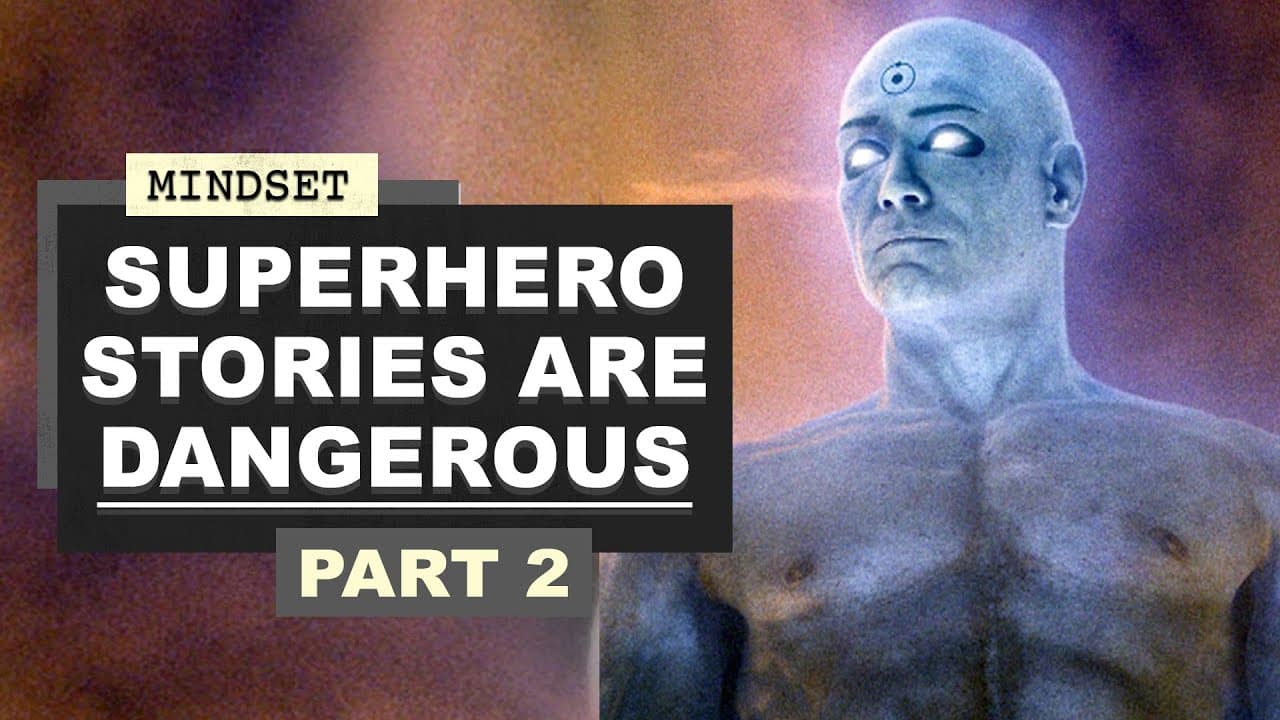
Alan Moore | Batman: The Killing Joke and Watchmen creator on Imagination (Part 2)
TL;DR
Imagination becomes more powerful when writers commit to uncertainty instead of confining stories to familiar boundaries. The discussion describes crime authors discovering the murderer halfway through a book, a writer repeatedly abandoning a story at page three, and fantasy’s reliance on dragons, dwarves, and orcs. Read on to see how creative tools, cultural conventions, and trust in the imagination shape original fictional worlds.
Transcript
it's interesting when you bring that up as well about the different forms of imagination because when people talk about imagination it sometimes seems that people will eventually get to just one form but as you said with some authors they cannot believe that other writers start with uncertainty or that you know a crime author there are some crime a... Read More
Key Insights
- 🎁 Imagination varies in creating characters and stories, presenting challenges of uncertainty and unexpected developments.
- 🌍 Established narrative boundaries can limit the expanse of imaginative worlds, impacting creativity and storytelling possibilities.
- 🧘 Active engagement with imagination serves as therapy and meditation, fostering innovation and alternate realities.
- 🌍 Authors emphasize the transformative and unpredictable nature of imagination in creating compelling fictional worlds.
- ⛔ Societal narratives and boundaries influence the creativity and potentially limiting imaginative exploration.
- 💍 The process of actively engaging with imagination is crucial for creating unique artistic endeavors.
- 😑 Authors stress the importance of commitment and trust in imagination for innovative storytelling and artistic expression.
Install to Summarize YouTube Videos and Get Transcripts
Explore YouTube Video Summarizer or Get YouTube Transcript Extractor
Questions & Answers
Q: How does Alan Moore describe the power of imagination in writing?
Alan Moore says imagination is limitless, but literature and society impose boundaries that people internalize. He argues that writers can reach more original territory by committing themselves to imagination and asking how far they can take it.
Q: Why do some authors begin writing without knowing how the story will develop?
The discussion presents uncertainty as a genuine form of imagination rather than a failure to plan. Some crime authors reportedly discover who committed the murder halfway through writing the book, while other writers feel that the story itself is calling them forward.
Q: How did a laptop change one writer’s creative process?
A dyslexic writer describes repeatedly reaching page three of a story and then throwing it away. After circumstances changed, a laptop allowed the work to flow, an experience the writer jokingly called cathartic.
Q: Do complex fictional works always require a structure, plan, or map?
No. One writer says a complicated work emerged with no structure, plan, or map at all, and that the process was always moving forward. This sometimes created a need to go back and make earlier material add up.
Q: How can fictional characters surprise or disturb their creators?
David Keenan, the author of This Is Memorial Device, described hating a character he had created because the character was so horrible. The example shows how writers can emotionally struggle with people who exist only through their own imagination.
Q: Why can familiar fantasy tropes limit imagination?
Alan Moore argues that fantasy should allow every work to become an individual world created by an individual author. Yet recurring dragons, dwarves, and orcs can establish boundaries that prevent writers from exploring fantasy’s potentially infinite universe.
Q: How have imagined boundaries affected science fiction?
The discussion says early science-fiction stories imagined travel as far as the moon, followed by nearby planets in the solar system. Only after the idea of warp drive emerged could stories readily reach other solar systems, illustrating how imagined perimeters can expand over time.
Q: How can cultural storytelling conventions shape imaginative works?
The speakers contrast some non-European films that move between musical, melodrama, thriller, and comedy with superhero movies that repeat essentially the same story. They suggest that some audiences find comfort in imaginative stories that impose structure, while others prefer uncertainty and arguments about meaning.
Summary & Key Takeaways
-
Authors explore how imagination varies in creating characters and stories.
-
The authors discuss the struggle and uncertainty in their creative processes.
-
The conversation delves into the societal impact of established narrative boundaries on imagination.
Read in Other Languages (beta)
Share This Summary 📚
Summarize YouTube Videos and Get Video Transcripts with 1-Click
Try YouTube Summary with ChatGPT & Claude or YouTube Transcript Generator
Explore More Summaries from How To Academy Mindset 📚


Summarize YouTube Videos and Get Video Transcripts with 1-Click
Try YouTube Summary with ChatGPT & Claude or YouTube Transcript Generator