What Was Warren Buffett’s Most Important Investing Advice in 2018?
TL;DR
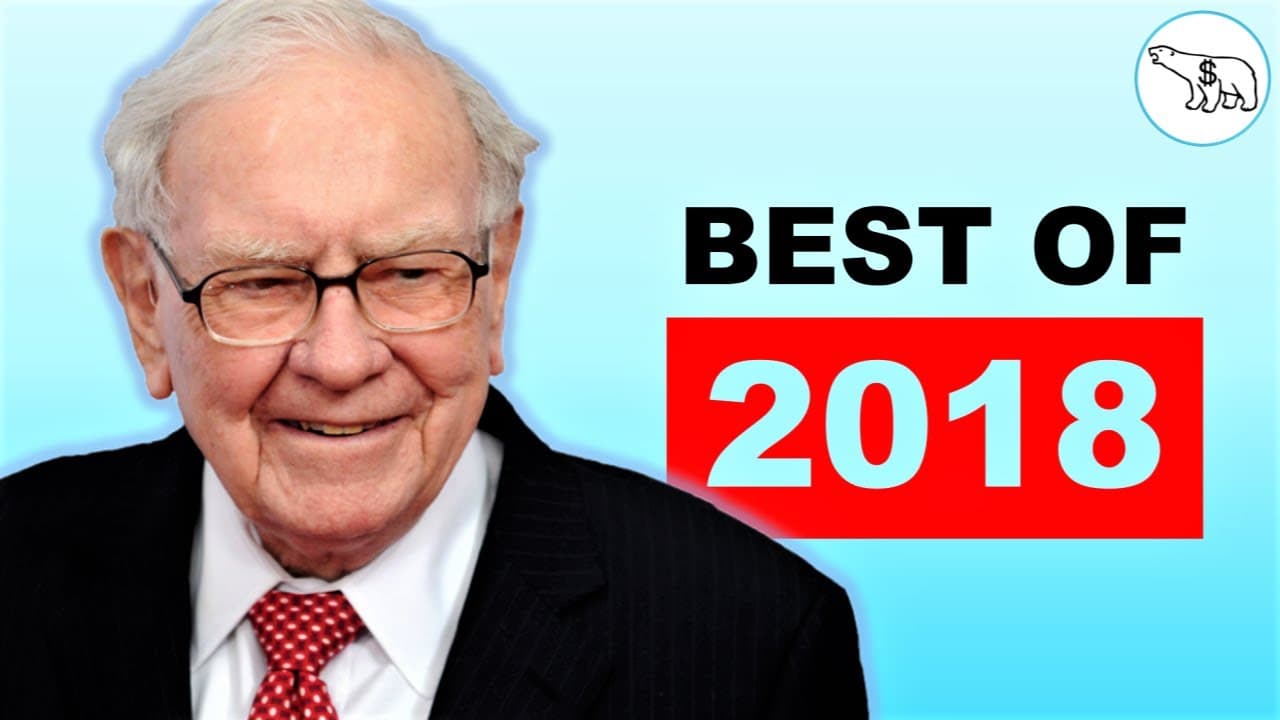
Warren Buffett’s key 2018 advice was to favor low-cost index funds for passive investing, define risk by whether a future objective will be achieved, and evaluate stocks with a disciplined checklist. His Vanguard S&P 500 index fund returned 8.5% annually in a 10-year bet, versus about 3% for five funds-of-funds. Read on for the bet’s results, time-horizon data, and Buffett’s stock-selection criteria.
Transcript
I’ve watched and read all publicly available material to bring you the most important investment advice from Warren Buffett in 2018. This year, the world’s greatest investor: - Won a 10-year bet proving that most Wall Streeter’s truly do not deserve their high salaries - Explained what investment risk really is, which I will use to help guiding you... Read More
Key Insights
- 😘 Warren Buffett's bet demonstrates that most active managers fail to outperform low-cost index funds.
- ✳️ Investment risk should be understood as the possibility of not achieving the desired objective.
- 🏃 Investing in stocks may be more beneficial than bonds in the long run, but consider the time horizon and associated risks.
- 📼 Warren Buffett's checklist for buying stocks involves assessing competitive strengths, management quality, returns on assets, growth opportunities, and stock prices.
- 👍 Following an investment framework with proven success can increase the chances of successful active investing.
- 🥹 Warren Buffett advises holding onto stocks for at least five years for better returns.
- ⏳ Individual investors can benefit from investing in low-cost index funds to achieve financial freedom with minimal time commitment.
Install to Summarize YouTube Videos and Get Transcripts
Explore YouTube Video Summarizer or Get YouTube Transcript Extractor
Questions & Answers
Q: What was Warren Buffett’s most important investing advice in 2018?
Buffett advocated a cheap index fund for passive investors, defined investment risk as the possibility of failing to achieve greater future consumption, and provided a checklist for selecting stocks. His advice emphasizes costs, investment objectives, time horizons, business quality, and price.
Q: What was Warren Buffett’s 10-year investing bet?
Buffett bet that the S&P 500 would outperform a portfolio of funds-of-hedge-funds after fees, costs, and expenses from January 1, 2008, through December 31, 2017. Protégé Partners selected five funds-of-funds, while Buffett selected a low-cost Vanguard S&P 500 index fund.
Q: Who won Warren Buffett’s bet, and what were the final returns?
Buffett’s Vanguard index fund won. It returned 8.5% per year, while the five funds selected by Protégé Partners averaged about 3% per year after fees, costs, and expenses; none of the five beat the index fund.
Q: How much money was at stake in Buffett’s index-fund bet?
Each side put up $320,000. By the end of 2017, the stake would be worth $1 million and invested in the winner’s chosen charity.
Q: How did Warren Buffett define investment risk?
Buffett described investing as giving up consumption today in an attempt to enable greater consumption later. Risk is the possibility that this objective will not be attained.
Q: Should money needed in one year be invested in stocks?
The historical data presented shows that stock-market money was worth less after one year in 33% of the periods. Although the average result could buy something 8.4% fancier, that loss frequency demonstrates the risk attached to a short time horizon.
Q: How does a longer investment horizon affect stock-market risk?
For five-year periods, money was worth less 25% of the time, while the average outcome was 47% better. For 10-year periods, investors were worse off 12% of the time but obtained more than twice as much on average; for periods of 18 years or longer, there had been no negative return since 1928, with an average outcome four times as nice.
Q: What does Warren Buffett look for when buying stocks?
Buffett’s checklist calls for durable competitive strengths, high-grade management, good returns on net tangible assets, and opportunities for internal growth. He also requires a sensible stock price.
Summary & Key Takeaways
-
Warren Buffett won a bet showing that most active fund managers underperform a low-cost index fund.
-
Buffett clarified the true meaning of investment risk as the possibility that an investment objective may not be achieved.
-
He provided a checklist for buying stocks, emphasizing durable competitive strengths, high-quality management, good returns on assets, growth opportunities, and reasonable prices.
Read in Other Languages (beta)
Share This Summary 📚
Summarize YouTube Videos and Get Video Transcripts with 1-Click
Try YouTube Summary with ChatGPT & Claude or YouTube Transcript Generator
Explore More Summaries from The Swedish Investor 📚



Summarize YouTube Videos and Get Video Transcripts with 1-Click
Try YouTube Summary with ChatGPT & Claude or YouTube Transcript Generator