How to Create Unique Color Grades in Premiere Pro

TL;DR
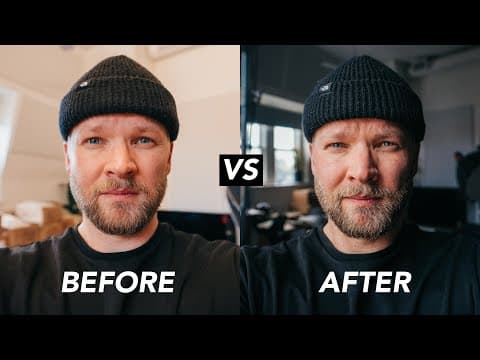
You can create five distinct color grades in Premiere Pro without using presets or LUTs. Start with adjusting contrast and saturation for flat footage, then explore styles like teal and orange, black and white, cool and warm tones by manipulating shadows, mid-tones, and highlights. Experimenting with these techniques can uniquely enhance your videos.
Transcript
- Hey guys, welcome to Travel Feels. Today, we're gonna take a look at how to do five different color grades without any LUTs or extra plug-ins. Let's do this. (upbeat music) (moody dubstep music) So we all know how important color grading is, it's so important I couldn't stress it enough. Next to filming, it's probably one of the most important th... Read More
Key Insights
- 🎮 Color grading is essential to enhance video quality and aesthetics.
- 🧡 Teal and orange color grade involves adjusting shadows, midtones, and highlights in the color wheel.
- 🖤 Black and white editing requires careful consideration of exposure and contrast.
- 🧡 Experimenting with different color grades can offer a range of creative possibilities.
- 👀 Combining color grades and adjusting contrasts can create unique and personalized looks.
- 🫡 Starting with presets or LUTs can speed up the color grading process.
- 🤩 Practice and experimentation are key to mastering color grading techniques.
Install to Summarize YouTube Videos and Get Transcripts
Explore YouTube Video Summarizer or Get YouTube Transcript Extractor
Questions & Answers
Q: Why is color grading important for video production?
Color grading enhances the visual appeal of footage, bringing out details and conveying specific moods or aesthetics. Without color grading, videos may look flat and uninteresting.
Q: How can you achieve a teal and orange color grade?
To achieve the popular teal and orange look, adjust shadows to teal, midtones to orange, and highlights back to teal in the color wheel. This combination complements skin tones and creates a visually pleasing contrast.
Q: What considerations are important when color grading in black and white?
In black and white editing, exposure levels, contrast, and shadow-highlight balance are crucial. Experimenting with curves and exposure adjustments can create different effects and eliminate a digital appearance.
Q: Why should filmmakers practice color grading without presets?
Practicing color grading without presets builds understanding of color theory and editing techniques. It allows for customization and creativity in creating unique looks tailored to each project.
Summary & Key Takeaways
-
Color grading is crucial for enhancing video quality, especially with flat profile footage.
-
Teal and orange color grade involves adjusting shadows, midtones, and highlights in the color wheel.
-
Other color grades like black and white, temperature, and warm tones offer creative possibilities.
Read in Other Languages (beta)
Share This Summary 📚
Summarize YouTube Videos and Get Video Transcripts with 1-Click
Try YouTube Summary with ChatGPT & Claude or YouTube Transcript Generator
Explore More Summaries from Matti Haapoja 📚


Summarize YouTube Videos and Get Video Transcripts with 1-Click
Try YouTube Summary with ChatGPT & Claude or YouTube Transcript Generator