How Gemini AI Agents Change Knowledge Work
TL;DR
Gemini’s agentic tools can handle digital chores, organize information, create documents and media, and run many cloud tasks in parallel. Deep integration with Gmail, Drive, Docs, Sheets, Slides, and Calendar supports a shift from manually completing each step to directing desired outcomes, while voice interaction makes complex requests faster and more natural.
Transcript
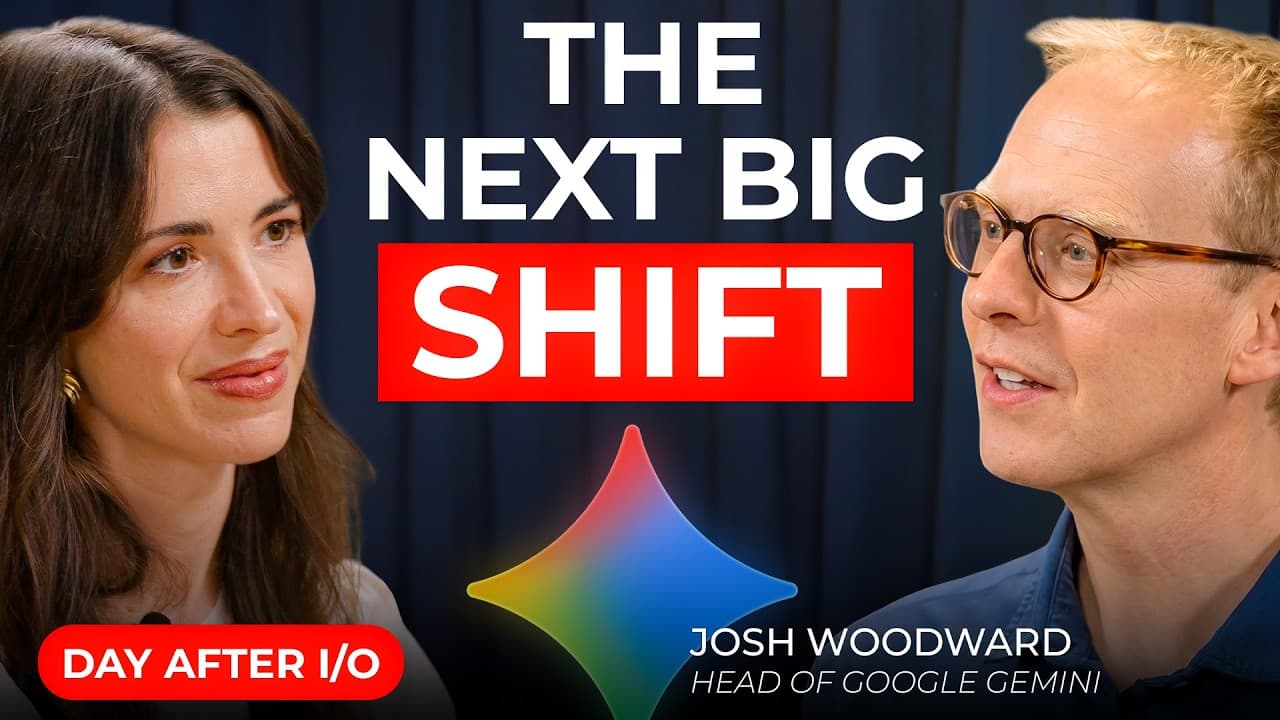
The amount you're going to be able to get done is unbelievable. What used to take a few seconds is just going to be like boom boom boom boom. >> This is Josh Woodward, head of Gemini. Google just launched Gemini Spark, an AI agent that works for you 24/7 in the background. >> That was a project we started called personal intelligence. If you're a G... Read More
Key Insights
- Gemini Spark is an AI agent designed to work in the background and complete tasks through Google’s ecosystem. Its integration with Gmail, Drive, Docs, Sheets, Slides, and Calendar allows users to work across existing information without manually setting up separate connectors.
- Background execution is supported by virtual machines that Google can spin up through Google Cloud. Woodward says this architecture could eventually allow users to assign hundreds of tasks and have many of them completed in parallel rather than processing only one or two tasks at a time.
- Gemini’s generative media suite can produce more than conventional text documents. The capabilities described include creating Google Docs, slide decks, images, videos, and songs, giving the agent a wider range of possible deliverables from a user’s instructions and selected source material.
- Voice interaction works by combining natural speech with file understanding and tool use. Users can select files from Drive or a desktop, speak an unstructured request, and have Gemini interpret PDFs and images, correct mistakes, enhance the text, and create a polished output.
- Digital chores are a practical consumer use case for AI agents. Gemini Spark can help users remember family deadlines, track tasks such as returning a library book, reorganize calendars, identify meetings that could be canceled, and preserve time for family activities or hobbies.
- Recurring schedules can turn Gemini into a personalized information service. Woodward describes receiving ongoing news about the Oklahoma City Thunder written in the voice of a dedicated fan, illustrating how scheduled agents can follow a specific interest and adapt the presentation style.
- NotebookLM demonstrates how assembled context can support multiple forms of knowledge work. After users provide papers or other sources, the system can transform that material into formats such as a podcast, slide deck, or mind map, depending on the outcome the user requests.
- Knowledge work is shifting from doing to directing as AI handles more procedural steps. Instead of specifying every action, users increasingly describe what they need to understand or produce, gather the relevant context, and orchestrate the desired outcome or deliverable.
Install to Summarize YouTube Videos and Get Transcripts
Explore YouTube Video Summarizer or Get YouTube Transcript Extractor
Questions & Answers
Q: What is Gemini Spark designed to do?
Gemini Spark is designed to act as a background AI agent that completes tasks for users rather than only responding to individual questions. It can work with information from Google services, help manage digital chores, create documents and media, follow recurring interests, and potentially execute many cloud-based tasks in parallel through virtual machines.
Q: Why would Google ecosystem users choose Gemini Spark?
Google ecosystem users may benefit because Gemini Spark is deeply integrated with services they already use, including Gmail, Drive, Docs, Sheets, Slides, and Calendar. According to Woodward, these services work without separate connectors. That integration lets the agent find relevant personal context, organize information, prepare outputs, and support workflows across several Google products.
Q: How can Gemini help users save time in their calendars?
Gemini can review calendar commitments and help users identify time that could be recovered. Woodward suggests asking it to find the three meetings that should be canceled during the week. He also describes using the system with his wife to free time for family activities, shared plans, hobbies, and other priorities outside routine obligations.
Q: How does Gemini use voice beyond transcription?
Gemini can treat speech as an instruction for a larger workflow rather than simply converting spoken words into text. A user can select files from Drive or a desktop, speak about the desired result, and let the system understand PDFs and images, retrieve relevant context, correct stated mistakes, enhance the writing, and create a structured output.
Q: What kinds of content can Gemini Spark create?
Gemini Spark can create conventional work products such as Google Docs and slide decks, but the described system is intended to support a broader generative media suite. Woodward says it can make images, videos, and songs through connected model capabilities. This versatility allows one agent to produce different deliverables from the same general context or request.
Q: How can Gemini agents help with everyday family responsibilities?
Gemini agents can assist with the many small digital chores that are easy to overlook. Woodward gives the example of remembering deadlines involving his children, including returning a library book before the school year ends. The agent can also help organize calendars, preserve family time, track obligations, and reduce the effort required to remember routine responsibilities.
Q: What does moving from doing to directing mean for knowledge workers?
Moving from doing to directing means focusing on the result rather than manually performing every procedural step. A knowledge worker can describe what needs to be understood or created, provide or identify relevant context, and ask AI to produce deliverables such as a podcast, presentation, mind map, or document. The user increasingly orchestrates and evaluates the outcome.
Q: How does NotebookLM illustrate the future of AI-assisted work?
NotebookLM illustrates how AI can transform a collection of source material into several useful formats. Users can assemble papers or other context, then request a podcast, slide deck, mind map, or another output. The example shows how knowledge workers can spend less time executing each conversion step and more time defining what they need to understand or deliver.
Summary & Key Takeaways
-
Josh Woodward describes Google’s move into an agentic era, highlighted by Gemini Spark and the Gemini Omni model. Spark is designed to complete background tasks using Google services, while Omni expands the range of accepted inputs and generated outputs. These developments shift AI from answering prompts toward executing broader workflows.
-
Gemini Spark combines Google ecosystem integration, background virtual machines, and generative media capabilities. It can work with Gmail, Drive, Docs, Sheets, Slides, and Calendar, while creating documents, presentations, images, videos, and songs. Planned additions mentioned in the discussion include MCP connections and agentic payments through Google Pay.
-
Voice is becoming a more important interface because users can describe goals naturally, include mistakes or unstructured thoughts, and let the model clean up the request. For knowledge workers, the larger change is from doing each procedural step to directing outcomes, assembling context, and choosing the deliverables they want AI to produce.
Read in Other Languages (beta)
Share This Summary 📚
Summarize YouTube Videos and Get Video Transcripts with 1-Click
Try YouTube Summary with ChatGPT & Claude or YouTube Transcript Generator
Explore More Summaries from Silicon Valley Girl 📚

Summarize YouTube Videos and Get Video Transcripts with 1-Click
Try YouTube Summary with ChatGPT & Claude or YouTube Transcript Generator