This is why you'll need polling in your web applications
TL;DR
The video discusses using polling for asynchronous processes in web applications.
Transcript
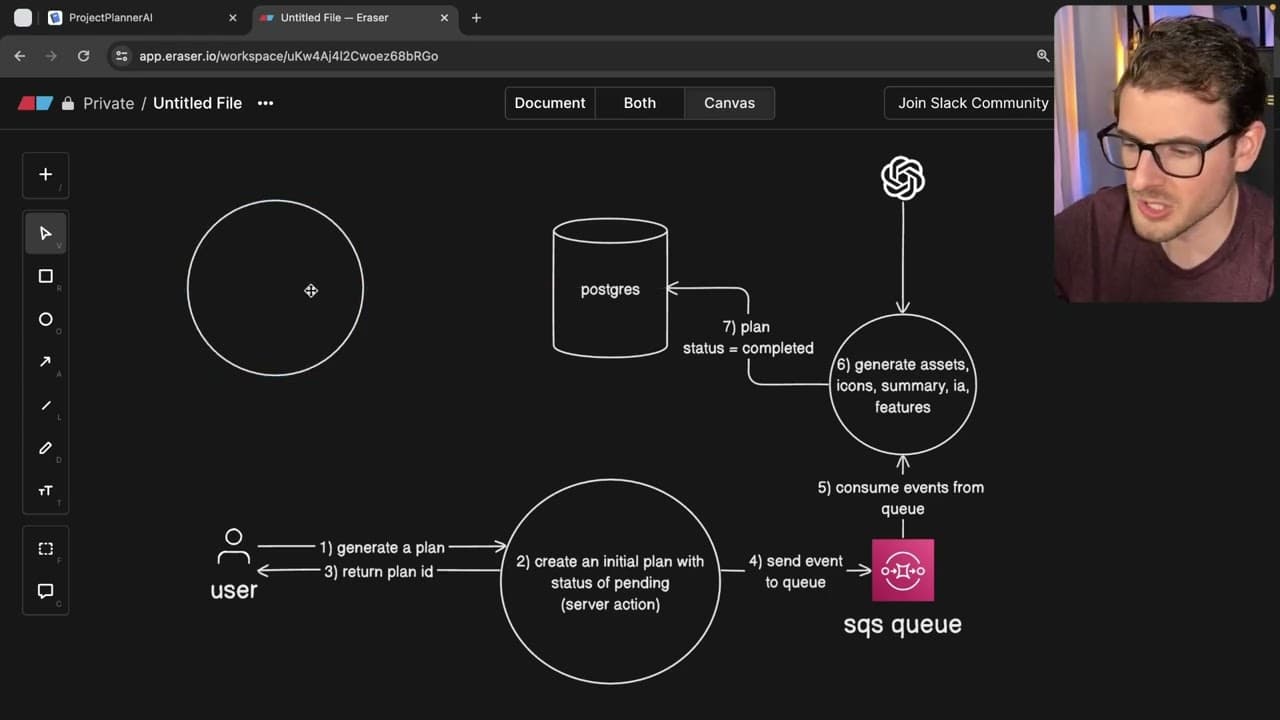
so often when you're building out a web application you're going to have to do some type of long running process and I kind of made some videos about this in the past but I want to hit on this topic one more time I have a side project that I've been working on with another YouTuber called project planner Ai and I want to share with you how using so... Read More
Key Insights
- 🏃 Long-running processes in web applications necessitate clear user communication and feedback to maintain a positive experience.
- 👤 Polling is a straightforward method for status checking that can be tailored to user interface needs without overly complicating the backend.
- 📽️ Combining different technologies such as SQS, Lambda, and Next.js can create a seamless integration for project management tools.
- 👤 Feedback loops with users provide essential guidance for improving product features and addressing user needs more accurately.
- 😫 The initial plan's status is set as pending upon creation, which informs both the user and the system of the task's state in real-time.
- 👤 Asynchronous processes, when handled well, can enhance the perceived speed of applications by managing user expectations effectively.
- 👶 The video emphasizes the importance of prototypes in gauging user interest and testing new feature viability before extensive development.
Install to Summarize YouTube Videos and Get Transcripts
Explore YouTube Video Summarizer or Get YouTube Transcript Extractor
Questions & Answers
Q: How does polling enhance user experience during long-running processes?
Polling allows web applications to provide users with real-time updates about the status of their requests. By periodically checking the status of asynchronous operations, users remain informed without needing to refresh manually. This keeps them engaged and reduces frustration associated with uncertainty during processing times.
Q: What technologies are used in the Project Planner AI application?
The application utilizes various technologies including Next.js for the frontend, AWS SQS for managing message queuing, and Lambda functions for executing backend processes. It also integrates OpenAI for generating project-related content, creating a robust environment for development and user interaction.
Q: What is the difference between normal polling and long polling?
Normal polling involves periodically sending requests to check the status of a process at fixed intervals, which can be resource-intensive. In contrast, long polling keeps the connection open until a response is available, allowing servers to respond immediately when the status changes, which can lead to a more efficient user experience.
Q: What role does collaboration play in the development of web applications?
Collaboration is highlighted as essential for achieving more than what one could on their own. Working with other creators can provide fresh perspectives, ideas, and shared responsibilities, ultimately enhancing the application's quality and fostering innovative approaches to problem-solving.
Q: How does the application handle failures in the processing of tasks?
The system incorporates a dead letter queue within AWS SQS that captures failed processing tasks after a certain number of retries. This allows developers to inspect and diagnose failures later, improving application reliability and ensuring that issues can be addressed without losing critical data.
Q: Can polling be effectively replaced by websockets in this application?
While websockets offer a more instant communication method by sending real-time events as they happen, implementing them can be complex. For beginners, the simplicity of polling is often sufficient, especially in environments where the overhead of setting up websockets isn't justified. Polling remains a viable option as long as it is managed correctly.
Summary & Key Takeaways
-
The content explains the importance of handling long-running asynchronous processes in web applications, focusing on a side project called Project Planner AI that aids users in project planning.
-
It demonstrates how polling is implemented to check the status of ongoing tasks, providing a placeholder indication for the status while using efficient event messaging with SQS and Lambda for backend processing.
-
The creator emphasizes collaboration and feedback in the development process, sharing insights on generating useful features and optimizing user experience while utilizing Next.js and server actions.
Read in Other Languages (beta)
Share This Summary 📚
Summarize YouTube Videos and Get Video Transcripts with 1-Click
Try YouTube Summary with ChatGPT & Claude or YouTube Transcript Generator
Explore More Summaries from Web Dev Cody 📚
Summarize YouTube Videos and Get Video Transcripts with 1-Click
Try YouTube Summary with ChatGPT & Claude or YouTube Transcript Generator