Suing YouTube’s Science Scammers
TL;DR
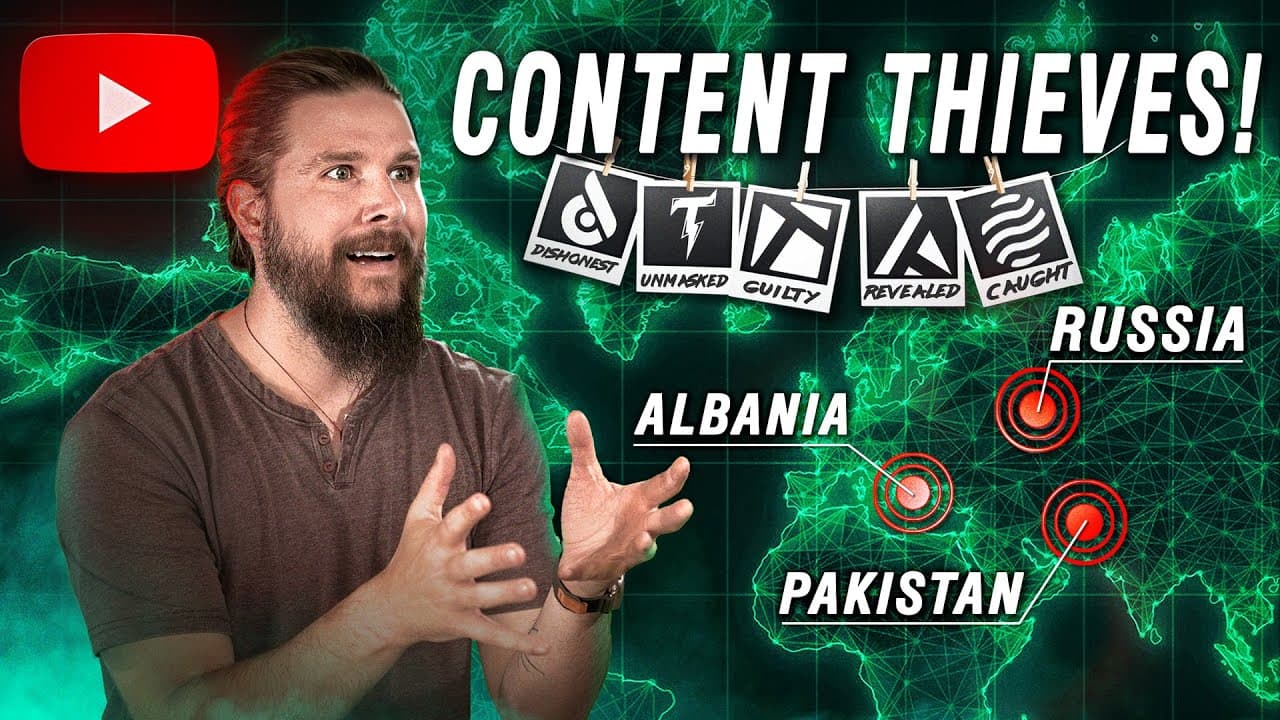
Efforts to fight YouTube’s science scam channels have removed some major offenders, but the broader flood of AI-generated, misleading, and stolen content remains largely unchanged. The creator worked with Viral DRM to file lawsuits and delete channels with millions of subscribers and thousands of videos, while one viral video was reportedly stolen by as many as 100,000 channels. Read on to see how these operations work and why current responses appear inadequate.
Transcript
I have been posting at least one sciency thing somewhere on YouTube every single week for the last 10 years and I can safely say I've never seen a response like I did when I posted this the problem is an epidemic of Miss and disle content made to scam your attention written and read by Bots created by probably nefarious individuals for monetary gai... Read More
Key Insights
- ❓ Scam channels with AI-generated stolen content continue to be a major issue on YouTube, with little progress made in addressing the problem.
- 😒 Some scam channels have explicitly stated that they use AI voice clones, indicating an awareness of the increased attention to the issue.
- 💌 The creator has received responses from viewers who have provided insights into the inner workings of these scam channels, including business emails and job listings.
- 💁 The BBC conducted an investigation into the problem, resulting in YouTube promoting YouTube Kids and information panels, but the responses are considered inadequate by the creator.
- 📁 The creator has collaborated with viral DRM to file lawsuits and take down scam channels, resulting in significant damage to their operations.
- 🇦🇱 Thousands of channels are identified as stealing content, with the majority located in countries such as Pakistan, Iran, Albania, Russia, and others.
- 🎮 AI technology plays a role in the problem, with AI-generated voices and video editing being used to create and promote stolen content.
Install to Summarize YouTube Videos and Get Transcripts
Explore YouTube Video Summarizer or Get YouTube Transcript Extractor
Questions & Answers
Q: What has happened since the creator exposed YouTube’s science scam channels?
A couple of months later, the creator says the overall problem has changed very little: similar logos, deceptive thumbnails, repeated topics, and videos cross-posted across multiple channels remain common. However, one cited spam channel disappeared, and two channels began disclosing that they use AI voice clones.
Q: How do the scam channels create so much content?
Evidence supplied by viewers showed shared business emails, copied-and-pasted recruitment listings for voice actors, and businesses designed to produce the most content with the least effort. Some employees were allegedly directed to copy from other channels, and a former scriptwriter confirmed the general operating model.
Q: What role does AI play in these YouTube scam channels?
The channels use AI-generated material and, in some cases, AI voice clones to produce videos at scale. Two channels explicitly added disclosures saying they were read by an AI voice clone, matching the creator’s earlier suspicions.
Q: How did the channel Riddle respond to the criticism?
Riddle produced a fully animated, voiced rebuttal that depicted the creator as a “channel executioner.” Riddle later removed its video, and the creator also removed his real-time podcast response while maintaining that his original criticisms remained valid.
Q: Did anyone connected to the scam channels contact the creator?
The creator received an anonymous email apparently sent by someone behind the channels. It claimed that the spam operation could not be stopped, emphasized that it was driven by money, and included homophobic, antisemitic, and racial slurs that the creator redacted.
Q: What did the BBC investigation find about these channels?
The BBC investigation found additional examples of stolen, scam, and spam content and interviewed experts, including the creator. It also conducted an experiment with children that produced troubling results about the videos’ effects on developing minds.
Q: How did YouTube respond to the BBC investigation?
YouTube recommended YouTube Kids for children under 13, said it was committed to removing misinformation, and pointed to information panels that provide context for conspiracy-related content. The BBC found those panels on only a few videos across the 50 channels examined, and YouTube did not comment on advertising revenue from the videos.
Q: What actions has the creator taken against the scam channels?
The creator worked with Viral DRM, a company that protects creators’ copyrights, to file lawsuits and pursue channel removals. These efforts led to the deletion of channels containing millions of subscribers and thousands of videos, although the creator says they have made only a small dent in the wider problem.
Summary & Key Takeaways
-
Scam channels with clickbait and AI-generated stolen content continue to be a problem on YouTube, with little change since the issue was highlighted.
-
Some scam channels have explicitly stated that they are read by AI voice clones, indicating increased attention to the problem.
-
The creator received responses from viewers who wanted to help, uncovering business emails, job listings, and insights into how these channels operate.
-
The BBC conducted an investigation into the issue and YouTube responded by promoting YouTube Kids and information panels, but the creator believes these responses are not sufficient.
Read in Other Languages (beta)
Share This Summary 📚
Summarize YouTube Videos and Get Video Transcripts with 1-Click
Try YouTube Summary with ChatGPT & Claude or YouTube Transcript Generator
Explore More Summaries from Kyle Hill 📚
![🔴 Viral "Hanger Reflex" Explained! | [OFFICE HOURS] Podcast 090 thumbnail](/_next/image?url=https%3A%2F%2Fi.ytimg.com%2Fvi%2F-GQPNu0erKc%2Fhqdefault.jpg&w=750&q=75)

![What Made MEGALODON So Huge? | [OFFICE HOURS] Podcast #025 thumbnail](/_next/image?url=https%3A%2F%2Fi.ytimg.com%2Fvi%2F2F_zCTfPt-I%2Fhqdefault.jpg&w=750&q=75)
Summarize YouTube Videos and Get Video Transcripts with 1-Click
Try YouTube Summary with ChatGPT & Claude or YouTube Transcript Generator