How to Create Classes and Instances in Python OOP
TL;DR
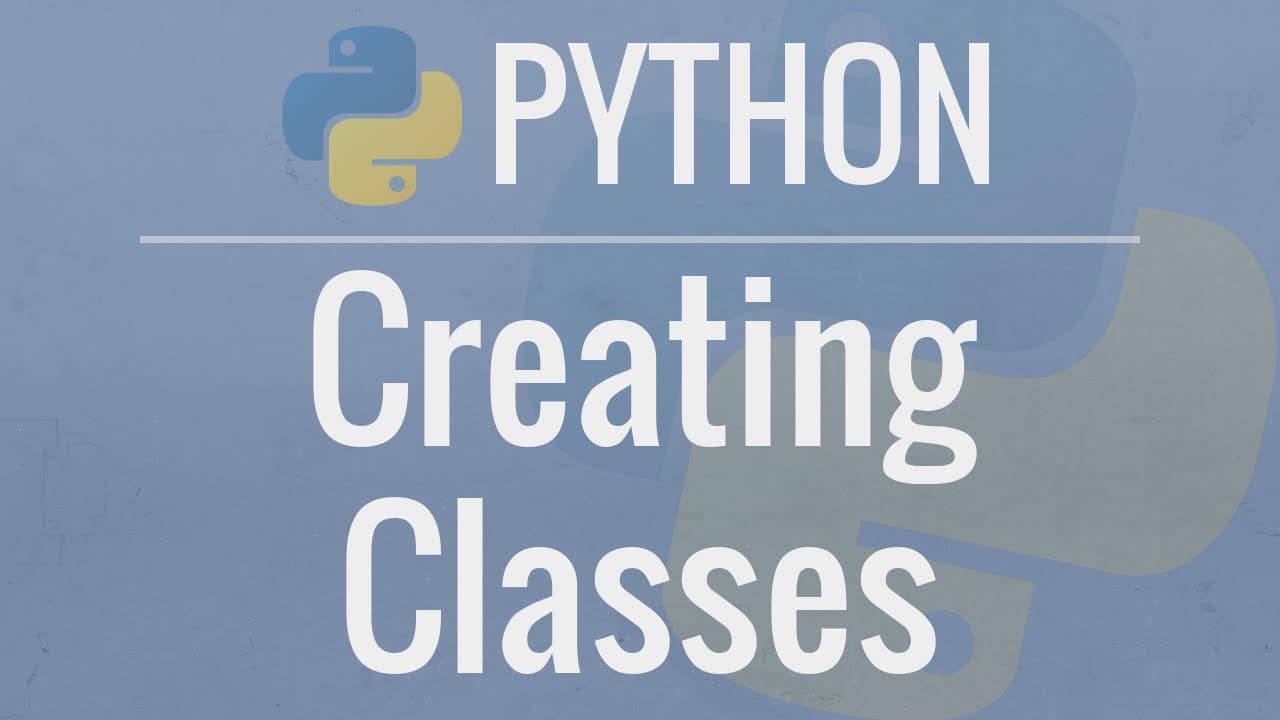
To create classes in Python, define a class using the 'class' keyword and establish a blueprint for instances. Use the 'init' method to automatically initialize attributes for each instance, ensuring reusability and organization in your code. Each instance is unique and can have its own set of methods and attributes.
Transcript
Hey, everybody. How's [it] going in this series of videos? We'll be learning how to create and use classes within python and how object-oriented concepts are applied within the language now There's a lot to cover when working with classes, so I'm going to break these up into several different videos We'll cover the basics of creating and instantiat... Read More
Key Insights
- 👻 Classes are a fundamental concept in Python and other programming languages, allowing for organization and reusability of code.
- 😫 Instances are unique objects created from classes. Each instance has its own set of attributes and methods.
- ♾️ The "init" method is used to initialize instance variables automatically when creating objects.
- 🤙 Methods within a class have the "self" argument as the first parameter, representing the instance the method is called on.
- 👨💻 Using classes and instances can significantly reduce the amount of repetitive code in a program.
- 🏛️ Class variables and instance variables serve different purposes and are accessed differently.
Install to Summarize YouTube Videos and Get Transcripts
Explore YouTube Video Summarizer or Get YouTube Transcript Extractor
Questions & Answers
Q: What is the purpose of using classes in Python?
Classes logically group related data and functions so they are easy to reuse and build upon. A class can serve as a blueprint for creating objects, such as employees with names, email addresses, pay, and shared actions.
Q: What is the difference between a class and an instance in Python?
A class is a blueprint for creating objects, while an instance is a unique object created from that class. For example, employee_1 and employee_2 are separate Employee instances with their own locations in memory and their own instance data.
Q: How do you create a simple class and instance in Python?
Define the class with a class statement, such as class Employee. If its body is temporarily empty, use pass; then create an instance by calling the class, as in employee_1 = Employee().
Q: How does init initialize instance variables?
The init method runs automatically when an instance is created. In the Employee example, it accepts first name, last name, and pay, assigns them to the instance, and builds the email from the first and last names plus the company domain.
Q: What does self mean in a Python class method?
self represents the instance on which the method is operating. Python passes that instance automatically as the first argument, allowing expressions such as self.first and self.last to access its attributes.
Q: What is the difference between an attribute and a method?
An attribute is data associated with a class or instance, such as an employee's first name, email, or pay. A method is a function associated with the class, such as full_name, which combines the instance's first and last names.
Q: How do you call an instance method in Python?
Call the method through the instance and include parentheses, such as employee_1.full_name(). Leaving off the parentheses accesses the method itself instead of running it and returning the full name.
Q: What happens if self is omitted from an instance method?
The class definition may appear to run normally until the method is called. Because Python automatically passes the instance, a method declared with no parameters raises a TypeError saying it takes zero positional arguments but one was given.
Summary & Key Takeaways
-
The video introduces the concept of classes and why they are widely used in programming languages to logically group data and functions.
-
It demonstrates how to create a simple employee class as a blueprint for creating instances with specific attributes and methods.
-
The video explains the difference between class variables and instance variables and how to set instance variables automatically using the special "init" method.
Read in Other Languages (beta)
Share This Summary 📚
Summarize YouTube Videos and Get Video Transcripts with 1-Click
Try YouTube Summary with ChatGPT & Claude or YouTube Transcript Generator
Explore More Summaries from Corey Schafer 📚


Summarize YouTube Videos and Get Video Transcripts with 1-Click
Try YouTube Summary with ChatGPT & Claude or YouTube Transcript Generator