Why Do Electric Cars Lose Value So Quickly?
TL;DR
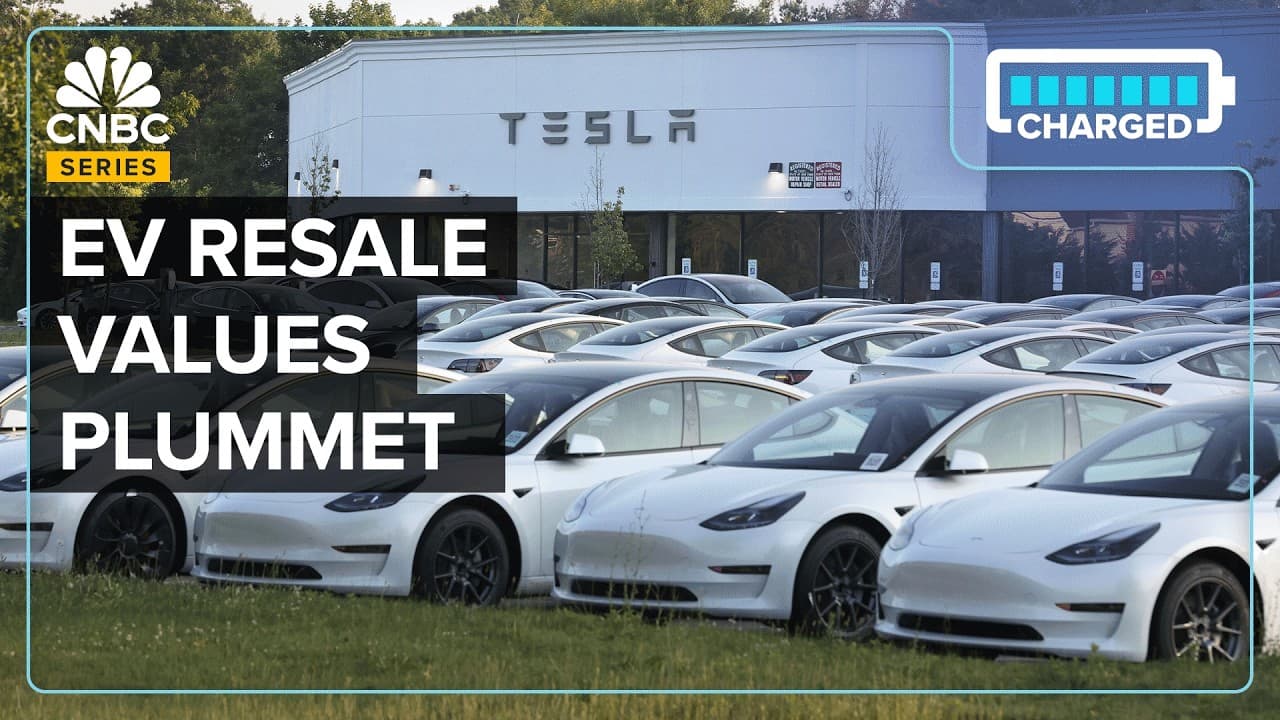
EVs lose value faster largely because purchase incentives reduce effective new-car prices, technology advances make older models seem outdated, and high prices plus charging and range concerns limit used-buyer demand. Depreciation matters most for owners who replace cars frequently, so keeping an EV for about eight years or leasing when changing vehicles every three years can reduce the financial impact.
Transcript
The old saying goes, A car loses value as soon as you drive it off the lot. It's true. And it can be a big hit, almost half its value in the first five years. Buying a new car is a terrible investment. But EVs take an especially large hit, and the losses some suffer are astonishing. Evs have lower operating costs than gas cars, especially if... Read More
Key Insights
- EVs depreciated about 59% over five years, compared with 46% for the overall vehicle industry. The Jaguar I-Pace lost 72%, while the Tesla Model S, Model X, Model Y, and Porsche Taycan each lost at least about 60%.
- Depreciation is a major component of total ownership cost because resale proceeds offset the original purchase price. An EV can cost less to operate through home charging and reduced maintenance, yet still become expensive to own if its resale value falls sharply.
- Purchase incentives directly weaken resale values by lowering the effective price of new vehicles. The expired federal credits offered $7,500 for new EVs and $4,500 for used EVs, while overall EV incentives were more than twice those of the broader market in August.
- EV technology improves quickly enough to make recent models appear obsolete. Over a ten-year period, maximum driving range about doubled and median range roughly tripled, while newer 800-volt electrical architectures can cut charging time roughly in half compared with older 400-volt systems.
- EV battery durability is exceeding earlier consumer expectations, according to the studies discussed. Most vehicles returning to the used market have very good batteries, and replacement costs are falling, suggesting that education about battery health could improve confidence among prospective used-EV buyers.
- EV prices and market positioning restrict their appeal among used-car shoppers. Buyers paid about $9,000 more on average for an EV than for a basic gas or hybrid vehicle, and a disproportionately large share of EVs were premium, luxury, or priced like luxury vehicles.
- Range and charging concerns reduce used-EV demand because value-oriented buyers prioritize cost and functionality. More than half of respondents in a June 2025 survey worried about long-distance suitability, public charging availability, and the possibility of running out of charge while driving.
- Long ownership reduces the practical difference between EV and gas-car depreciation because vehicles generally reach the bottom of their depreciation curves after about eight years. Drivers who change cars every three years can instead lease an EV to avoid directly absorbing its resale loss.
Install to Summarize YouTube Videos and Get Transcripts
Explore YouTube Video Summarizer or Get YouTube Transcript Extractor
Questions & Answers
Q: Why do electric cars depreciate faster than gas cars?
Electric cars depreciate faster because several pressures combine: purchase incentives lower effective new-car prices, technology advances make older EVs seem outdated, and the pool of interested used buyers remains limited. Many EVs also carry premium or luxury pricing, a segment that commonly depreciates quickly. Concerns about range, public charging, and travel flexibility further reduce what value-oriented buyers are willing to pay.
Q: How much value do EVs lose after five years?
EVs lost about 59% of their value over five years in the study discussed, substantially more than the overall vehicle industry average of 46%. Results varied by model. The discontinued Jaguar I-Pace lost 72%, while the Tesla Model S, Model X, Model Y, and Porsche Taycan each lost at least about 60%. Even the relatively inexpensive Nissan Leaf appeared among the largest depreciators.
Q: How do tax credits affect EV depreciation?
Tax credits weaken depreciation figures because they reduce the effective amount buyers pay for a new vehicle. When that vehicle is resold, used buyers account for the original discount even if a particular owner did not receive it. The federal incentives that expired on September 30, 2025 provided $7,500 for new EVs and $4,500 for used ones, placing downward pressure on resale prices.
Q: Why does improving EV technology lower used prices?
Rapid improvements make older EVs appear less capable than newer models, even when they are only two or three years old. Over ten years, maximum EV range about doubled and median range roughly tripled. Newer vehicles increasingly use efficient 800-volt architectures that can roughly halve charging times, while older models commonly use 400-volt systems. These advances reduce demand for earlier technology.
Q: Are used EV batteries likely to need replacement?
The evidence discussed indicates that EV battery durability is better than many consumers previously expected. Studies show that most vehicles returning to the used market have very good batteries, while battery replacement costs are falling. Fear of an expensive repair or replacement can still discourage buyers, but better consumer education about actual battery health may strengthen confidence in used electric vehicles.
Q: Why is used-buyer demand for EVs limited?
Used-car buyers tend to prioritize affordability, functionality, and flexibility. EVs often cost more upfront, and buyers paid about $9,000 more on average for an EV than for a basic gas or hybrid vehicle. Many shoppers also remain concerned about long-distance travel, public charging availability, and running out of charge. Those perceived limitations reduce the prices buyers will accept.
Q: How will off-lease vehicles affect used EV prices?
A large wave of off-lease EVs is expected to increase used-market supply. The share of new EVs leased rose from 17% in January 2023 to 71% by September 2025, and close to one million used EVs could return annually by 2028. That added volume may keep consumer prices low, although declining incentives and leasing could later produce a tighter supply market.
Q: Should frequent car buyers purchase or lease an EV?
Drivers who replace their cars about every three years may be better served by leasing an EV because they avoid directly absorbing its steep early resale loss. Buyers who intend to keep a vehicle for about eight years face less relative depreciation risk because cars generally reach the bottom of their depreciation curves around that point. The appropriate choice therefore depends heavily on ownership duration.
Summary & Key Takeaways
-
EVs depreciated about 59% over five years, compared with an overall industry average of 46%. Their resale weakness reflects more than their powertrain. Many EVs are premium or luxury vehicles, which already tend to lose value quickly, while their higher purchase prices restrict demand among value-oriented buyers in the used market.
-
Purchase incentives and rapid technological improvement put additional pressure on used EV prices. Credits and dealer discounts reduce what buyers effectively pay for new vehicles, lowering resale benchmarks. Meanwhile, improvements in driving range, charging speed, and 800-volt architectures can make EVs that are only two or three years old appear outdated.
-
The used EV market is expected to expand as leased vehicles return, potentially approaching one million units annually by 2028. Greater supply could keep prices low, although reduced incentives and leasing may eventually tighten supply. Owners can limit depreciation exposure by keeping an EV about eight years or leasing when replacing cars frequently.
Read in Other Languages (beta)
Share This Summary 📚
Summarize YouTube Videos and Get Video Transcripts with 1-Click
Try YouTube Summary with ChatGPT & Claude or YouTube Transcript Generator
Explore More Summaries from CNBC 📚






Summarize YouTube Videos and Get Video Transcripts with 1-Click
Try YouTube Summary with ChatGPT & Claude or YouTube Transcript Generator