How to Build Confidence by Embracing Failure
TL;DR
True confidence comes from trusting that you can figure out whatever challenges arise, rather than already knowing every answer. Build it by deliberately doing difficult things, examining the fears beneath possible failure, preparing with intention, and continuing when exhaustion or self-doubt invites you to quit.
Transcript
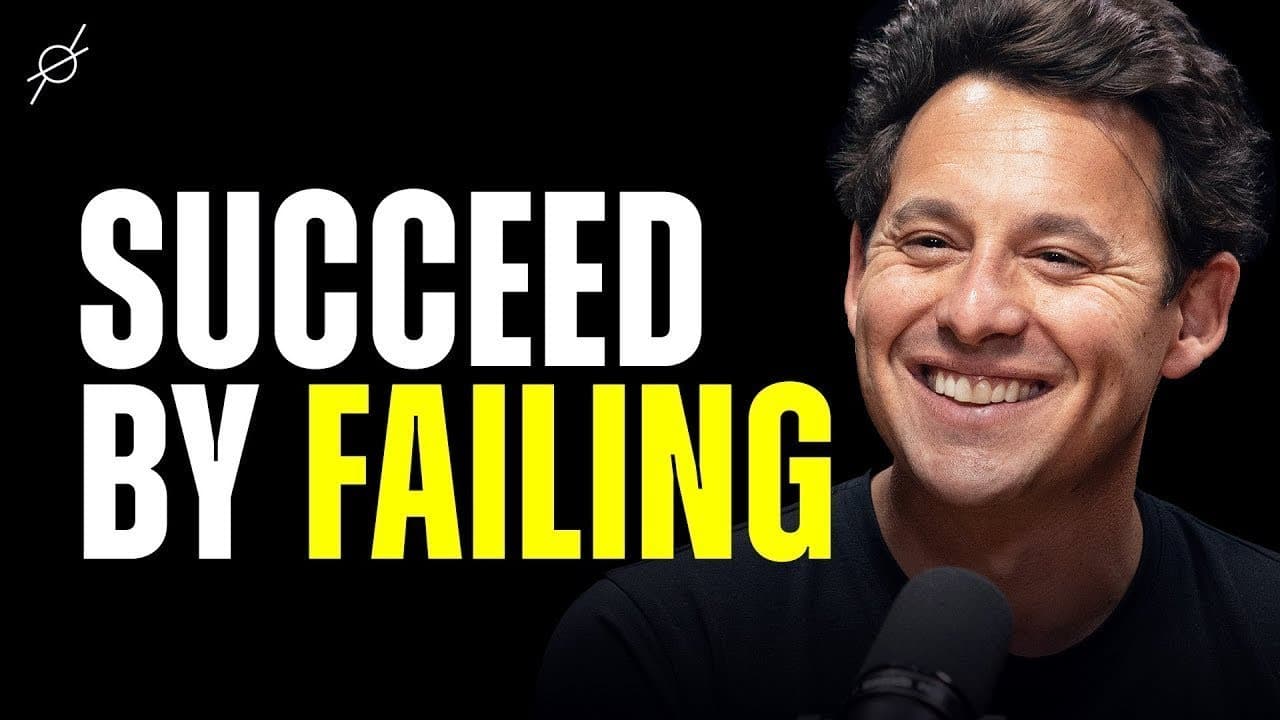
it is scary to start a business it is very scary to put yourself out there it is very scary to to fail the cost of failure in the 50s of Entrepreneurship was massive today it's not Harley finlin is democratizing entrepreneurship for the digital age as the president of Shopify Harley has helped transform a small snowboard equipment retailer into a g... Read More
Key Insights
- True confidence is the belief that you can figure out whatever comes your way, not the belief that you already know what to do. This definition makes uncertainty manageable because confidence rests on adaptability and resourcefulness rather than complete preparation or guaranteed outcomes.
- Entrepreneurship is frightening because it requires people to expose themselves to uncertainty and possible failure. Finkelstein argues that the cost of entrepreneurial failure was massive in the 1950s but is lower today, making experimentation and another attempt more accessible.
- Intentionality is expressed through the family motto, “the way you do anything is the way you do everything.” Finkelstein tries to bring comparable care to his Shopify responsibilities, family trips, meals, health, and personal challenges instead of allowing success in one area to justify cruising elsewhere.
- A yearly challenge can mark time and restore deliberate discomfort as people grow older. Finkelstein chose an Everesting event near Montreal after turning 40 because climbing the equivalent of 29,000 feet frightened him and exposed a neglected need for greater intentionality around health.
- Fear becomes more useful when it is examined precisely. Finkelstein initially feared failing to complete the endurance event because he would feel embarrassed, then identified the deeper concern: being the only member of his four-person training group who did not finish.
- Extreme difficulty can create singular focus by making multitasking impossible. During the endurance event, Finkelstein stopped checking his phone and email and concentrated on one task, an experience he valued enough to repeat simply for another extended period without ordinary distractions.
- Mental exhaustion can encourage people to negotiate against their original commitments. After roughly 26 hours, Finkelstein began questioning whether reaching the equivalent of Kilimanjaro was sufficient, then took a 90-minute nap, returned to the course, and completed the larger objective.
- Ambition requires distinguishing excellence from misplaced effort. Finkelstein wants to make excellent pancakes for his children, but recognizes that obsessing over ingredients at the expense of sitting with them would defeat the purpose and turn intentionality into pressure rather than connection.
Install to Summarize YouTube Videos and Get Transcripts
Explore YouTube Video Summarizer or Get YouTube Transcript Extractor
Questions & Answers
Q: How can entrepreneurs build true confidence?
Entrepreneurs can build true confidence by replacing the expectation of knowing every answer with trust in their ability to respond and figure things out. Deliberately facing difficult situations provides evidence of that resourcefulness. Preparation still matters, but confidence grows most when uncertainty appears, self-doubt surfaces, and the entrepreneur continues adapting rather than treating discomfort as proof of incapacity.
Q: Why is failure important to entrepreneurial success?
Failure is important because entrepreneurship requires action before certainty is available. Finkelstein presents failure as frightening but increasingly survivable, arguing that its cost was massive in the 1950s and is lower today. When people accept the possibility of an unsuccessful attempt, they can test ideas, gain experience, and keep moving instead of allowing impostor syndrome to prevent participation.
Q: What is impostor syndrome in entrepreneurship?
Entrepreneurial impostor syndrome is the internal belief that a person lacks the legitimacy or knowledge required to build something. Finkelstein says this feeling exists only in one’s own head and contrasts it with true confidence. A founder does not need complete certainty. The more useful belief is that unexpected problems can be addressed through learning, adaptation, and continued effort.
Q: How can a difficult physical challenge improve mindset?
A difficult physical challenge can reveal fears, internal bargaining, and habitual responses to discomfort in a concentrated setting. Finkelstein’s Everesting event forced him to confront embarrassment, mental exhaustion, and the temptation to redefine completion. Finishing showed him the value of preparation, companionship, sustained focus, and becoming comfortable with discomfort, lessons he wanted to carry into later life.
Q: How should someone examine a fear of failure?
A fear of failure should be written down and broken into more specific concerns. Finkelstein first identified that he feared not completing the event because failure would embarrass him. Further examination showed that he specifically feared being the only person in his four-member group who did not finish. That precision turned a vague fear into something understandable and actionable.
Q: Why does mental exhaustion make quitting more likely?
Mental exhaustion makes quitting more likely because it encourages people to bargain with themselves and reduce the original goal. After about 26 hours awake, Finkelstein began wondering whether completing the equivalent of Kilimanjaro was already enough. He recognized that his thinking had deteriorated, took a 90-minute nap, returned, and completed the equivalent of Everest rather than accepting the smaller milestone.
Q: How does intentionality affect work and family life?
Intentionality means giving deliberate attention to how an activity is performed and why it matters. Finkelstein applies the motto, “the way you do anything is the way you do everything,” to Shopify work, travel planning, meals, health, and parenting. However, he also warns that careful execution becomes counterproductive when perfecting a task displaces the relationship or purpose behind it.
Q: Why should successful people leave their comfort zones?
Successful people should leave their comfort zones because an activity that looks difficult to others may have become familiar to the person who mastered it. Public praise can reinforce that familiar identity and make genuine experimentation feel especially risky. Finkelstein chose a challenge outside his endurance background to avoid cruising, experience vulnerability, and practice becoming comfortable with being uncomfortable.
Summary & Key Takeaways
-
Harley Finkelstein connects entrepreneurship with the willingness to face uncertainty, fail, and adapt. He argues that the perceived cost of failure is lower today than it was in the 1950s, while impostor syndrome often exists primarily in the entrepreneur’s own mind. Confidence develops through resourcefulness rather than certainty.
-
Finkelstein describes completing an Everesting endurance event that required climbing the equivalent of 29,000 feet. Training exposed his fear of embarrassment if he failed in front of his group. During the event, exhaustion produced doubts and internal bargaining, but a 90-minute nap helped him return and finish with his companions.
-
The experience reinforced intentionality, singular focus, and comfort with discomfort. Finkelstein applies the family motto, “the way you do anything is the way you do everything,” while recognizing that ambition requires balance. Perfecting a task matters less when that effort distracts from the people or purpose the task should serve.
Read in Other Languages (beta)
Share This Summary 📚
Summarize YouTube Videos and Get Video Transcripts with 1-Click
Try YouTube Summary with ChatGPT & Claude or YouTube Transcript Generator
Explore More Summaries from Rich Roll 📚





Summarize YouTube Videos and Get Video Transcripts with 1-Click
Try YouTube Summary with ChatGPT & Claude or YouTube Transcript Generator