How to Survive an In-Flight Cockpit Fire

TL;DR
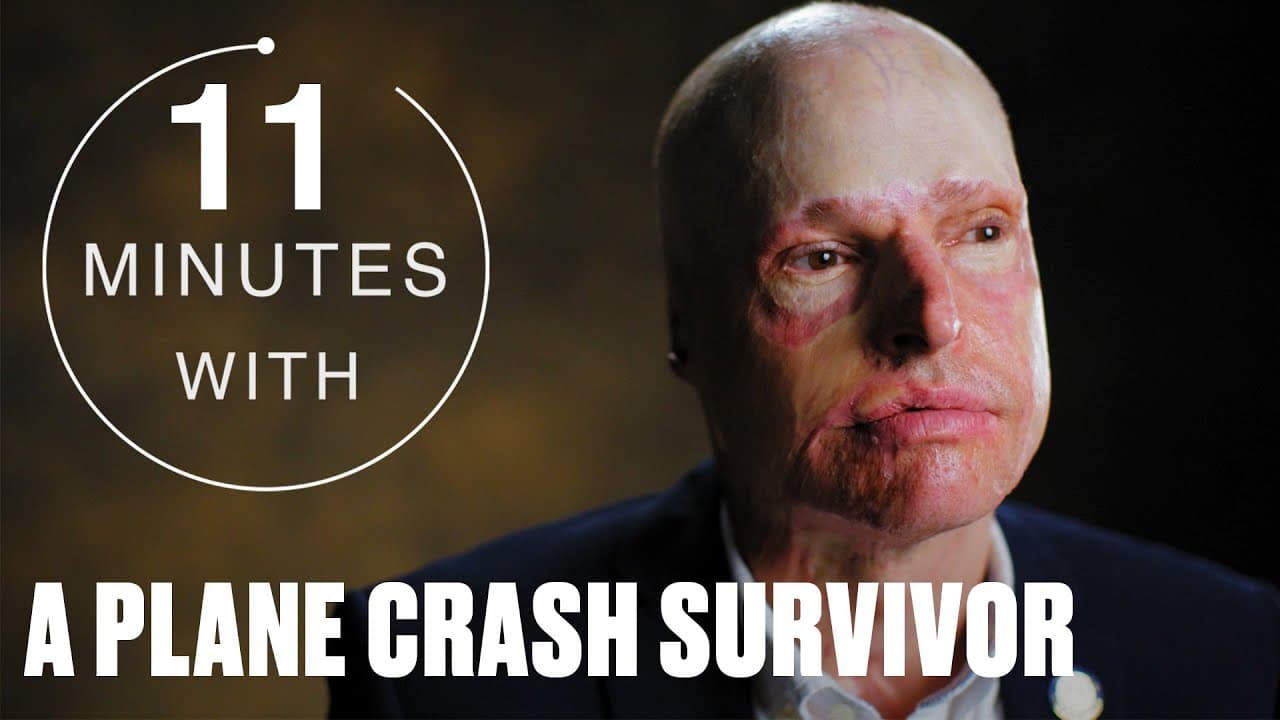
Keep controlling the aircraft during an emergency, reduce speed and altitude, shut down ignition and fuel systems, and escape only when the height offers a chance of survival. Jamie Hull followed his instructor’s command to “fly the damn aircraft,” jumped from the wing at about 15 feet, and survived devastating burns, internal injuries, and years of treatment.
Transcript
i got onto the left hand wing clambering over that door lip and then i stood onto the wing and was able to stand on the wing momentarily i jumped um i would estimate at a height of about fifteen one five feet i can remember going to luton airport back in the day and i was just a kid and you could get quite close to the activity you'd hear the the p... Read More
Key Insights
- Maintaining control of the aircraft was Hull’s first priority after discovering the fire. He recalled an instructor’s command to “fly the damn aircraft,” kept his hands on the controls, reduced power and airspeed, and managed the descent despite flames entering the cockpit.
- The cockpit fire became immediately life-threatening at 1,000 feet. Hull saw a thin yellow-orange flame near the front fuselage, then watched fire spread around his feet and ankles, leaving him convinced that remaining inside would allow the flames to overwhelm him.
- A controlled descent created Hull’s only perceived escape opportunity. He monitored the altimeter through 900, 800, 700, and 600 feet while reducing speed, then crossed the active runway at approximately 100 to 50 feet before preparing to leave the aircraft.
- Shutting down the aircraft required a deliberate sequence under extreme pressure. Hull turned off the key magnetos, red switch, and fuel pump, then rotated the fuel selector valve to the off position while descending through the final 50 feet.
- Opening the canopy required physical force while the aircraft was still descending. Hull reached for the handle, used his elbow, and struck the door with the heel of his hand as the aircraft passed through approximately 50, 40, 30, and 20 feet.
- Jumping at low altitude still produced a severe impact because the aircraft was moving. Hull estimated that he left the wing at about 15 feet while traveling roughly 30 knots, landed feet first, pitched forward, and struck his face on sharp grass.
- Hull’s injuries extended far beyond visible burns. Medical assessment found 63 percent third-degree burns, facial and bilateral eye-socket fractures, a ruptured large intestine, and a lacerated liver that was bleeding profusely inside his body.
- Recovery required prolonged medical and psychological rehabilitation. Doctors gave Hull a five percent probability of survival, and he underwent 62 operations under general anaesthetic. After years of physical and mental work, he returned to the air by learning to fly a hot-air balloon.
Install to Summarize YouTube Videos and Get Transcripts
Explore YouTube Video Summarizer or Get YouTube Transcript Extractor
Questions & Answers
Q: How did Jamie Hull survive an in-flight cockpit fire?
Jamie Hull survived by continuing to control the aircraft instead of abandoning it at 1,000 feet. He reduced power, airspeed, and altitude, crossed the active runway at low height, and shut off the magnetos, fuel pump, and fuel selector. After forcing open the canopy, he climbed onto the wing at about 20 feet and jumped from an estimated 15 feet.
Q: What should a pilot prioritize during an aircraft emergency?
Hull’s experience emphasizes maintaining control of the aircraft as the immediate priority. During the fire, he remembered his instructor saying, “above all, if there’s an emergency and you’ve got a problem, fly the damn aircraft.” He kept his left hand on the control stick and his right hand on the throttle while reducing speed, descending, breathing, and thinking through each action.
Q: How did Jamie Hull discover that his aircraft was on fire?
Hull first noticed a thin streak of visible yellow-orange flame emerging from the front portion of the fuselage. He looked twice because the sight was initially difficult to believe. When he looked down toward the rudder pedals, he saw flames beginning to lap around his feet and ankles inside the small two-seat cockpit, confirming that the emergency was real.
Q: Why did Jamie Hull not jump immediately from 1,000 feet?
Hull believed jumping from 1,000 feet would not be survivable, and he was not wearing a parachute because he said parachutes were not worn in that light aircraft. He therefore concluded that he needed to keep flying, reduce the aircraft’s speed, and descend to a much lower height before attempting to escape from the burning cockpit.
Q: How did Jamie Hull shut down the aircraft before escaping?
As the aircraft descended to low altitude, Hull turned the key magnetos, identified as alpha and bravo, to the off position. He also switched off the red switch in the center column and the fuel pump, then rotated the fuel selector valve through 90 degrees to off. He performed these actions in sequence while continuing to control the aircraft.
Q: What happened when Jamie Hull jumped from the aircraft?
Hull climbed over the left canopy-door lip and briefly stood on the wing before jumping from an estimated height of 15 feet. He believed the aircraft was moving at roughly 30 knots, so the landing was extremely hard. He landed feet first, was thrust forward, struck his face on sharp Florida razor grass, and then extinguished flames on his shoulder and scalp.
Q: What injuries did Jamie Hull suffer in the crash?
Hull was diagnosed with 63 percent third-degree burns. The impact also fractured his nose and both upper eye-socket areas. Force from the jump and landing traveled through his torso, rupturing his large intestine and lacerating his liver, which caused profuse internal bleeding. He later underwent extensive reconstructive treatment involving 62 operations under general anaesthetic.
Q: How did Jamie Hull recover and return to flying?
Doctors in Orlando gave Hull a five percent probability of survival and placed him in a drug-induced coma. He does not remember roughly the next six months of his life. Recovery required 62 operations and years of physical and mental rehabilitation. Wanting to return to the air, he later won a scholarship and trained in Italy to fly a hot-air balloon.
Summary & Key Takeaways
-
Jamie Hull was building solo flying experience when he saw yellow-orange flames emerging from the front of his small aircraft at 1,000 feet. Fire soon surrounded his feet and ankles. With no parachute and little time, he concluded that controlling the aircraft and descending quickly offered his only realistic chance of survival.
-
Remembering an instructor’s command to fly the aircraft during an emergency, Hull kept one hand on the control stick and another on the throttle. He reduced speed, descended toward the runway, switched off the magnetos, fuel pump, and fuel selector, forced open the canopy, and climbed onto the wing at 20 feet.
-
Hull jumped from about 15 feet while moving at roughly 30 knots, struck the ground hard, and extinguished flames on his shoulder and scalp. He suffered fractures, internal injuries, and 63 percent third-degree burns. After receiving a five percent survival estimate and undergoing 62 operations, he eventually returned to flying in a balloon.
Read in Other Languages (beta)
Share This Summary 📚
Summarize YouTube Videos and Get Video Transcripts with 1-Click
Try YouTube Summary with ChatGPT & Claude or YouTube Transcript Generator
Explore More Summaries from LADbible Stories 📚



Summarize YouTube Videos and Get Video Transcripts with 1-Click
Try YouTube Summary with ChatGPT & Claude or YouTube Transcript Generator