How Has War Changed Between WWII and Afghanistan?
TL;DR
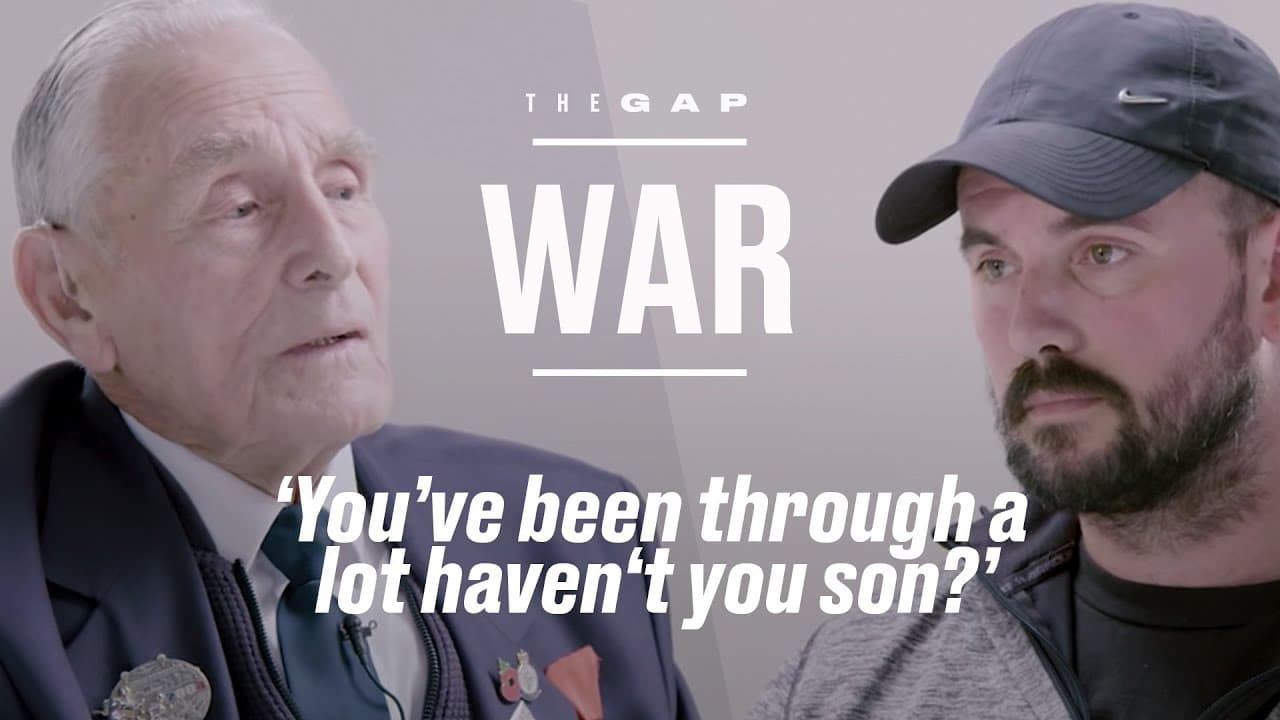
War has fundamentally changed across generations: WWII soldiers fought a visible enemy while advancing forward, but modern soldiers in Afghanistan face hidden enemies who can attack from behind. John Dennett, 95, and Ste Nicholls, 34, both agree they would not have wanted to fight in the other's war, and both point to mental health as service's lasting cost.
Transcript
- We deployed in Iraq in 2006, we then deployed to Kosovo. From there we then deployed to Afghanistan. - Well you've been through quite a lot son, haven't you? - Yes. (solemn music) - Hi. - Hello young man, how are you? - Nice to meet you. - How are you? - Pleasure. (solemn music) - How have you been? Are you okay? - Not so bad, yourself? - On the ... Read More
Key Insights
- Modern warfare differs fundamentally from WWII because the enemy is invisible. As Ste explains, in Afghanistan the enemy 'can come up behind you and you don't know he's there,' unlike WWII where advancing forward meant going the right way.
- Mental health is described as a 'massive epidemic' going through the military. Ste says he has 'really really suffered' for the past 13 years, batting it backwards while moving forward, and knows many soldiers and girls still suffering.
- Forgiving the former enemy took decades. John says it took him until about 1970 to see clearly and realize the Germans 'were the same as us,' doing what they had to do, having been bred to fight them to win the war.
- Ste felt equal to his enemy rather than hateful. He believed he was fighting in someone else's country while they defended it, saying if men could fight him and his section to that extreme, then 'hats off to them.'
- Media perception shapes how soldiers are viewed. Returning from Iraq, Ste was portrayed as a killer and murderer with unhappy crowds at Teesside; returning from Afghanistan he was portrayed as a hero with the country rejoicing 'save our heroes.'
- Combat stress persists long after service ends. Ste describes constant high alert in a war zone where one look triggers fight mode, and says 12 years later he is 'still in fight mode' and doesn't think he will ever change that.
- John's deployment lasted two years fighting the Second World War across the North African Campaign and the invasion of Sicily as an anti-aircraft gunner, firing Oerlikons and a 12 pounder from a landing craft.
- Talking about service aids recovery. Ste started a new project this year discussing his career, story and mental health, saying if someone in a dark room watches, relates, and walks out the front door, 'then we've saved one.'
Install to Summarize YouTube Videos and Get Transcripts
Explore YouTube Video Summarizer or Get YouTube Transcript Extractor
Questions & Answers
Q: How has war changed between World War Two and Afghanistan?
War has changed fundamentally across generations. In WWII, as John explains, you had to go where you were sent, and as long as you were going forward you were going the right way against a visible enemy. In Afghanistan, Ste describes fighting an enemy you cannot locate, who 'can come up behind you and you don't know he's there.' Both men agree they would not have wanted to fight in the other's war.
Q: What did John Dennett do during World War Two?
John Dennett served two years in the Second World War as part of the third flotilla, which had 12 vessels. He took part in the North African Campaign and then the invasion of Sicily. He was an anti-aircraft gunner on a landing craft equipped with six Oerlikons and a 12 pounder, firing many times through the war. He fought behind a shield with a gap that gave a feeling the enemy couldn't hit him, though he admits he could not swim.
Q: Where did Ste Nicholls deploy during his military service?
Ste Nicholls first did six weeks of jungle training in Belize as pre-training for Iraq. He deployed to Iraq in 2006 on a six-month tour that turned into seven months, based at Saddam's Palace in Basra South where he patrolled and did Strike Ops. He then deployed to Kosovo for peacekeeping, and finally to Afghanistan. He describes these as completely different operations, moving from armored to foot.
Q: Why is mental health described as an epidemic in the military?
Ste calls mental health a 'massive epidemic' going through the military for veterans and still-serving soldiers. He says he has really suffered for the past 13 years, batting it backwards while keeping himself moving forward. He explains that combat stress keeps soldiers in permanent 'fight mode,' and that having his daughter and family helps him stay straight, though it still creeps back. He knows many soldiers are suffering the same way.
Q: What were Ste's feelings toward the enemy in Afghanistan?
Ste says that at the time he did not have any hate for the enemy, which he acknowledges makes him stand out. He believed he was fighting in someone else's country and that they were defending it in a way, which he cites as one reason he eventually left. He fought so hard that he felt equal to them, saying that if someone could get men in front of him and fight to that extreme, then 'hats off to them.'
Q: How does media portrayal affect how soldiers are viewed?
Ste says how soldiers are viewed depends entirely on how the media portrays them. Returning from Iraq and landing at Teesside, he faced groups of British people who were not happy, because the media portrayed the soldiers as killers and murderers. In contrast, when he came back from Afghanistan, he was portrayed as a hero and the whole country rejoiced with 'save our heroes.' The same service could be framed in opposite ways.
Q: How long did it take John to stop feeling hatred toward the Germans?
John says he was bred to fight the Germans to win the war, and it took him until about 1970 before he could really see his way clear. Only then did he realize that the Germans were the same as the British, simply doing what they had to do. He now has nothing against them, but he emphasizes that it took him all that time to reach that understanding after the war ended.
Q: Why did the two veterans decide to tell their stories?
John hopes telling his story helps the younger generation understand history, since younger people don't know about his war and he doesn't know about theirs. Ste, who spent ten years in a dark place keeping things to himself, started a new project this year talking about his career and mental health, and finds it helps him. He believes someone in a dark room scrolling on their phone might relate, walk out their front door, and be saved.
Summary & Key Takeaways
-
John Dennett, 95, served two years in WWII as an anti-aircraft gunner in the third flotilla, taking part in the North African Campaign and the invasion of Sicily. He operated Oerlikons and a 12 pounder from a landing craft, firing behind a shield gap that gave a comforting feeling of safety.
-
Ste Nicholls, 34, trained in Belize jungle before deploying to Iraq in 2006 at Saddam's Palace in Basra South, then Kosovo for peacekeeping, then Afghanistan. He led a section of eight lads through 360 ambushes and IED strikes, relying on rifles and 7.62 belt-fed GPMGs.
-
Both men agree they would not want to fight the other's war and identify comradeship as what they most miss. Ste stresses mental health as service's lasting toll, while John, glad to get out after four and a half years, holds no regrets and is proud to have taken part.
Read in Other Languages (beta)
Share This Summary 📚
Summarize YouTube Videos and Get Video Transcripts with 1-Click
Try YouTube Summary with ChatGPT & Claude or YouTube Transcript Generator
Explore More Summaries from LADbible Stories 📚


Summarize YouTube Videos and Get Video Transcripts with 1-Click
Try YouTube Summary with ChatGPT & Claude or YouTube Transcript Generator