Products
Features
YouTube Video Summarizer
Summarize YouTube videos
Web & PDF Highlighter
Highlight web pages & PDFs
Chat with PDF
Ask any PDF questions with AI
Ask AI Clone
Chat with your highlights & memories
Audio Transcriber
Transcribe audio files to text
Glasp Reader
Read and highlight articles
Kindle Highlight Export
Export your Kindle highlights
Idea Hatch
Hatch ideas from your highlights
Integrations
Obsidian Plugin
Notion Integration
Pocket Integration
Instapaper Integration
Medium Integration
Readwise Integration
Snipd Integration
Hypothesis Integration
Apps & Extensions
Chrome Extension
Safari Extension
Edge Add-ons
Firefox Add-ons
iOS App
Android App
Discover
Discover
Ideas
Discover new ideas and insights
Articles
Curated articles and insights
Books
Book recommendations by great minds
Posts
Essays and notes from readers
Quotes
Inspiring quotes collection
Videos
Curated videos and summaries
Explore Glasp
Glasp Story
How we grew from 0 to 3 million users
Glasp Newsletter
Weekly insights and updates
Glasp Talk
Interview series with great minds
Glasp Blog
Latest news and articles
Glasp Use Cases
Learn how others use Glasp
Build & Support
Glasp API
Access Glasp's API for developers
MCP Connector
Connect Glasp to Claude & ChatGPT
Community
Glasp Reddit Community
Students
Student discount and benefits
FAQs
Frequently Asked Questions
AboutPricing
DashboardLog inSign up

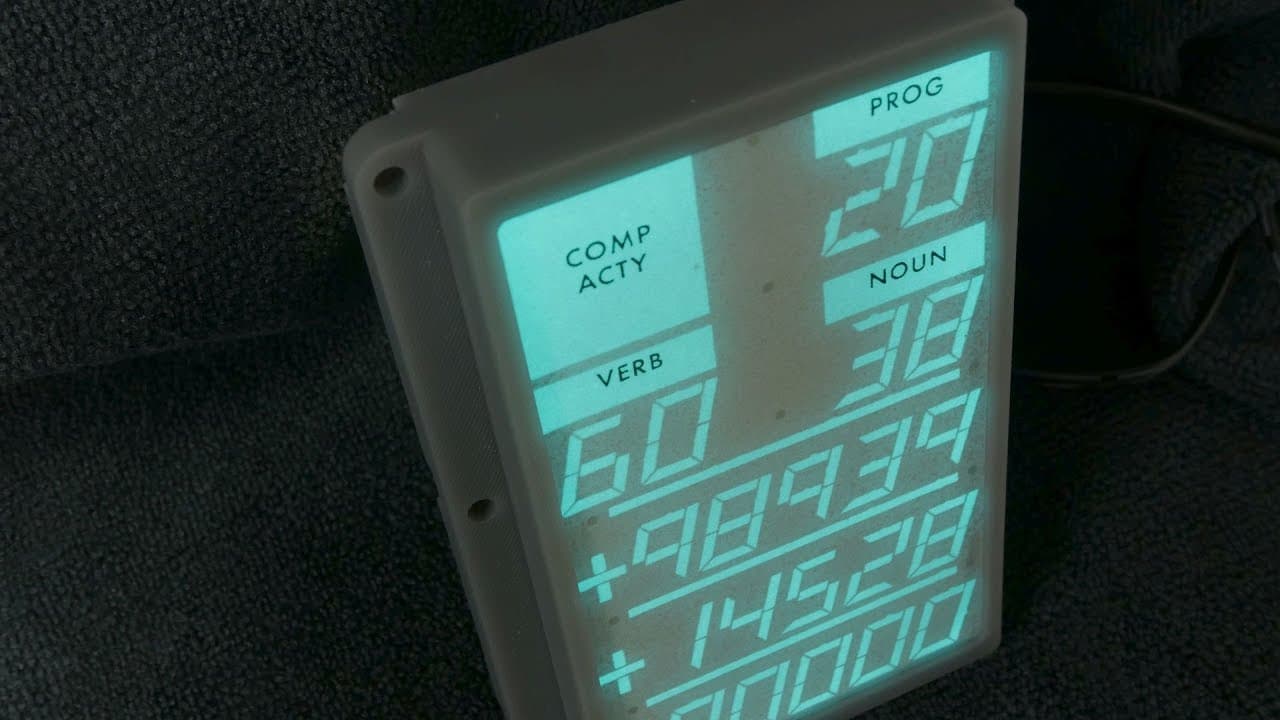
Build an electroluminescent glass panel display -- an Apollo DSKY
489.3K views
•
May 15, 2019
by
Applied Science
YouTube video player
Build an electroluminescent glass panel display -- an Apollo DSKY

TL;DR

The creator built custom electroluminescent displays for Apollo guidance computers using screen printing, high voltage drivers, and retro materials.

Transcript

today and Applied Science we're going to show you how I built these custom electroluminescent displays these are made from a pane of glass and the segments are defined by screen printing and then I have a high voltage driver to make the electroluminescent display work these happen to be a replica of the disc II the dsk Y from the Apollo program so ... Read More

Key Insights

  • 💻 The project aimed to create custom electroluminescent displays for Apollo guidance computers.
  • âš¡ The displays were made using screen printing and high voltage drivers, using materials from the time of the Apollo program.
  • 😀 The project faced challenges with bugs, mechanical construction, and voltage undershoot.

Install to Summarize YouTube Videos and Get Transcripts

Explore YouTube Video Summarizer or Get YouTube Transcript Extractor

Questions & Answers

Q: What materials were used to create the custom electroluminescent displays?

The displays were made from a pane of glass with segments defined by screen printing using conductive ink. The common electrode was created using conductive epoxy with a wire on top.

Q: Why did the creator choose to use materials from the time of the Apollo program?

The purpose of the project was to stay true to the materials used during the Apollo program, as there were no modern alternatives like LEDs or LCDs at that time.

Q: What was the most difficult part of the project?

The most difficult part was the board bring-up due to high voltages involved. However, the challenge was not in arcing, but in dealing with voltage undershoot and protecting the circuit from blowing out.

Q: How did the creator overcome the voltage undershoot problem?

The creator changed the drive pattern to drive the common and segment electrodes out of phase, ensuring that the voltage never crossed zero and avoided the undershoot issue.

Summary & Key Takeaways

  • The creator built custom electroluminescent displays for Apollo guidance computers using screen printing and high voltage drivers.

  • The purpose of the project was to learn new techniques and use materials from the time of the Apollo program.

  • The project faced challenges with bugs and mechanical construction, and the creator documented everything on Github.


Read in Other Languages (beta)

English

Share This Summary 📚

Summarize YouTube Videos and Get Video Transcripts with 1-Click

Download browser extensions on:

Try YouTube Summary with ChatGPT & Claude or YouTube Transcript Generator

Explore More Summaries from Applied Science 📚
Electron beam control in a scanning electron microscope thumbnail
Electron beam control in a scanning electron microscope
Applied Science
Thermocouple vacuum gauge teardown and explanation thumbnail
Thermocouple vacuum gauge teardown and explanation
Applied Science
Custom supercritical CO2 chamber with easy-to-use lid clamp thumbnail
Custom supercritical CO2 chamber with easy-to-use lid clamp
Applied Science
How to Create Images Using Plant Leaves and Photosynthesis thumbnail
How to Create Images Using Plant Leaves and Photosynthesis
Applied Science
Cryogenic machining: Custom rubber parts thumbnail
Cryogenic machining: Custom rubber parts
Applied Science
Cleaning a high-vacuum Penning gauge (cold cathode vacuum gauge) thumbnail
Cleaning a high-vacuum Penning gauge (cold cathode vacuum gauge)
Applied Science

Summarize YouTube Videos and Get Video Transcripts with 1-Click

Download browser extensions on:

Try YouTube Summary with ChatGPT & Claude or YouTube Transcript Generator

Apps & Extensions

  • Chrome Extension
  • Safari Extension
  • Edge Add-ons
  • Firefox Add-ons
  • iOS App
  • Android App

Key Features

  • YouTube Video Summarizer
  • Web & PDF Summarizer
  • Web & PDF Highlighter
  • Chat with PDF
  • Ask AI Clone
  • Audio Transcriber
  • Glasp Reader
  • Kindle Highlight Export
  • Idea Hatch

Integrations

  • Obsidian Plugin
  • Notion Integration
  • Pocket Integration
  • Instapaper Integration
  • Medium Integration
  • Readwise Integration
  • Snipd Integration
  • Hypothesis Integration

More Features

  • APIs
  • MCP Connector
  • Blog & Post
  • Embed Links
  • Image Highlight
  • Personality Test
  • Quote Shots
  • Open Graph Checker

Company

  • About us
  • Our Story
  • Blog
  • Community
  • FAQs
  • Job Board
  • Newsletter
  • Pricing
Terms

•

Privacy

•

Guidelines

© 2026 Glasp Inc. All rights reserved.