How Do One-Legged Robots Balance While Hopping?
TL;DR
One-legged robots balance while hopping by using a clever actuation system that utilizes energy from height, velocity, and a spring mechanism. Key factors include calculating foot placement and maintaining an upright position during movement, enabling advanced maneuvers like flipping and obstacle navigation.
Transcript
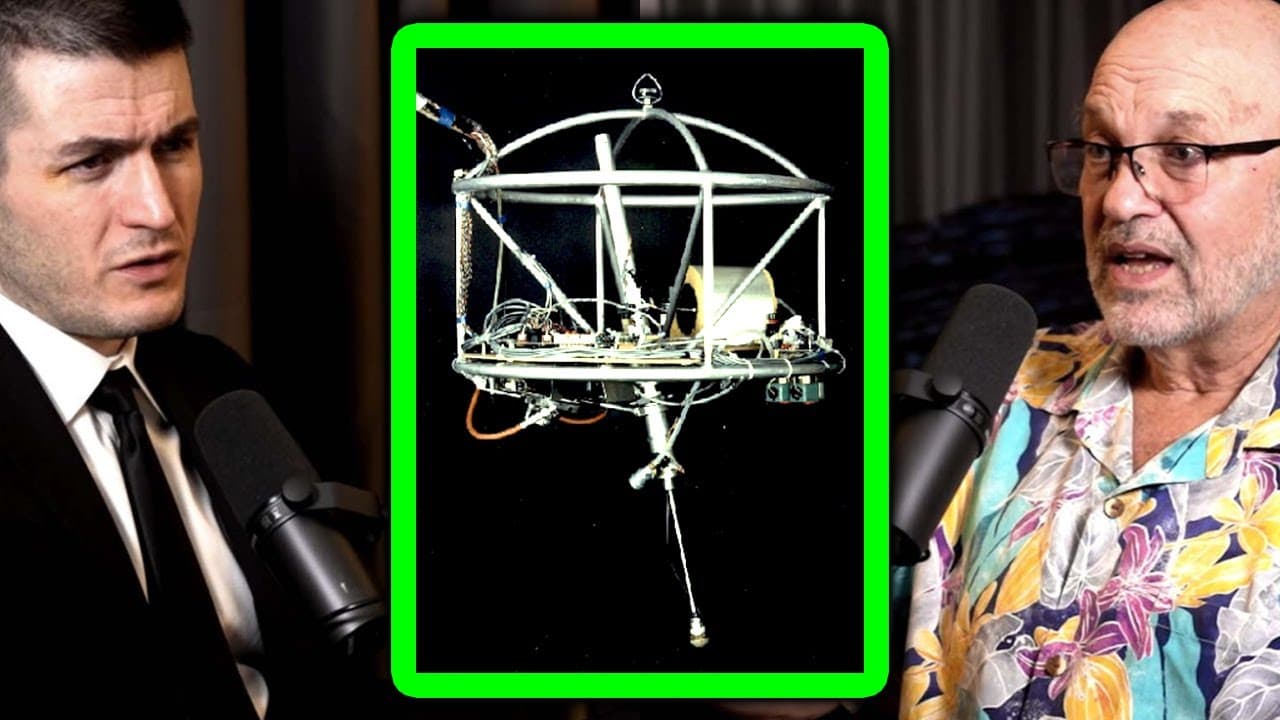
so what was on the technical side what are the some of the challenges of getting up getting to the point where we saw like in the video the the pogo stick robot that's actually successfully hopping and then eventually doing flips and all this kind of stuff well in the very early days I needed some better engineering than I had than I could do mysel... Read More
Key Insights
- 🥢 The engineering challenges of developing a hopping stick robot involved creating a balanced actuated system and making it work in 3D.
- 🤩 Energy distribution, foot placement, and maintaining upright attitude were key elements in achieving self-balance.
- 👻 Optimizing performance and navigation capabilities allows the robot to go faster and overcome obstacles.
- 😤 Finding talented team members is essential for the success of ambitious projects.
- 💡 Believing in oneself and the potential of the idea is crucial in the early stages of development.
- ❓ Collaboration and the contributions of different individuals with varied expertise enhance the overall outcome.
- 🤖 Boston Dynamics is an example of a company that excels in robotic engineering and produces highly functional robots.
- 🎙️ More videos with Marc Raibert:
Install to Summarize YouTube Videos and Get Transcripts
Explore YouTube Video Summarizer or Get YouTube Transcript Extractor
Questions & Answers
Q: How does a hopping stick in 3D balance itself?
The robot's actuation involves three main elements: energy distribution, foot placement, and maintaining an upright attitude. By estimating the robot's height off the ground and measuring energy distribution, the system can adjust the amount of energy put into each hop. Foot placement is crucial for maintaining stability, and torque is applied between the legs and the body to keep the robot upright during each hop.
Q: How far does the robot have to tilt before it becomes impossible to balance itself?
In the early stages, optimization was not a priority, so the robot's ability to balance itself was limited. However, with further development and optimization, the robot has the potential to achieve higher performance and balance itself even at greater tilting angles. Progress has been made in recent years to improve speed and obstacle navigation, allowing the robot to adapt to various situations.
Q: What was it like finding other people to work on this project?
Finding the right team members, like Ben Brown, was crucial to the project's success. Collaborating with talented engineers who had expertise in making things work was essential. The ability to bring together skilled individuals contributed significantly to the development of the hopping stick robot and subsequent success in the field of robotics.
Summary & Key Takeaways
-
In the early stages, the engineering team faced challenges in creating a balanced, actuated system for the hopping stick robot.
-
They developed a design that could work and quickly progressed from using an inclined air table to a device that allowed the robot to move around the room.
-
The major breakthrough came when they made the robot work in 3D while bouncing and performing flips.
Read in Other Languages (beta)
Share This Summary 📚
Summarize YouTube Videos and Get Video Transcripts with 1-Click
Try YouTube Summary with ChatGPT & Claude or YouTube Transcript Generator
Explore More Summaries from Lex Clips 📚




Summarize YouTube Videos and Get Video Transcripts with 1-Click
Try YouTube Summary with ChatGPT & Claude or YouTube Transcript Generator