How to Make Copper Hydroxide for Schweizer's Reagent
TL;DR
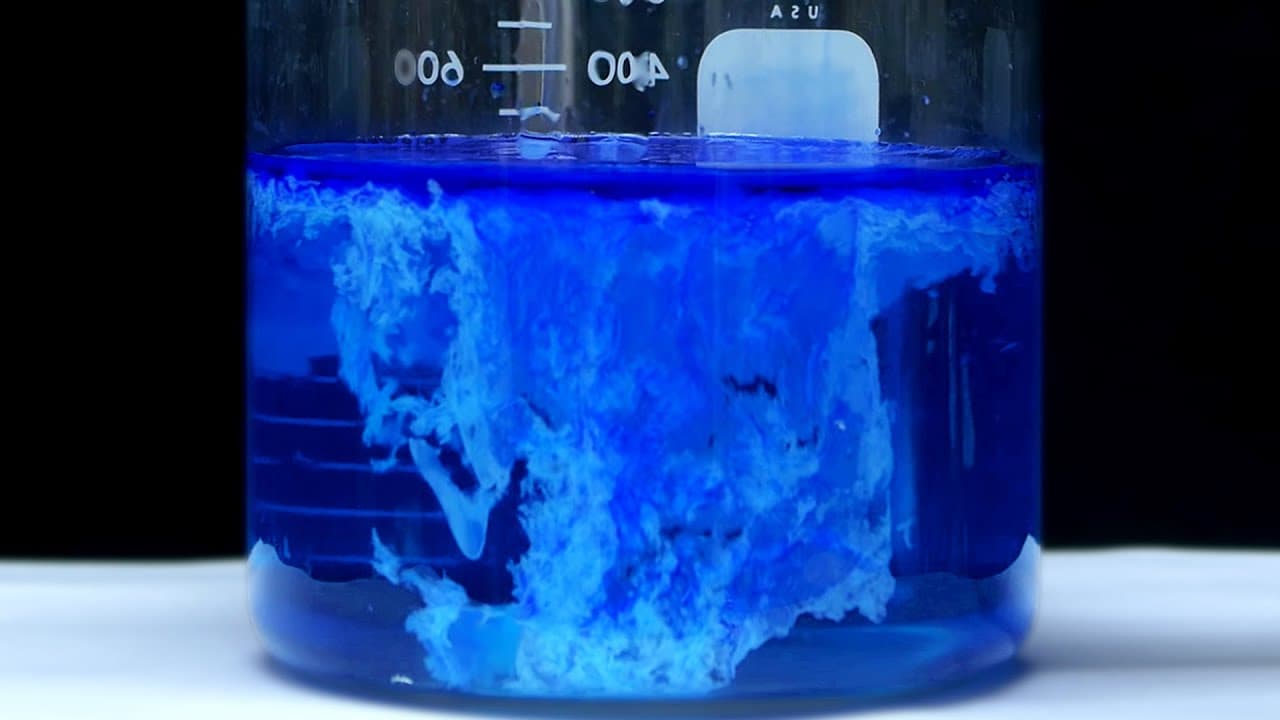
To make copper hydroxide, dissolve 50g of copper sulfate pentahydrate in water, then add 50ml of 30% aqueous ammonia, creating a blue solution. Add 16g of sodium hydroxide to precipitate the copper hydroxide, which is then washed with acetone and dried to yield a light blue powder, suitable for creating Schweizer's reagent.
Transcript
today we're going to be making a little bit of copper hydroxide which is used commercially as a fungicide or a pigment but I'm not really interested in that and I'm actually going to be using it to make something called SH Wiser's reagent I've actually already made a video about why sirs reagent and what makes it so special is that it's one of the ... Read More
Key Insights
- ❓ Copper hydroxide is used to make SH Wiser's reagent, which can dissolve cellulose.
- ❓ Impurities in the copper sulfate solution are removed through vacuum filtration.
- 🪜 Adding sodium hydroxide to the copper hydroxide solution precipitates the copper hydroxide.
- 💁 The copper hydroxide is washed with acetone and then dried to obtain a powder form.
- 💦 The yield of copper hydroxide in this process was above 100%, indicating potential water content.
Install to Summarize YouTube Videos and Get Transcripts
Explore YouTube Video Summarizer or Get YouTube Transcript Extractor
Questions & Answers
Q: What is the purpose of copper hydroxide in making SH Wiser's reagent?
Copper hydroxide is used in SH Wiser's reagent as it is one of the few substances that can dissolve cellulose, which is present in materials like clothing, paper, and dietary fiber.
Q: Why are impurities removed from the copper sulfate solution?
Impurities are removed through vacuum filtration to ensure a pure copper hydroxide product. These impurities can affect the quality and stability of the final product.
Q: Can sodium hydroxide be added directly to copper sulfate instead of copper hydroxide?
Adding sodium hydroxide directly to copper sulfate does not yield good results. The reaction produces a slimy texture and an unstable product, unlike the light blue copper hydroxide obtained when sodium hydroxide is added to copper hydroxide.
Q: How is the copper hydroxide powder obtained?
After washing the copper hydroxide with acetone, the remaining acetone is evaporated, leaving behind a semi-dry paste. The final drying process converts the paste into a light blue copper hydroxide powder.
Summary & Key Takeaways
-
Copper hydroxide is made using copper sulfate pentahydrate, sodium hydroxide, and ammonium hydroxide.
-
The impurities in the copper sulfate solution are removed through vacuum filtration.
-
Sodium hydroxide is added to the copper hydroxide solution to precipitate the copper hydroxide.
-
The copper hydroxide is washed with acetone and then dried to obtain a light blue powder.
Read in Other Languages (beta)
Share This Summary 📚
Summarize YouTube Videos and Get Video Transcripts with 1-Click
Try YouTube Summary with ChatGPT & Claude or YouTube Transcript Generator
Explore More Summaries from NileRed 📚
Summarize YouTube Videos and Get Video Transcripts with 1-Click
Try YouTube Summary with ChatGPT & Claude or YouTube Transcript Generator