How Did U.S. Power Expand in the Middle East?
TL;DR
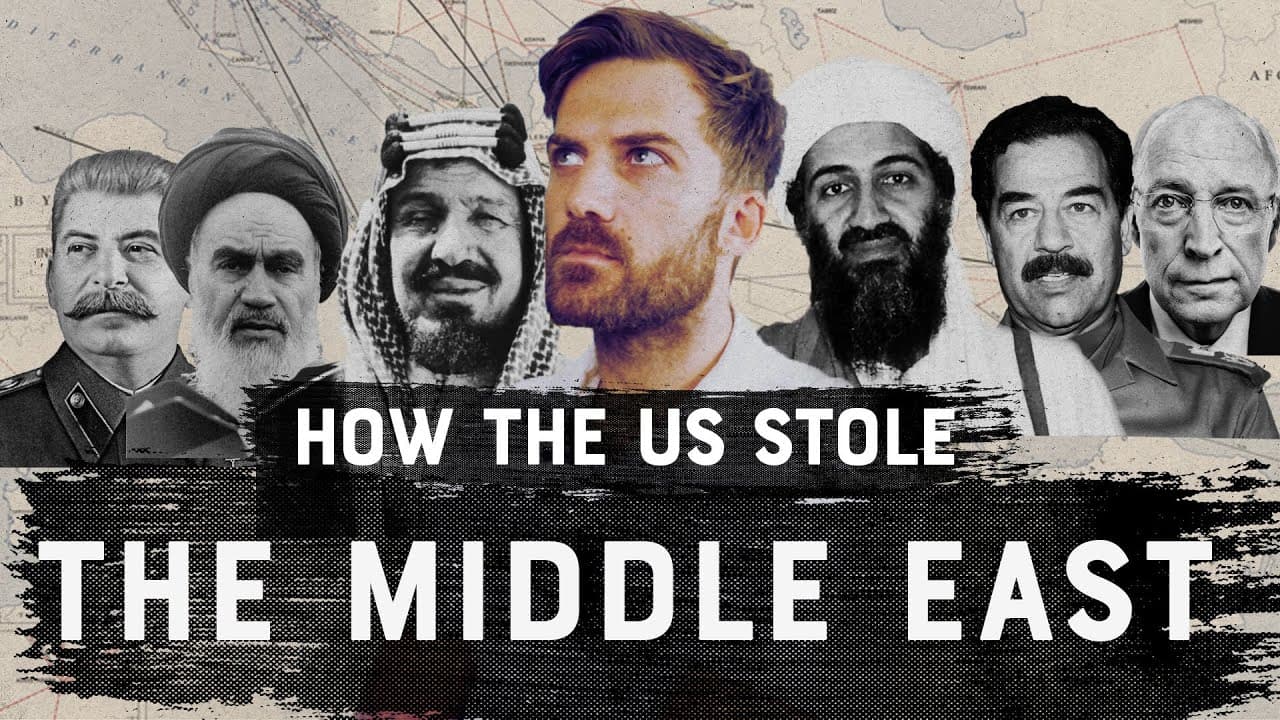
American influence in the Middle East began with oil exploration in Saudi Arabia and expanded through military infrastructure, Cold War intervention, and support for Israel. The resulting network connected commercial interests, alliances, weapons, money, covert action, and war, while generating regional anger over foreign troops, political interference, and support for Israel.
Transcript
(upbeat music) (John sighs and claps) - The Middle East, the part of Asia that Europeans see as the middle of what they see as the east. Sort of arbitrary. Whatever, we call it the Middle East. This part of the world is literally where civilization started, right here, in modern-day Iraq. And over the years, the borders here have been redrawn many ... Read More
Key Insights
- European powers drew many modern Middle Eastern boundaries without adequately considering language, ethnicity, or regional identity. Although those powers eventually departed, their territorial divisions remained and became the basic framework for borders described in the video's historical account.
- Oil is presented as the original driver of substantial American involvement in the Middle East. After machine-intensive warfare demonstrated its strategic importance, the rising United States increasingly viewed reliable access to oil as essential for building and maintaining international power.
- The first significant American presence in the region developed around Saudi oil operations. A California company received permission to explore almost a million square kilometers and discovered oil on March 3, 1938, attracting American workers, executives, and families.
- The first United States military operation in the Middle East was a landing strip beside the Saudi oil field. Saudi rulers permitted it despite domestic hostility toward Americans, but required that the base display no American flagpole on Saudi soil.
- The Saudi-American partnership created tension between economic benefits and religious restrictions. American settlements permitted activities such as women driving and alcohol consumption, which the transcript says were illegal in Saudi Arabia, while the royal family benefited from rapidly growing oil wealth.
- Cold War competition expanded American goals beyond securing oil. During the 1950s and 1960s, the United States sought to prevent the nuclear-armed Soviet Union from gaining regional influence and treated Middle Eastern governments and alliances as part of that strategic contest.
- The overthrow of Iran's government illustrated the use of covert intervention. The United States and Britain removed a democratically elected leader they considered potentially too friendly with the Soviet Union and installed a dictatorial ruler who was friendlier toward American interests.
- American support for Israel created a conflict between strategic partnership and access to Arab oil. The United States supplied Israel with money and fighter jets, despite concern that this policy would anger neighboring oil-producing states, which later used oil pressure against Israel's supporter.
Install to Summarize YouTube Videos and Get Transcripts
Explore YouTube Video Summarizer or Get YouTube Transcript Extractor
Questions & Answers
Q: How did United States involvement in the Middle East begin?
Significant American involvement began with a California company's search for oil in Saudi Arabia during the 1930s. The Saudi king authorized exploration across almost a million square kilometers of desert, despite religious and political concerns about Western outsiders. After oil was discovered on March 3, 1938, American executives, workers, families, settlements, and supporting infrastructure established a durable presence.
Q: Why was Middle Eastern oil important to the United States?
Oil had become essential to the machine-based style of warfare demonstrated during the world war described in the transcript. Germany's defeat was attributed partly to insufficient oil access, helping convince the emerging American superpower that control of this resource would shape international power. That strategic judgment redirected American attention toward the oil reserves of the Middle East.
Q: How did the first United States military base in the Middle East develop?
The United States asked Saudi rulers to permit a military facility beside the expanding oil operation, presenting it as protection for Saudi Arabia, American personnel, and the oil itself. The royal family accepted because the oil relationship was generating substantial wealth. The resulting landing strip became the first American military operation in the region, although Saudi leaders prohibited a United States flagpole.
Q: Why did Saudi Arabia accept an American military presence?
Saudi rulers faced public hostility toward Westerners and understood that a visible American base could intensify opposition. However, the partnership was producing valuable oil and making the royal family increasingly wealthy. They therefore accepted the landing strip while imposing a symbolic restriction: Americans could display a small plaque on a building, but could not plant their national flag on Saudi soil.
Q: How did the Cold War change American policy in the Middle East?
During the 1950s and 1960s, American policy expanded from securing oil to blocking Soviet influence. The Soviet Union was a nuclear-armed superpower seeking regional partners associated with communism. In response, the United States pursued friendly governments and alliances, supported selected regional powers, and treated political developments in places such as Iran as part of the wider superpower competition.
Q: Why did the United States and Britain overthrow Iran's government?
The transcript says Iran had a democratically elected leader whom American officials disliked because they believed he might be too friendly with the Soviet Union. The United States then worked with Britain to overthrow Iran's government and install a dictatorial leader who was more favorable to American interests. The episode demonstrates how Cold War concerns produced direct political intervention.
Q: Why did the United States support Israel despite the oil risk?
The United States regarded the newly declared State of Israel as a friendly regional country that could advance American interests. It consequently provided money, fighter jets, and other assistance for Israel's wars with Arab neighbors. American officials debated this support because neighboring countries possessed oil and would be angered, but the United States ultimately chose the Israeli partnership despite that foreseeable risk.
Q: How did American support for Israel affect relations with Arab oil producers?
American financial and military support for Israel angered neighboring oil-producing countries that viewed the United States as supplying their enemy. Those countries responded with what the transcript calls an oil weapon, creating a crisis that wounded the American economy and exposed the tension between supporting Israel and maintaining access to regional oil. Later peace talks helped the backlash calm down.
Summary & Key Takeaways
-
American involvement began when a California oil company received permission from the Saudi king to explore a vast desert region. After discovering oil on March 3, 1938, American executives, workers, and families established settlements around the operation, creating the first significant United States presence in the Middle East.
-
Oil infrastructure led to military infrastructure when the United States proposed building a base beside the Saudi oil operation. Saudi leaders accepted because oil was producing substantial wealth, but prohibited an American flagpole. The landing strip became the first United States military operation in the region and supported the growing partnership.
-
During the 1950s and 1960s, containing Soviet influence joined oil access as a central American objective. The United States and Britain overthrew Iran's democratically elected government, while American support for Israel brought money and fighter jets into regional wars and provoked backlash from neighboring oil-producing countries.
Read in Other Languages (beta)
Share This Summary 📚
Summarize YouTube Videos and Get Video Transcripts with 1-Click
Try YouTube Summary with ChatGPT & Claude or YouTube Transcript Generator
Explore More Summaries from Johnny Harris 📚



Summarize YouTube Videos and Get Video Transcripts with 1-Click
Try YouTube Summary with ChatGPT & Claude or YouTube Transcript Generator