How to Write Effective Book Reviews for Retention
TL;DR
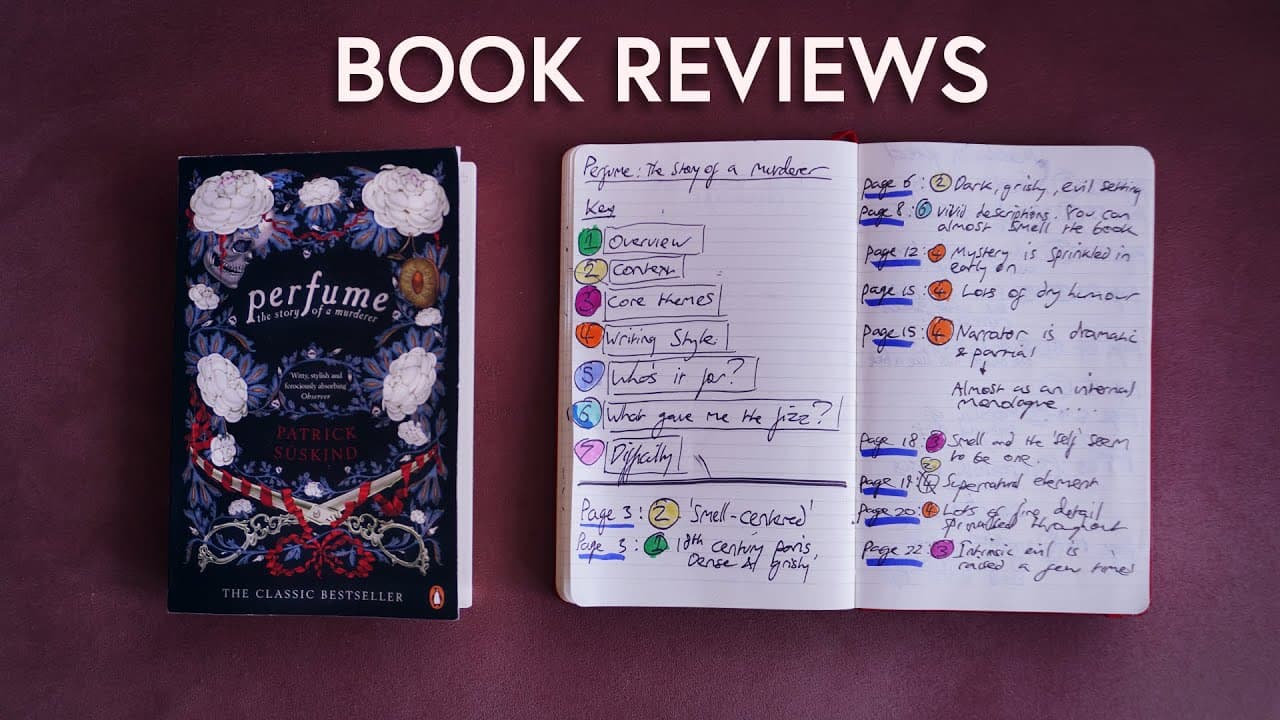
Writing book reviews enhances understanding and retention by encouraging active reading and critical thinking. The method involves categorizing key insights while reading and synthesizing them into a structured review. This process not only aids memory but also develops critical analysis skills and provides a sense of completion.
Transcript
If you're sick of forgetting what you read and you want to grow your critical thinking, then you should try writing book reviews. I've been writing them for years and I'm not a journalist or an editor, but you don't have to be because book reviews are a tool for learning and not just something you read online. I use them to understand ideas, to rea... Read More
Key Insights
- Writing book reviews enhances memory retention by engaging in active reading.
- Active reading involves interacting with the text, asking questions, and organizing thoughts.
- Book reviews require categorizing insights, which helps in structuring thoughts and ideas.
- The review process involves synthesizing insights, focusing on core themes and ideas.
- Writing reviews develops critical thinking by requiring explanation and justification of opinions.
- Personalizing the review process allows adaptation to individual preferences and goals.
- Book reviews provide a sense of completion, creating a portfolio of insights and critiques.
- The method can be adapted to be more informative or critically opinionated based on personal goals.
Install to Summarize YouTube Videos and Get Transcripts
Explore YouTube Video Summarizer or Get YouTube Transcript Extractor
Questions & Answers
Q: How to improve memory retention when reading books?
Improving memory retention when reading books can be achieved by writing book reviews. This involves engaging in active reading, where you categorize key insights and synthesize them into a structured review. This method encourages critical thinking and helps focus on core themes, aiding in better understanding and retention of the material.
Q: What is active reading?
Active reading is a process where readers interact with the text by asking questions, organizing thoughts, and engaging critically with the material. It involves looking for specific insights and categorizing them, which helps in structuring thoughts and enhancing understanding and retention of the content being read.
Q: Why are book reviews beneficial for critical thinking?
Book reviews are beneficial for critical thinking because they require readers to explain and justify their opinions. This involves analyzing the text, identifying core themes, and providing reasoned arguments for critiques. The process develops the ability to think critically about the content and articulate insights clearly.
Q: How can book reviews be personalized?
Book reviews can be personalized by adapting the categories and focus areas to suit individual preferences and goals. Readers can choose to make their reviews more informative or critically opinionated, and can adjust the format to include bullet points, quotes, or more detailed analyses based on personal interests.
Q: What are the steps to writing a book review?
The steps to writing a book review include categorizing key insights while reading, marking relevant sections, and synthesizing these insights into a structured review. This involves focusing on core themes, providing explanations and critiques, and organizing the information into a coherent narrative that reflects the reader's understanding and analysis.
Q: How does writing book reviews aid in retention?
Writing book reviews aids in retention by encouraging active engagement with the text. By categorizing insights and synthesizing them into a structured review, readers focus on core themes and ideas, which helps consolidate their understanding and memory of the material. The process also involves critical thinking, which further enhances retention.
Q: What are the benefits of having a portfolio of book reviews?
Having a portfolio of book reviews provides a sense of completion and allows readers to track their understanding and insights over time. It serves as a personal record of critical analyses and reflections, helping to reinforce memory and understanding. The portfolio can also be a valuable resource for revisiting past readings and insights.
Q: How can writing book reviews improve critical analysis skills?
Writing book reviews improves critical analysis skills by requiring readers to justify their opinions and provide reasoned arguments for their critiques. This involves identifying core themes, analyzing the text, and articulating insights clearly. The process encourages deeper engagement with the material and enhances the ability to think critically about content.
Summary & Key Takeaways
-
Writing book reviews helps improve memory and understanding by promoting active reading and critical thinking. The process involves categorizing insights while reading and synthesizing them into a structured review. This not only aids retention but also develops critical analysis skills and provides a sense of completion.
-
The method of writing book reviews can be personalized to suit individual preferences, allowing for a more informative or critically opinionated approach. By categorizing insights and focusing on core themes, readers can enhance their understanding and retention of the material.
-
Writing book reviews encourages readers to engage actively with the text, ask questions, and organize their thoughts. This process aids in memory retention and critical thinking, ultimately providing a sense of completion and creating a portfolio of insights and critiques.
Read in Other Languages (beta)
Share This Summary 📚
Summarize YouTube Videos and Get Video Transcripts with 1-Click
Try YouTube Summary with ChatGPT & Claude or YouTube Transcript Generator
Explore More Summaries from Odysseas 📚


Summarize YouTube Videos and Get Video Transcripts with 1-Click
Try YouTube Summary with ChatGPT & Claude or YouTube Transcript Generator