What Are the Key Skills for Mastering Active Reading?
TL;DR
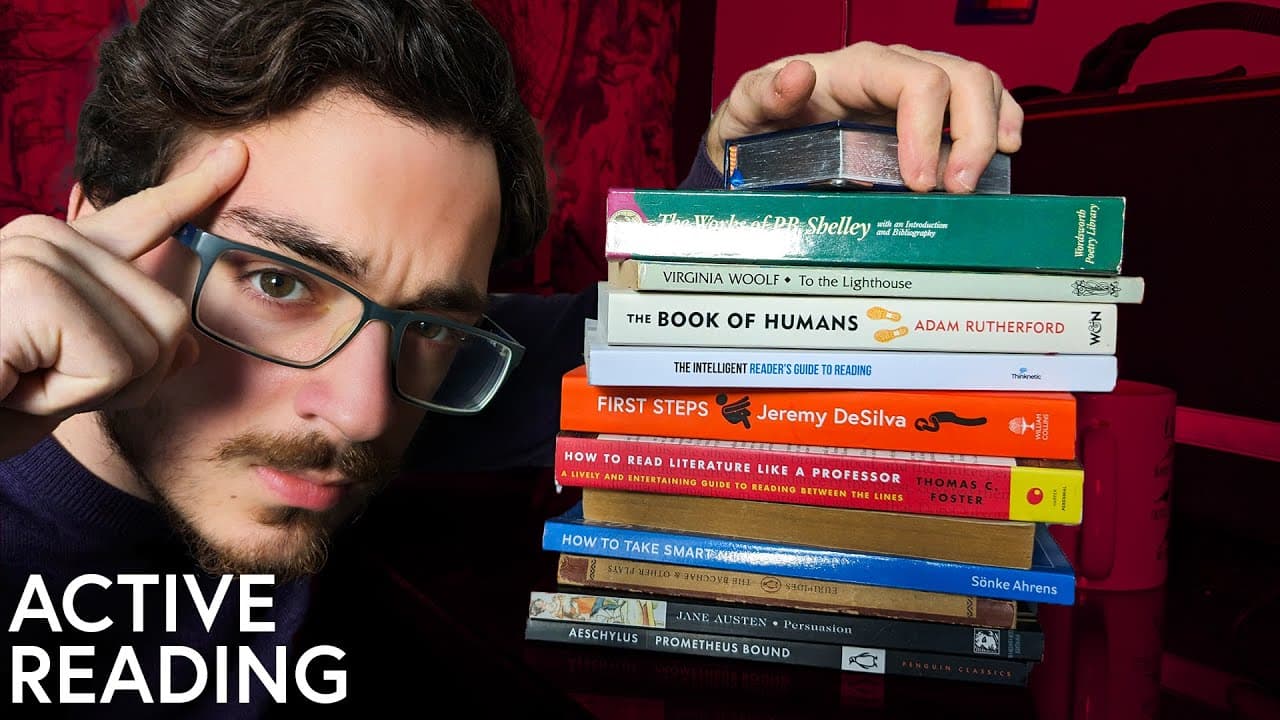
To master active reading, focus on five key skills: ask questions to enhance understanding, be critical to foster independent thinking, have a genuine will to learn, engage with the text by taking notes, and draw conclusions to summarize the main ideas. These strategies will help you become a more effective and confident reader.
Transcript
reading is hard it's frustrating at times and you walk away from the book feeling like you didn't remember anything or you didn't really understand what was being said and there's no feeling worse than that the only way out of that is active reading if you can develop your skill of active reading then you will not have that problem again and you'll... Read More
Key Insights
- 😷 Active reading involves asking questions, being critical, having the will to learn, talking with the author, and drawing conclusions.
- 😷 Reader's unique goals and motivations determine the questions they ask during active reading.
- 👻 Being critical allows readers to challenge ideas and assess themselves, fostering personal growth.
- 🪡 The will to learn is essential as readers need a genuine interest in the topic to engage effectively.
- 📔 Taking notes while reading helps in organizing thoughts and actively receiving the wisdom from the book.
- 🍻 Drawing conclusions helps in summarizing the main ideas of the book and linking them to each chapter's overarching theme.
- 💍 Engaging in a dialogue with the author involves actively participating in the learning process.
Install to Summarize YouTube Videos and Get Transcripts
Explore YouTube Video Summarizer or Get YouTube Transcript Extractor
Questions & Answers
Q: What are some important questions to ask when reading a book?
Some key questions to ask when reading a book include: What is the book about? What is being argued in the book? To what extent is it true? What do I do with this information? The specific questions may vary depending on the reader's unique goals and motivations.
Q: How does being critical contribute to active reading?
Being critical allows readers to assess themselves, compare their own arguments to the author's, challenge their beliefs, and foster personal growth. It helps readers analyze and evaluate the author's ideas, ensuring a deeper understanding of the text.
Q: Why is having the will to learn important in active reading?
The will to learn is crucial because if readers don't genuinely care about the topic, they won't be engaged or motivated to read. Having a clear purpose and personal goals in reading allows readers to have a satisfying and fruitful reading experience.
Q: How can readers engage in a dialogue with the author?
One way to engage in a dialogue with the author is by taking notes while reading. Writing down thoughts, questions, and summaries helps readers clarify their understanding and actively receive the wisdom from the book. This active engagement enhances the learning process.
Summary & Key Takeaways
-
Active reading requires asking questions to enhance understanding and engage in a conversation with the text.
-
Being critical allows readers to surpass the belief that they cannot criticize a book and encourages independent thinking.
-
The will to learn is essential in active reading, as readers need to be genuinely interested in the topic to engage with the book effectively.
Read in Other Languages (beta)
Share This Summary 📚
Summarize YouTube Videos and Get Video Transcripts with 1-Click
Try YouTube Summary with ChatGPT & Claude or YouTube Transcript Generator
Explore More Summaries from Odysseas 📚


Summarize YouTube Videos and Get Video Transcripts with 1-Click
Try YouTube Summary with ChatGPT & Claude or YouTube Transcript Generator