Quantum Computing: A Primer
TL;DR
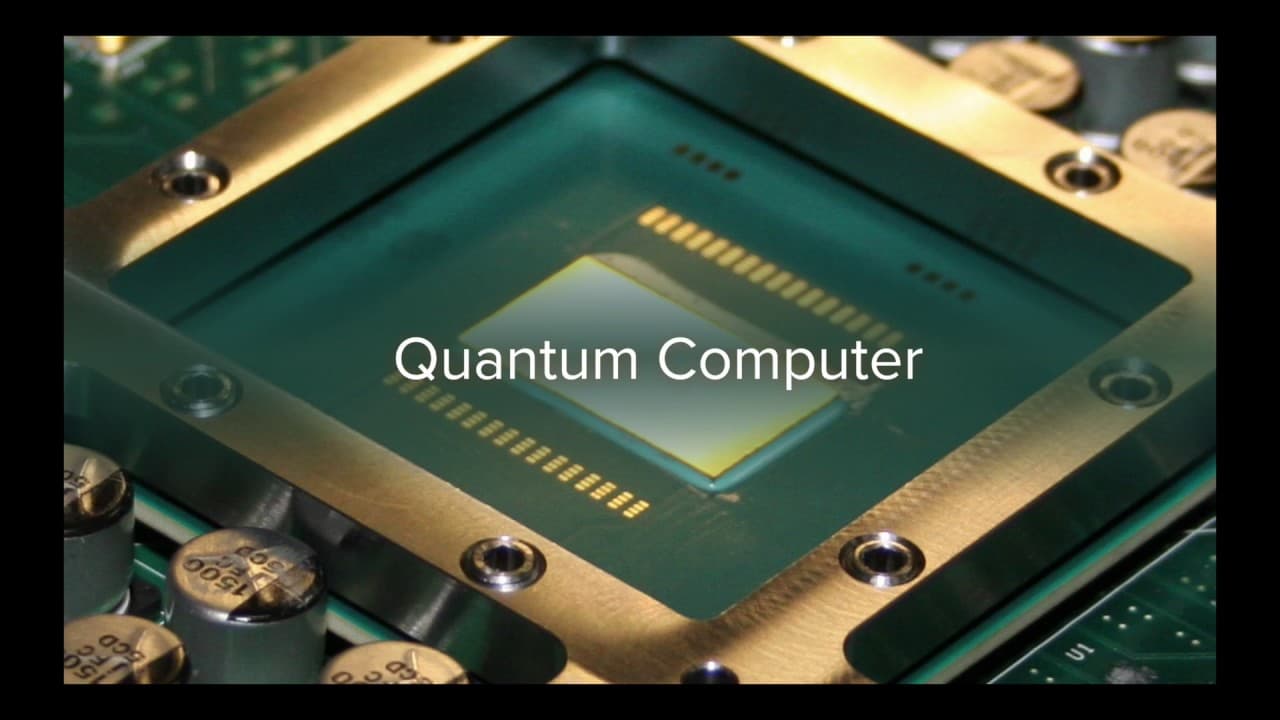
Quantum computing uses qubits and quantum physics to tackle mathematical problems that are too complicated to simulate efficiently with traditional computers. Unlike binary bits, qubits can represent both 0 and 1, enabling calculations based on linear algebra rather than Boolean algebra. The field could affect encryption, deep learning, chemistry, and battery technology, but extreme cooling and short coherence times make the machines difficult to build. Read on to understand their promise and limitations.
Transcript
hello this is Frank Chen from the a 16 CD land research team one of the ways that I think about my job is that my team and I are off scouting the future we're trying to understand what the big breakthrough is right around the corner our that will turn into great startups great products for you and me and one of the things that we've found is around... Read More
Key Insights
- 💻 Quantum computers rely on qubits, which can represent both 0 and 1 simultaneously.
- 🍰 Building quantum computers is challenging due to the need for extreme cooling, short coherence time, and the complex operations involved.
- 🏑 Quantum computers have the potential to revolutionize fields such as deep learning, encryption, chemistry, and battery technology.
Install to Summarize YouTube Videos and Get Transcripts
Explore YouTube Video Summarizer or Get YouTube Transcript Extractor
Questions & Answers
Q: What is quantum computing?
Quantum computing is an approach to computation that uses properties of quantum physics and information units called qubits. Its goal is to solve a class of mathematical problems much faster and more efficiently than traditional computers.
Q: How are quantum computers different from traditional computers?
Traditional computers use transistors, binary bits, and Boolean algebra operations. Quantum computers use qubits that can represent both 0 and 1 and perform linear algebra operations.
Q: Are quantum computers mainly intended to make computers smaller?
No. Frank Chen says that describing quantum computing as a way to encode more information in a smaller computer misses the main point; the objective is to handle problems that traditional computers cannot simulate efficiently.
Q: Why did Richard Feynman consider quantum computers necessary?
Feynman recognized that quantum mechanics is too complicated to simulate effectively with traditional computers. This difficulty motivates building computers that operate using quantum principles.
Q: How are quantum physics experiments performed or simulated?
Physicists can conduct experiments with particle accelerators that accelerate atomic and subatomic particles and collide them. When access to those machines is unavailable, they simulate particle interactions on supercomputers.
Q: What particle accelerators are discussed in the primer?
The primer mentions the Stanford Linear Accelerator and CERN’s Large Hadron Collider outside Geneva, Switzerland. It describes the Large Hadron Collider as a circular machine measuring 27 kilometers around.
Q: Why are quantum computers difficult to build?
Quantum computers must minimize interaction with the outside world and operate at extremely low temperatures. Their qubits also have short coherence times, while the required operations are complex.
Q: What could quantum computers be used for?
Potential applications include enhancing deep learning networks, factorizing large numbers, and working on encryption. Quantum chemistry applications could also help find new catalysts or improve battery technology.
Summary
In this video, Frank Chen discusses the field of quantum computing and its potential impact on various industries. He explains the basics of how quantum computers work, their advantages over traditional computers, and the challenges in building them. Chen also highlights potential applications of quantum computers in deep learning, cryptography, and quantum chemistry. He concludes by emphasizing the current excitement and investment in quantum computing, suggesting that it is an opportune time to explore startups in this field.
Questions & Answers
Q: How does traditional computing work?
Traditional computers use transistors to represent an on or off state, and perform boolean algebra operations on these states to execute tasks.
Q: How does quantum computing differ from traditional computing?
Quantum computers use qubits, which can represent both 0 and 1 simultaneously due to the probabilistic nature of quantum mechanics. Quantum gates perform linear algebra operations on these qubits, changing their direction or magnitude.
Q: What is the benefit of quantum computers over traditional computers?
Quantum computers have the potential to solve certain computational problems much faster than traditional computers. For example, Grover's algorithm allows for faster searching of large databases, and quantum computers can factor large numbers efficiently for cryptography.
Q: Why are quantum computers hard to build?
Quantum computers require extremely low temperatures, typically around 0.1 degrees Kelvin, to minimize interaction with the outside world. The limited coherence time of quantum states also poses challenges, as well as the difficulty in performing quantum operations quickly.
Q: What are some potential applications of quantum computers?
Quantum computers can accelerate deep learning network training, efficiently factor large numbers for cryptography, and perform complex simulations in fields such as quantum chemistry. They have the potential to revolutionize various industries and solve problems that are currently computationally infeasible.
Q: How close are we to building practical quantum computers?
Significant progress is being made in all aspects of quantum computing, including hardware, software, and algorithms. Research institutions, corporations, and startups are investing in the field, suggesting that we are nearing a breakthrough in building practical quantum computers.
Q: How can quantum computers benefit the field of deep learning?
Quantum computers can significantly speed up the training of deep learning networks, allowing for more sophisticated AI models and improved performance in a wide range of applications.
Q: What impact can quantum computers have on cryptography?
Quantum computers can factor large numbers efficiently, which poses a significant threat to modern cryptographic systems that rely on the difficulty of factoring large numbers. Researchers are exploring new algorithms and techniques to mitigate this vulnerability.
Q: How can quantum computers contribute to the field of quantum chemistry?
Quantum computers can perform complex calculations in quantum chemistry, helping to discover new chemical catalysts and improve processes like the Haber-Bosch process for ammonia production and the development of advanced battery chemistry.
Q: Why is now the right time to explore startups in quantum computing?
There is currently significant excitement and investment in the field of quantum computing, with progress being made in all key areas. This presents an opportunity to participate in the development and commercialization of quantum computers, paving the way for breakthrough applications.
Takeaways
Quantum computing has the potential to revolutionize various fields by solving computational problems faster and more efficiently than traditional computers. While there are significant challenges in building quantum computers, recent progress in hardware, software, and algorithms indicates that practical quantum computers may become a reality in the near future. Industries such as deep learning, cryptography, and quantum chemistry could benefit from the capabilities of quantum computers. As investment and interest in quantum computing continue to grow, exploring startups in this field can offer exciting opportunities.
Summary & Key Takeaways
-
Quantum computers rely on the properties of quantum physics to perform calculations that traditional computers cannot handle.
-
Traditional computers use transistors and perform boolean algebra operations, while quantum computers use qubits and perform linear algebra operations.
-
The goal of quantum computing is to solve a class of mathematical problems much faster and more efficiently than traditional computers.
Read in Other Languages (beta)
Share This Summary 📚
Summarize YouTube Videos and Get Video Transcripts with 1-Click
Try YouTube Summary with ChatGPT & Claude or YouTube Transcript Generator
Explore More Summaries from a16z 📚






Summarize YouTube Videos and Get Video Transcripts with 1-Click
Try YouTube Summary with ChatGPT & Claude or YouTube Transcript Generator