How to Exercise Across Your Menstrual Cycle
TL;DR
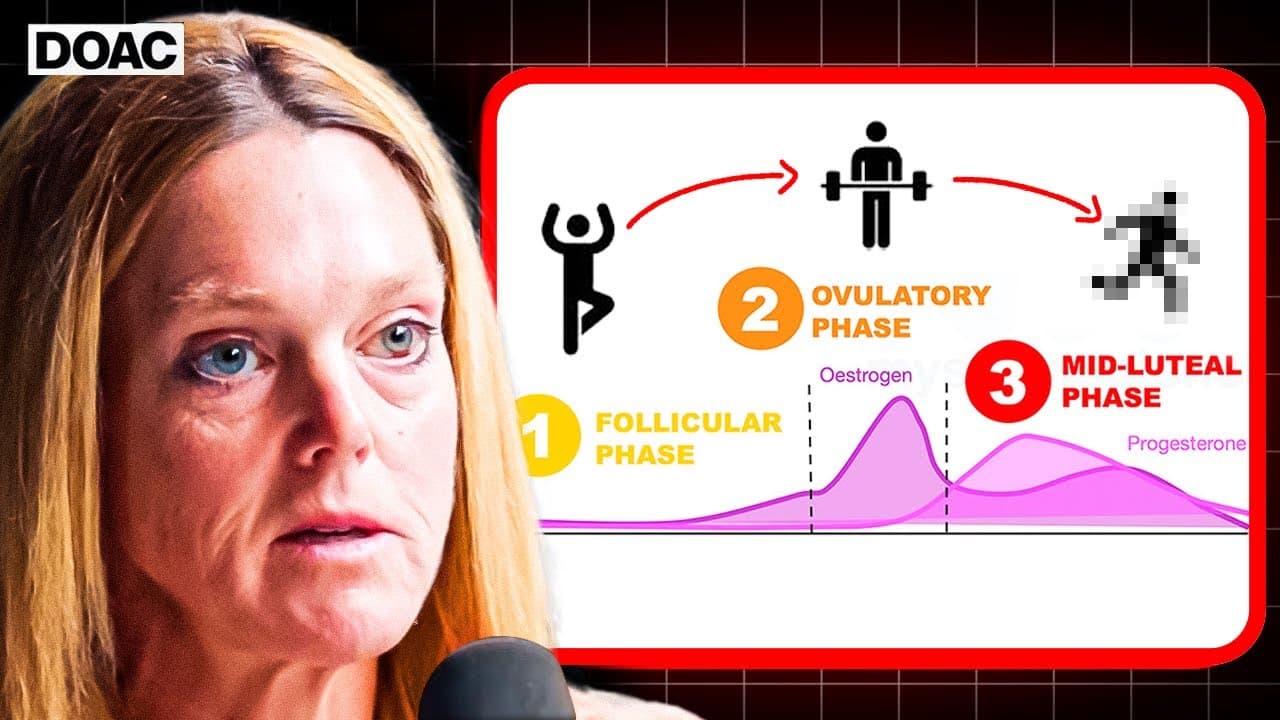
During the low hormone phase the body handles carbohydrates and protein well and stress tolerance is higher, while after ovulation a rise in progesterone shifts fueling and increases protein needs. Track how you feel with sessional rating of perceived exertion and adjust workouts based on cycle days, aiming for higher carbs before/after high intensity work around day 14 onward.
Transcript
so as it relates to this menstrual cycle yeah 28 days I'm going to put on the screen for anyone that doesn't understand it um or doesn't know what I'm referencing right now but I'll also link it below in the comments in the description sorry um 28 days long there's the early folicular stage the late folicular stage the mid Lulu L that's exactly wha... Read More
Key Insights
- The cycle is divided into phases with hormonal changes that affect training response and nutrition needs.
- Ovulation marks a transition where carbohydrate and protein requirements increase to support tissue and energy demands.
- Low energy availability and poor recovery can disrupt the bleed pattern, signaling the need to adjust training and nutrition.
- Tracking cycle length and bleed characteristics helps detect stress and potential reproductive health issues.
- Sessional rating of perceived exertion is recommended to tailor workouts day by day based on how you feel.
- Post ovulation, fueling should shift toward carbohydrates to compensate for the fuel shift and hormonal changes.
- Strength and cognitive performance may peak around days 6 to 13 as estrogen rises, then wane toward the end of the cycle.
- Roughly four to five days before menstruation, immune function can dip, suggesting a deload or lighter training focus.
Install to Summarize YouTube Videos and Get Transcripts
Explore YouTube Video Summarizer or Get YouTube Transcript Extractor
Questions & Answers
Q: How should I adjust workouts during the low hormone phase of the cycle
During the low hormone phase, approximately days 1 to 6, the body is more resilient to stress and can tolerate higher carbohydrate and protein intake. Use sessional rate of perceived exertion to judge effort; if you feel mentally or physically off, prioritize technique or recovery rather than hard training, and monitor how you recover across days.
Q: What change occurs around ovulation that affects training
Around ovulation, progesterone rises and the body conserves glucose for uterine lining and tissue needs, shifting fueling. This is a cue to possibly include more carbohydrate intake around workouts and to plan higher intensity efforts when your energy feel aligns, while continuing to track how you feel daily.
Q: How should training adapt after ovulation
After ovulation, the fueling shift favors endurance and tempo work rather than very high intensity. Protein needs increase by about 12 percent to support tissue turnover and amino acids. Plan workouts that align with energy levels and ensure adequate carbohydrate availability to sustain performance.
Q: What role does trackable cycle data play in training
Tracking cycle length, bleed pattern, and subjective feelings helps identify stress and energy availability issues before they become clinical. If bleed changes or cycle length deviates, pause or adjust training, sleep, and nutrition to support recovery and maintain bone and hormonal health.
Q: How can you know when to deload near the cycle end
In the days leading to the period, roughly four to five days before onset, immune function can become compromised, suggesting a deload or lower intensity focus. Use a lighter training plan and emphasize mobility and technique to maintain progress while reducing stress.
Q: What questions should you ask about your menstrual pattern
Ask what a typical bleed looks like and how long the cycle lasts, as many women have cycles outside the textbook 28 days. Noting heavy versus spotting days and any missed periods helps identify stress, energy intake, and potential risk for low energy availability or reproductive health changes.
Q: What factors contribute to irregular cycles in recreational athletes
Recreational athletes may experience irregular cycles due to low energy availability from insufficient carbohydrate intake or restrictive diets. Ensuring adequate calories and carbohydrates supports the hypothalamic function, reducing the risk of menstrual irregularities and enabling better adaptation to training stresses.
Q: How does this approach help with cognitive and physical performance
This approach aligns training with hormonal fluctuations to optimize both cognitive and physical performance. Peak strength and cognition can occur during specific days when estrogen is rising, while other days may favor endurance or technique focus, allowing for a nuanced plan across the cycle.
Summary & Key Takeaways
-
In this episode, nutrition and exercise strategies are tied to a 28 day cycle, emphasizing day 1 to 6 as early follicular and day 12 to 13 near ovulation for peak resilience. The host highlights meal composition shifts and training adjustments across phases to optimize performance and recovery.
-
From day 14 onward, high intensity workouts require more carbohydrates and protein intake to support amino acid needs and tissue turnover, with potential emphasis on endurance and tempo work as hormones shift.
-
Understanding bleed patterns and cycle length helps identify stress and energy availability issues, guiding pause or adjustments if irregularities appear, which may indicate underlying physiological stress or impending menopause transitions.
Read in Other Languages (beta)
Share This Summary 📚
Summarize YouTube Videos and Get Video Transcripts with 1-Click
Try YouTube Summary with ChatGPT & Claude or YouTube Transcript Generator
Explore More Summaries from The Diary Of A CEO Clips 📚





Summarize YouTube Videos and Get Video Transcripts with 1-Click
Try YouTube Summary with ChatGPT & Claude or YouTube Transcript Generator