Spiny Lizard Catches Me!
TL;DR
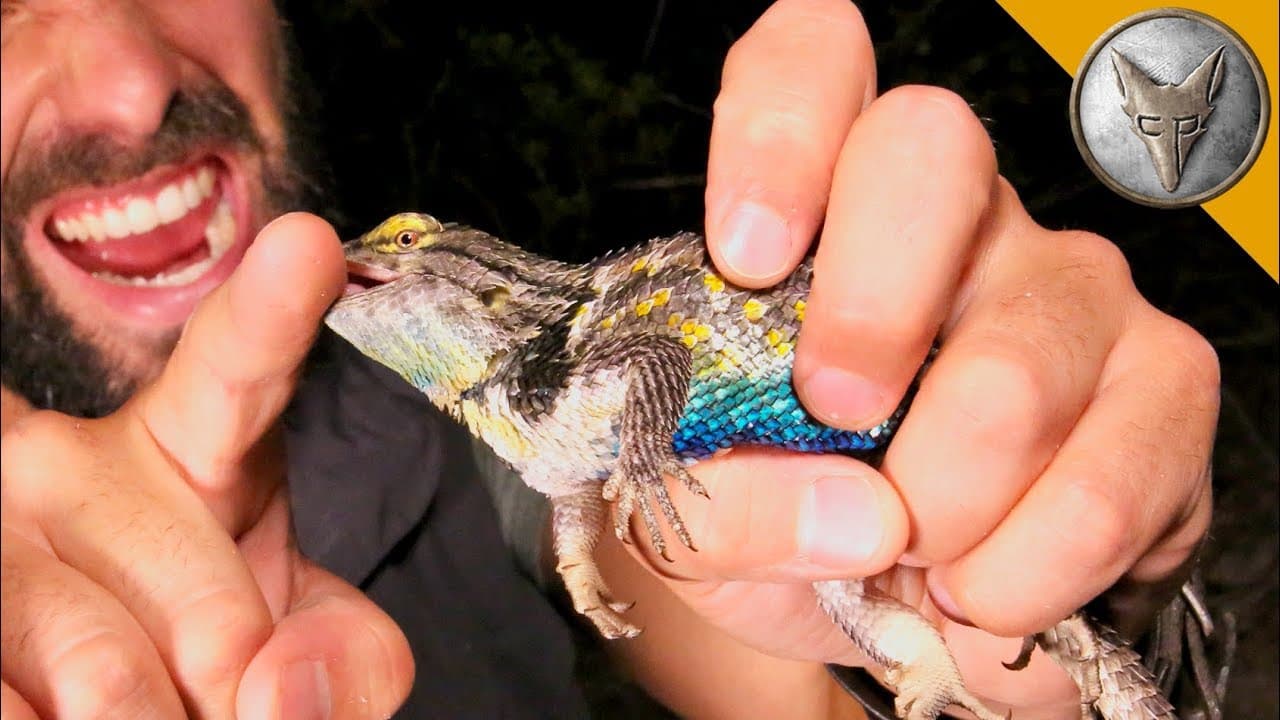
Coyote Peterson and his team venture into the Sonoran Desert at night to search for desert creatures, finding a baby western diamondback rattlesnake, a long-nose snake, and a desert spiny lizard.
Transcript
- Mark, you rolling? - [Mark] Yes I am. - That is the biggest spiny lizard we have seen this entire trip. One of the biggest I've seen in my life, it is huge. This is gonna be a tough catch. (suspenseful music) (yells in pain) (tribal jungle music) What's going on coyote pack? We are back in the Sonoran desert, and as you can see it is night time, ... Read More
Key Insights
- 🤑 Small rattlesnakes can be just as dangerous as large ones and should be handled with caution.
- 😤 Long-nose snakes have specialized scales on their noses for burrowing and are safe to handle.
- 💨 Desert spiny lizards have spiky scales and are incredibly fast, making them challenging to catch.
- 🐪 Spotting desert creatures in the Sonoran Desert at night requires careful observation and knowledge of their habits.
- 🌱 The Sonoran Desert is a diverse ecosystem with unique plants and animals.
- 🦎 Desert spiny lizards have unique adaptions, such as their coloration and spiky scales, for survival in the arid environment.
- 🐍 Coral snakes and long-nose snakes have similar coloration but can be differentiated by their patterns.
Install to Summarize YouTube Videos and Get Transcripts
Explore YouTube Video Summarizer or Get YouTube Transcript Extractor
Questions & Answers
Q: What precautions should be taken when encountering a rattlesnake in the wild?
When encountering a rattlesnake in the wild, it is essential to keep a safe distance and not attempt to handle or provoke the snake. Rattlesnakes should be viewed from a distance and left undisturbed.
Q: How can you differentiate between a coral snake and a long-nose snake?
Coral snakes and long-nose snakes have similar color patterns. To differentiate between them, remember this rhyme: "Red on yellow, kill a fellow; red on black, venom lack" - indicating that coral snakes have red next to yellow bands, while long-nose snakes have red next to black bands.
Q: Are desert spiny lizards venomous?
No, desert spiny lizards are not venomous. They rely on their spiky scales and impressive speed to deter predators. Their bites, while painful, do not pose a danger to humans.
Q: Why are desert spiny lizards challenging to catch?
Desert spiny lizards are known for their agility and speed, making them difficult to catch. They are cautious and can quickly flee into the desert landscape, utilizing their excellent camouflage.
Summary & Key Takeaways
-
Coyote Peterson and his team explore the Sonoran Desert at night, equipped with flashlights and snake tongs.
-
They encounter a baby western diamondback rattlesnake, emphasizing that even small rattlesnakes are dangerous and should not be handled.
-
They also find a long-nose snake, which is nonvenomous and safe to handle, and discuss its unique features.
-
Finally, they catch a large desert spiny lizard, known for its spiky scales and impressive speed.
Read in Other Languages (beta)
Share This Summary 📚
Summarize YouTube Videos and Get Video Transcripts with 1-Click
Try YouTube Summary with ChatGPT & Claude or YouTube Transcript Generator
Explore More Summaries from Brave Wilderness 📚





Summarize YouTube Videos and Get Video Transcripts with 1-Click
Try YouTube Summary with ChatGPT & Claude or YouTube Transcript Generator