How to Discuss Daily Life in a Big City
TL;DR
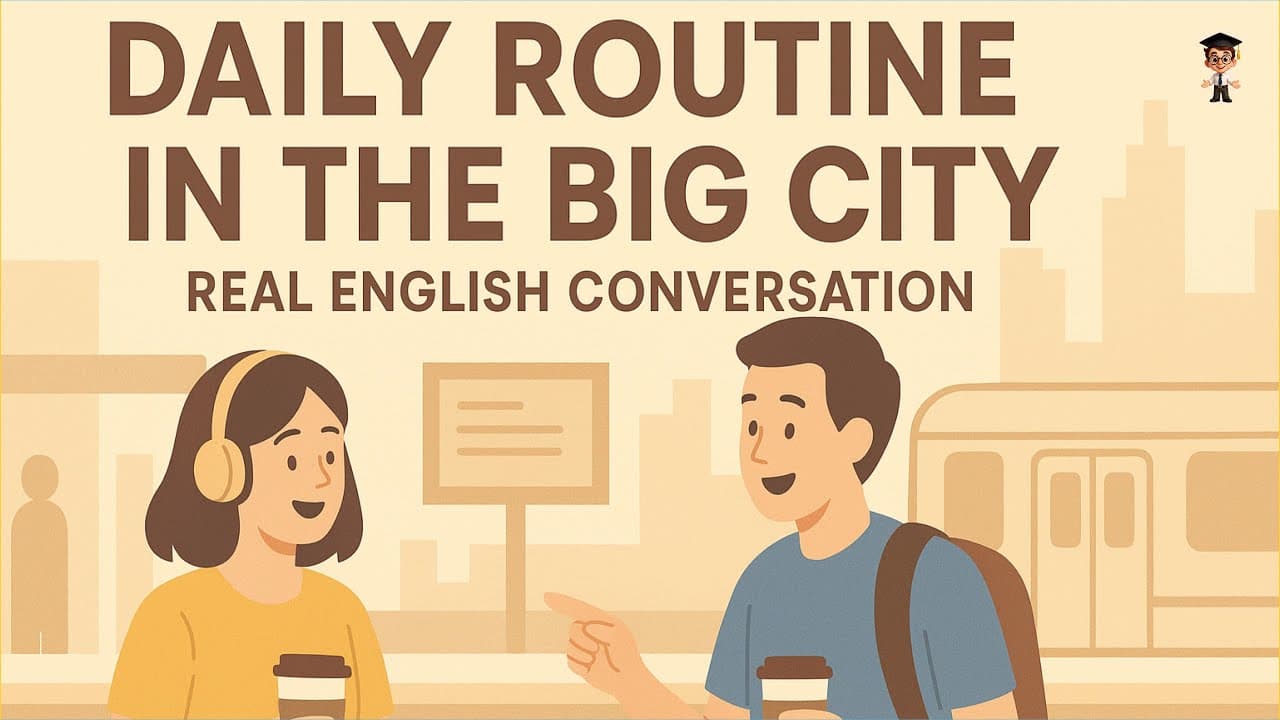
Use words such as commute, rush hour, subway, traffic jam, skyscraper, and hustle and bustle to describe everyday life in a big city. Natural conversations can also cover crowded transportation, food trucks, evening entertainment, cultural diversity, convenient services, and the need to balance urban energy with quiet time in a park.
Transcript
Hello everyone and welcome back to Mr. English channel where learning English is easy and fun. I'm Emily. Hello Emily. And a big hello to all our amazing listeners around the world. I am so happy to be here with you today. It is wonderful to see you Paul. You look very energetic today. Do I? Well, I am feeling good. I had a very large coffee this m... Read More
Key Insights
- A commute is the journey between a person's home and workplace. Big-city residents often wake up early because this trip can take time, and they may choose a subway, bus, or car depending on traffic, speed, comfort, and whether they want to see the city.
- Rush hour is the busy period when many people travel to or from work. Subway platforms, stairs, and train cars can become extremely crowded, leaving passengers unable to sit and making them feel packed like sardines, an expression for people standing very tightly together.
- A subway is an underground train system that may also be called the tube or metro. It is fast and can avoid road traffic, but passengers usually see dark tunnels instead of city streets and may have to stand while holding a handle during crowded trips.
- A traffic jam occurs when too many cars stop or move slowly on the road. Buses allow passengers to see shops and pedestrians through the windows, but congestion, honking cars, sirens, and construction can make road travel slow, noisy, and frustrating.
- The hustle and bustle is the busy activity, noise, and energy of a place. People in large cities often walk quickly and appear to be in a hurry, creating an atmosphere that can make residents feel awake and excited, but also tired.
- Food trucks are small kitchens on wheels that park on city streets. They offer quick choices such as tacos, burgers, and sandwiches, making them suitable for busy workers, while bringing lunch from home remains an option for people who want to save money.
- Cultural diversity is reflected in a city's people, languages, clothing, and restaurants. Residents can eat Italian, Chinese, Indian, or Mexican food, dress formally in business areas, wear unusual or colorful clothes elsewhere, and feel free to express themselves.
- Green space is important for balancing the demands of urban life. A city park can function like an oasis where people sit on benches, watch birds, eat sandwiches, forget the traffic, and enjoy a peaceful break from noise, crowds, construction, and concrete.
Install to Summarize YouTube Videos and Get Transcripts
Explore YouTube Video Summarizer or Get YouTube Transcript Extractor
Questions & Answers
Q: What does commute mean in everyday English?
A commute is the journey from your home to your workplace. In a big city, people may commute by car, bus, or subway, and they often wake up early because the trip takes time. The conversation describes commuting as either an adventure or a nightmare, depending on traffic, crowds, speed, and the transportation method a person chooses.
Q: What is rush hour in a big city?
Rush hour is the busy time when many people are traveling to or from work, usually in the morning and evening. Subway platforms, stairs, and train cars become crowded, and passengers may be unable to find seats. They often stand, hold a handle, and remain very close to other travelers until they reach their destination.
Q: How can beginners describe a crowded subway?
Beginners can say that the subway is crowded, that there are people everywhere, or that they cannot sit down and must stand. The expression "packed like sardines" describes people pressed tightly together like fish in a can. Although this situation is uncomfortable, the subway can still be faster than a bus traveling through city traffic.
Q: Why might someone choose a bus instead of the subway?
Someone might choose a bus because it provides a view of the city. Passengers can look through the window and see shops, streets, and people, while subway passengers mainly see dark tunnels. The disadvantage is that buses can become stuck in traffic jams, so they may be a better choice when the traveler is not in a hurry.
Q: What does hustle and bustle mean?
Hustle and bustle means the busy activity, movement, noise, and energy of a place. In a large city, people walk quickly, traffic produces constant sound, and many workers are in a hurry. This atmosphere can feel exciting and keep someone alert, but the same fast pace can also become tiring after a full day.
Q: How can someone talk about lunch in the city?
Someone can say that they bring lunch from home to save money or buy a meal from a food truck. Food trucks are small kitchens on wheels that park along city streets and sell quick options such as tacos, burgers, and sandwiches. Fast service is useful because city workers are often busy and have many choices.
Q: Why are parks important in big-city routines?
Parks offer green space and a quiet break from traffic, construction, crowds, noise, and concrete. A person can sit on a bench, watch birds, eat a sandwich, and temporarily forget the surrounding city. The conversation compares a park to an oasis and presents relaxation as necessary for balancing urban excitement with peaceful personal time.
Q: What are the main advantages of living in a big city?
The main advantages described are energy, convenience, diversity, personal expression, and access to activities. Shops, doctors, entertainment, restaurants, cinemas, theaters, and shopping malls are nearby or open late. Residents can encounter different people, languages, foods, and clothing styles, while enjoying a city where there is usually something to do after work.
Summary & Key Takeaways
-
A typical big-city morning begins early because workers must commute from home to the office. Public transportation can be faster than driving, especially when roads have traffic jams, but subway trains become crowded during rush hour. Passengers may need to stand, hold a handle, and travel very close to other people.
-
City life offers many convenient choices for lunch and entertainment. Workers can bring food from home to save money or buy quick meals from food trucks. After work, residents can visit restaurants, cinemas, theaters, or shopping malls, and they can enjoy food, languages, and people from many different cultures.
-
Big cities combine excitement with noise, crowds, concrete, and constant activity. Parks provide green space where residents can sit, watch birds, eat, and temporarily forget about traffic. The conversation presents balance as essential because people can enjoy the city's energy and convenience while still making time to relax in peaceful surroundings.
Read in Other Languages (beta)
Share This Summary 📚
Summarize YouTube Videos and Get Video Transcripts with 1-Click
Try YouTube Summary with ChatGPT & Claude or YouTube Transcript Generator
Explore More Summaries from Mr. English Channel 📚

Summarize YouTube Videos and Get Video Transcripts with 1-Click
Try YouTube Summary with ChatGPT & Claude or YouTube Transcript Generator