Is BPC-157 Safe and Effective for Injury Healing?
TL;DR
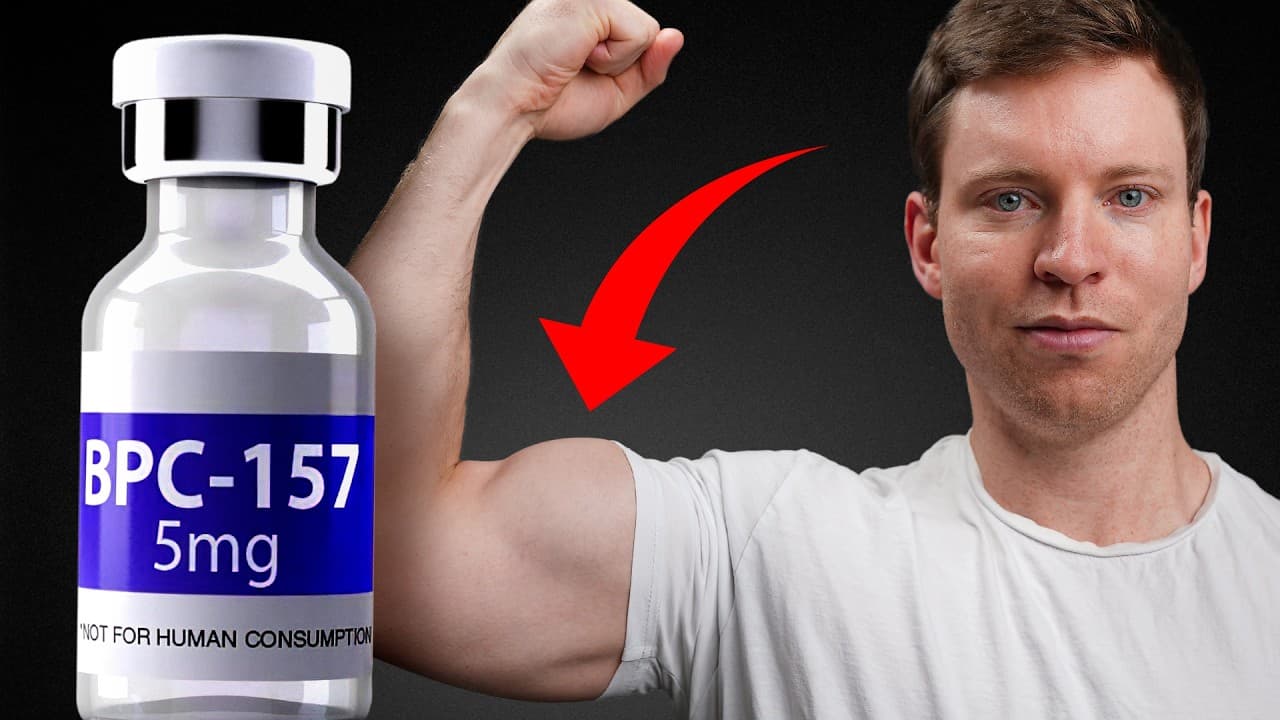
BPC-157 should not be used for injury healing based on current evidence because its reported benefits come mainly from animal research, while human effectiveness, safe dosing, and risks remain unknown. The only human study described included just 16 people, used retrospective interviews, and lacked a control group; competitive athletes also face anti-doping consequences. Read on to understand the evidence, uncertainties, and better-studied alternatives.
Transcript
people are reporting dramatic effects from bpc157 in terms of injury healing and performance enhancement so should you start taking it well let's have a look at what the scientific evidence says many have heard of bpc157 through influences like Joe Rogan or Andrew hubman I had a uh tendonitis in my elbow that I just could not fix I started using bp... Read More
Key Insights
- BPC-157 is a synthetic short chain of amino acids derived from a natural protein found in stomach acid. Its name stands for body protection compound 157, and researchers first described and isolated it during the early 1990s while investigating stomach protection and healing.
- Animal research is the main source of BPC-157's reported benefits. Experiments involving rats, mice, chickens, and other animals suggested healing effects across several organs and tissues, but animal findings cannot establish that the peptide is effective or safe for human use.
- BPC-157 may support tendon healing in animal models by improving blood vessel formation and tissue repair. Rat studies involving Achilles tendon injuries reported restored structure and function, an important observation because tendons have limited blood supply and generally require long recovery periods.
- Inflammation is a necessary healing response that can become harmful when it is excessive or prolonged. BPC-157 reduced experimentally induced inflammation in rat tissue, but these findings do not demonstrate how it affects human inflammation or identify a safe and effective dose.
- Angiogenesis is the formation of new blood vessels, which can deliver resources needed for tissue repair. Studies applying BPC-157 to damaged muscles and tendons indicated that it regulated a growth factor involved in blood vessel formation and accelerated healing in animals.
- Human evidence for BPC-157 is extremely limited. The only described study included 16 people with knee pain, used retrospective interviews six months to one year after treatment, and had no control group, so natural recovery and placebo effects could not be separated from treatment effects.
- Anecdotal recovery reports cannot establish that BPC-157 caused an improvement. Injuries and illnesses may improve naturally, expectations may produce placebo effects, and social media disproportionately highlights apparent successes, while randomized controlled trials can compare treated and untreated groups under similar conditions.
- BPC-157 carries three major practical concerns: human safety and correct dosing are unknown, products sold outside recognized medication or supplement frameworks are unregulated, and competitive athletes face anti-doping consequences because the US Anti-Doping Agency prohibits its use in competition.
Install to Summarize YouTube Videos and Get Transcripts
Explore YouTube Video Summarizer or Get YouTube Transcript Extractor
Questions & Answers
Q: Is BPC-157 safe and effective for injury healing?
Current evidence does not establish that BPC-157 is safe or effective for healing human injuries. No randomized human clinical trials have determined its risks, effectiveness, or safe dose range, while the reported healing benefits come mainly from animal experiments.
Q: What is BPC-157 and where does it come from?
BPC-157 is a synthetic peptide, or short chain of amino acids, derived from a natural protein found in stomach acid. Its name stands for body protection compound 157, and researchers at a university in Croatia first described and isolated it in the early 1990s while studying stomach protection and healing.
Q: Does BPC-157 help injuries heal faster in humans?
There is no reliable evidence that BPC-157 accelerates injury healing in humans. Studies in animals reported healing effects involving tendons, muscles, skin, and the digestive tract, but no randomized human clinical trials have confirmed those results.
Q: How might BPC-157 promote tissue healing?
Animal research suggests that BPC-157 may reduce excessive inflammation, stimulate new blood vessel formation, and influence nitric oxide signaling. These processes can affect blood flow, immune responses, and the delivery of resources to damaged tissue, but the proposed effects have not been confirmed in randomized human trials.
Q: What did the human study of BPC-157 find?
The only human study described involved 16 people who received BPC-157 injections for knee pain. Researchers interviewed them six months to one year later, and the study had no control group, so it could not separate any treatment effect from natural recovery, expectations, or other influences.
Q: Why are personal BPC-157 success stories unreliable evidence?
Anecdotes cannot establish that BPC-157 caused an improvement because injuries and pain may resolve naturally. Expectations can also produce placebo effects, and apparent successes may receive disproportionate attention online; randomized controlled trials are needed to compare treated and untreated groups.
Q: What risks and uncertainties come with BPC-157 products?
Human safety, effective dosing, and a safe dose range remain unknown because clinical trials have not established them. Products sold outside recognized medication or supplement frameworks may also be unregulated, so buyers cannot reliably verify what they contain.
Q: Can competitive athletes use BPC-157?
The US Anti-Doping Agency prohibits BPC-157 use in competition. Competitive athletes therefore face anti-doping consequences in addition to unresolved questions about human safety and effectiveness.
Summary & Key Takeaways
-
BPC-157 is a synthetic peptide derived from a natural protein found in stomach acid. Animal experiments suggest that it may support healing in the digestive tract, tendons, muscles, and skin. Proposed mechanisms include controlling inflammation, stimulating new blood vessel formation, and influencing nitric oxide signaling, blood flow, and immune responses.
-
The promising findings do not establish effectiveness in people because no randomized human clinical trials have been completed. The only human study discussed involved 16 people treated for knee pain. It relied on recollections collected six months to one year later and lacked a control group, making its reported improvement impossible to attribute confidently to BPC-157.
-
Using BPC-157 involves uncertain safety, unknown dosing, and unregulated products whose contents may not be independently verified. It is also prohibited in competition by the US Anti-Doping Agency. The presentation recommends relying instead on interventions supported by extensive human evidence, highlighting creatine monohydrate and betaine as studied performance-related supplements.
Read in Other Languages (beta)
Share This Summary 📚
Summarize YouTube Videos and Get Video Transcripts with 1-Click
Try YouTube Summary with ChatGPT & Claude or YouTube Transcript Generator
Explore More Summaries from Dr Brad Stanfield 📚





Summarize YouTube Videos and Get Video Transcripts with 1-Click
Try YouTube Summary with ChatGPT & Claude or YouTube Transcript Generator