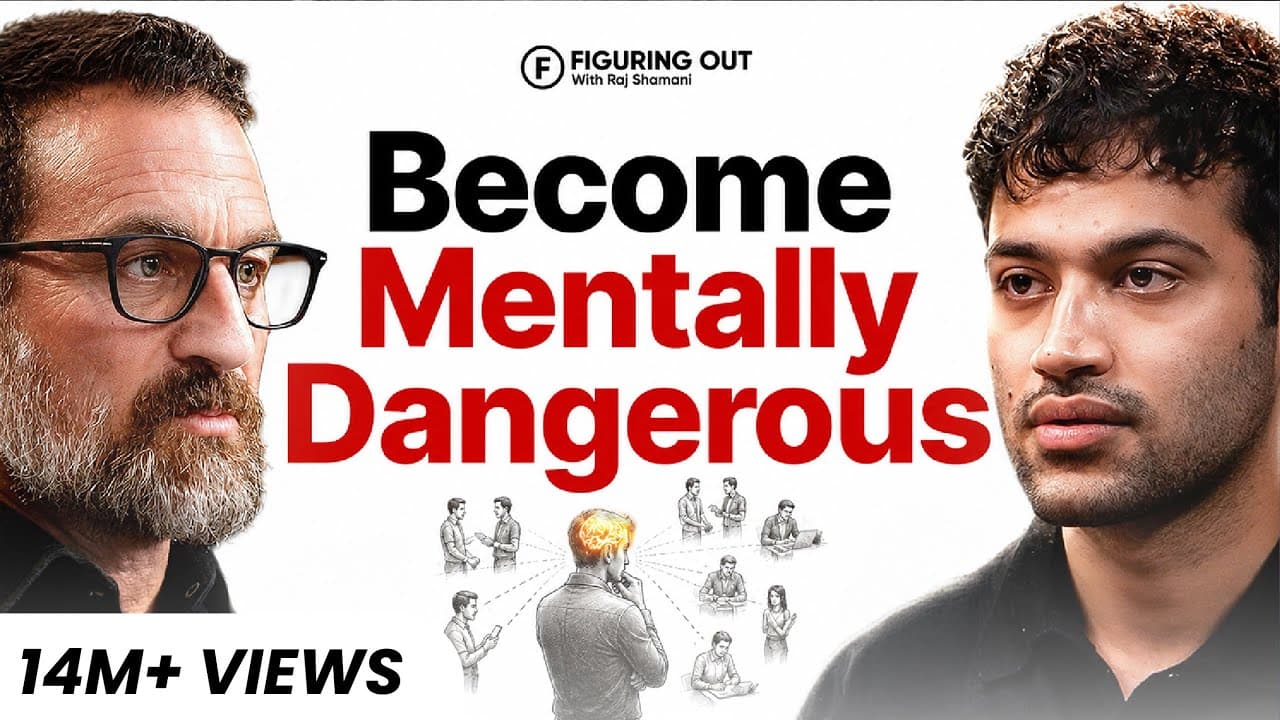
How Does Andrew Huberman Build Mental Resilience With Daily Habits? | FO556 Raj Shamani
TL;DR
Mental resilience can be strengthened by keeping cortisol high in the morning and low at night, then practicing deliberate recovery. Andrew Huberman recommends bright light within 30–60 minutes of waking and describes breathwork, yoga nidra, and a closed-eye movement exercise for managing stress and sleep. Read on for specific habits that may improve focus, courage, recovery, and performance under pressure.
Transcript
the person that can turn their mind off in the final hour of their day and get the better, deeper sleep, I'm going to put all my money on that person. >> How turn off. >> The next time you have trouble asleep or getting back to sleep, keeping your eyes closed, slowly move your eyes to one side, then to the other side. Then you're going to move your... Read More
Key Insights
- High morning cortisol levels enhance energy, focus, and learning capacity.
- Low nighttime cortisol is essential for deep sleep and emotional recovery.
- Morning sunlight exposure within the first 30-60 minutes boosts cortisol.
- Yoga Nidra is a powerful tool for turning off thinking and enhancing relaxation.
- Breathwork, especially extended exhales, can lower stress and improve HRV.
- Training the brain to switch off is key to long-term resilience and success.
- A three-stage career framework involves grinding, regulating, and mastering.
- Understanding personal stress responses can prevent choking under pressure.
Install to Summarize YouTube Videos and Get Transcripts
Explore YouTube Video Summarizer or Get YouTube Transcript Extractor
Questions & Answers
Q: How does Andrew Huberman recommend building mental resilience with daily habits?
Huberman recommends supporting high morning cortisol and low nighttime cortisol because cortisol deploys glucose and lipids from the body’s energy stores. He suggests getting bright light in your eyes within the first 30–60 minutes of the day, while practices such as breathwork and yoga nidra can support relaxation and recovery.
Q: What is the best way to increase morning cortisol?
Huberman says the best method is getting bright light in your eyes within the first 30–60 minutes of the day. You can drink water, tea, or coffee during that period, and exercising within the first hour is helpful when possible.
Q: Why are high morning cortisol and low nighttime cortisol important?
High morning cortisol supports energy, focus, and learning capacity, while low nighttime cortisol supports deeper sleep and emotional recovery. Huberman presents this daily pattern as a key foundation for long-term resilience and performance.
Q: How can you turn off your mind when you cannot fall asleep?
Keep your eyes closed and slowly look from side to side, then move them counterclockwise and clockwise. Next, look toward the tip of your nose without crossing your eyes, and exhale; Huberman says this disrupts proprioceptive circuits and helps you forget your body position, a critical first step in falling asleep.
Q: What role does yoga nidra play in mental resilience?
Yoga nidra helps train the shift from active thinking toward sensation and relaxation. According to the existing discussion, this can reduce stress, improve sleep quality, and strengthen the ability to recover from daily challenges.
Q: How does breathwork help manage stress?
Breathwork that emphasizes extended exhales can lower stress and improve heart rate variability. The extended exhale slows the heart rate, promotes relaxation, and can help lower cortisol levels.
Q: Can courage be developed?
Huberman says courage can be built incrementally. The method is to approach the edge of agitation and remain there, allowing greater tolerance for discomfort to develop over time.
Q: Why do people freeze or choke under pressure?
Huberman explains that people may freeze because they imagine how well an outcome could go and attach too much importance to it. Thoughts such as “If I can't do this, I can't do anything” raise the perceived stakes, making choking more likely.
Summary & Key Takeaways
-
Achieving mental resilience involves balancing cortisol levels: high in the morning and low at night. This balance optimizes energy, focus, and sleep quality, crucial for mental toughness. Simple habits like morning sunlight exposure, hydration, and yoga nidra can significantly boost mental performance by managing stress and aiding recovery.
-
Andrew Huberman emphasizes the importance of understanding and managing stress responses. Techniques such as breathwork and yoga nidra help in turning off the mind, enhancing relaxation, and preventing choking under pressure. The right habits can transform stress into resilience, making one mentally 'dangerous'.
-
The three-stage career framework—grind, regulate, master—illustrates the path to mental resilience. Early career involves intense effort; mid-career focuses on dynamic regulation; later stages emphasize mastery. Knowing oneself and managing stress responses are critical to achieving long-term success and resilience.
Read in Other Languages (beta)
Share This Summary 📚
Summarize YouTube Videos and Get Video Transcripts with 1-Click
Try YouTube Summary with ChatGPT & Claude or YouTube Transcript Generator
Explore More Summaries from Raj Shamani 📚


Summarize YouTube Videos and Get Video Transcripts with 1-Click
Try YouTube Summary with ChatGPT & Claude or YouTube Transcript Generator