How to spot a never quit founder for VC bets
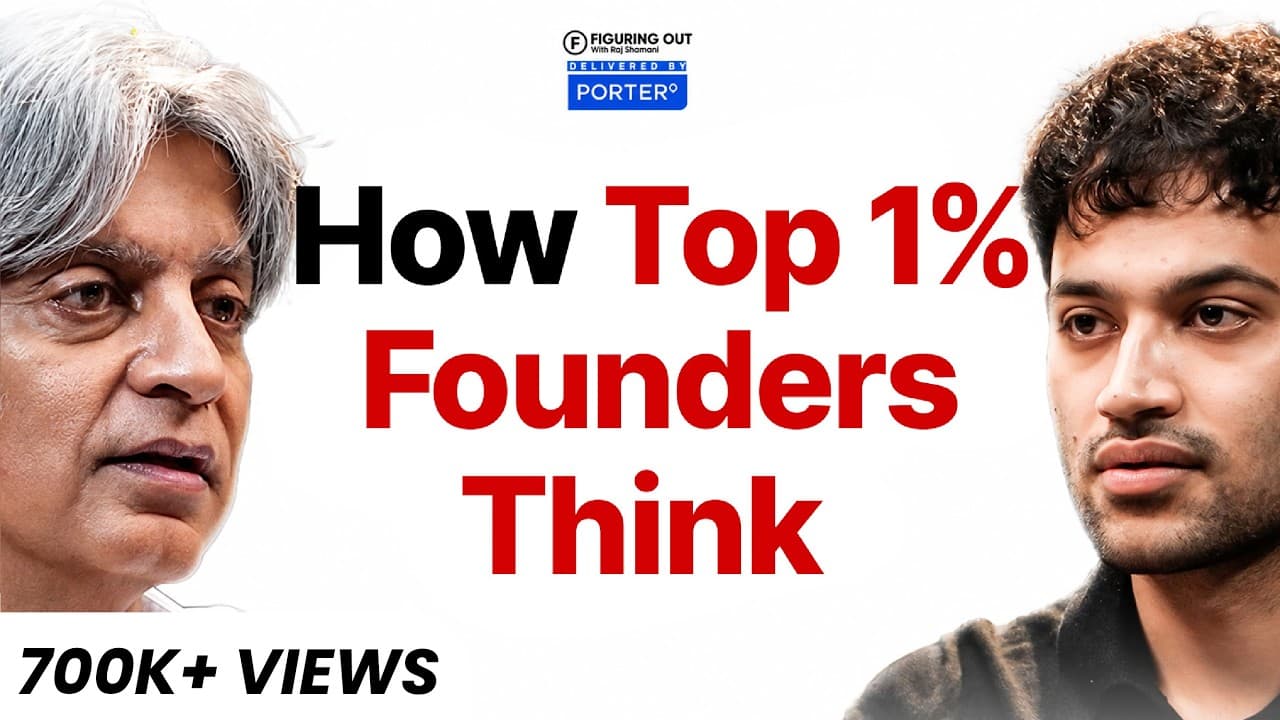
TL;DR
Conscientious founders who persist and solve a personal pain point tend to outperform opportunistic ones. A strong founding team needs a seller and a builder, plus clear, simple communication in pitches. The key is focus on founder traits, product clarity, and market timing to maximize funding potential.
Transcript
If I put you in a room with 10 entrepreneurs, one of them in next decade will become a billionaire. The other nine won't. What are the other nine people are doing wrong versus one who did right? A lot of people are starting companies because it's sexy, opportunistic, but not really for the right reasons. So the main reason a really good company is ... Read More
Key Insights
- X is a conscious founder who outperforms due to deliberate action and no excuses. The emphasis on personal pain points ensures a clear purpose and stronger conviction.
- The key to a successful founding team is a seller who can raise capital and a builder who can deliver product, creating a balanced, capable unit.
- The trait of never quitting is identifiable by resilience and a willingness to push through adversity, which predicts long term viability.
- The founder should be able to articulate a clear problem, solution, and why now, with a focus on simplicity over data heavy pitches.
- Pitch quality matters more than volume of slides; a maximum of 10 slides with a strong front loaded team slide is recommended.
- Conscientiousness, reliability, and follow through are crucial indicators investors use to evaluate founders.
- Founders who have failed before and come back smarter are often more attractive to investors due to demonstrated learning and resilience.
- Sector choice matters; focusing on hot, booming sectors can influence funding decisions, as capital allocation follows perceived momentum.
Install to Summarize YouTube Videos and Get Transcripts
Explore YouTube Video Summarizer or Get YouTube Transcript Extractor
Questions & Answers
Q: What is the core trait that separates top founders according to the interviewee?
The core trait is conscientiousness combined with perseverance. A founder who says what they will do and actually does it demonstrates reliability and discipline. This trait is highlighted as essential for navigating tough times, delivering on commitments, and building trust with investors and team members.
Q: Why is selling considered a necessary skill for entrepreneurs in this discussion?
Selling is essential because entrepreneurship is about convincing others, including customers and investors, of the value of your vision. A founder who can sell effectively can raise capital, attract partnerships, and drive momentum for the company, making the difference between a hopeful idea and a funded, scalable business.
Q: What kind of founder does Raj suggest investors want to back?
Investors want founders who are never willing to give up, who will figure things out no matter the obstacles. This never quit mindset, combined with practical execution and a clear problem solving approach, signals a high probability of long term success and adaptability in changing markets.
Q: How should a pitch deck be structured for high conversion, according to the interview?
A pitch deck should be concise and focused on the core elements: the team, problem, solution, why now, product overview, traction, competition, and funding ask. The guidance favors clarity over clutter, with a maximum of about ten slides and a strong early emphasis on team and vision.
Q: What role does personal experience play in choosing founders to fund?
Personal experience matters because it informs the founder’s empathy with users and helps identify meaningful pain points worth solving. Founders who have personally faced a problem or seen a genuine need are more likely to pursue durable, impactful ventures rather than chasing fashion or opportunistic gains.
Q: Why is it important for a founder to show practical proof in their deck rather than excess data?
Investors favor clarity and concrete signals over overwhelming data because it demonstrates focused thinking and actionable insight. A deck that shows a clear path to value with credible traction beats one filled with charts that lack direct narrative or purpose.
Q: What is the recommended maximum number of slides in a pitch deck from the discussion?
The recommendation is to keep slides to a maximum of ten. This constraint helps maintain focus on the essential elements, ensuring the narrative remains tight, persuasive, and easy for investors to follow without getting lost in excessive data or distractions.
Q: How does the interviewer describe the impact of sector choice on funding decisions?
Sector choice influences funding because investors tend to back sectors that are hot and booming, where capital is flowing and growth signals are strong. While not the only factor, aligning with high momentum areas can improve the odds of attracting capital and scale opportunities.
Summary & Key Takeaways
-
A founder’s core advantage is a personal, pain driven motive that drives relentless execution and resilience, separating them from those chasing trends. The investor emphasizes longevity, accountability, and practical problem solving as indicators of future success.
-
Founders should combine selling ability with solid product building. Entrepreneurship is portrayed as selling, fundraising, and fronting the company. A balanced team with a capable seller and a builder tends to attract better investor alignment and execution potential.
-
A concise and compelling pitch deck works best when it is simple, clear, and focused on problem, solution, traction, and team. The investor highlights an ideal deck with limited slides and emphasizes how a strong narrative translates to higher conversion rates with less clutter.
Read in Other Languages (beta)
Share This Summary 📚
Summarize YouTube Videos and Get Video Transcripts with 1-Click
Try YouTube Summary with ChatGPT & Claude or YouTube Transcript Generator
Explore More Summaries from Raj Shamani 📚

Summarize YouTube Videos and Get Video Transcripts with 1-Click
Try YouTube Summary with ChatGPT & Claude or YouTube Transcript Generator