How Does Eckhart Tolle Say You Can Escape the Prison of the Mind?
TL;DR
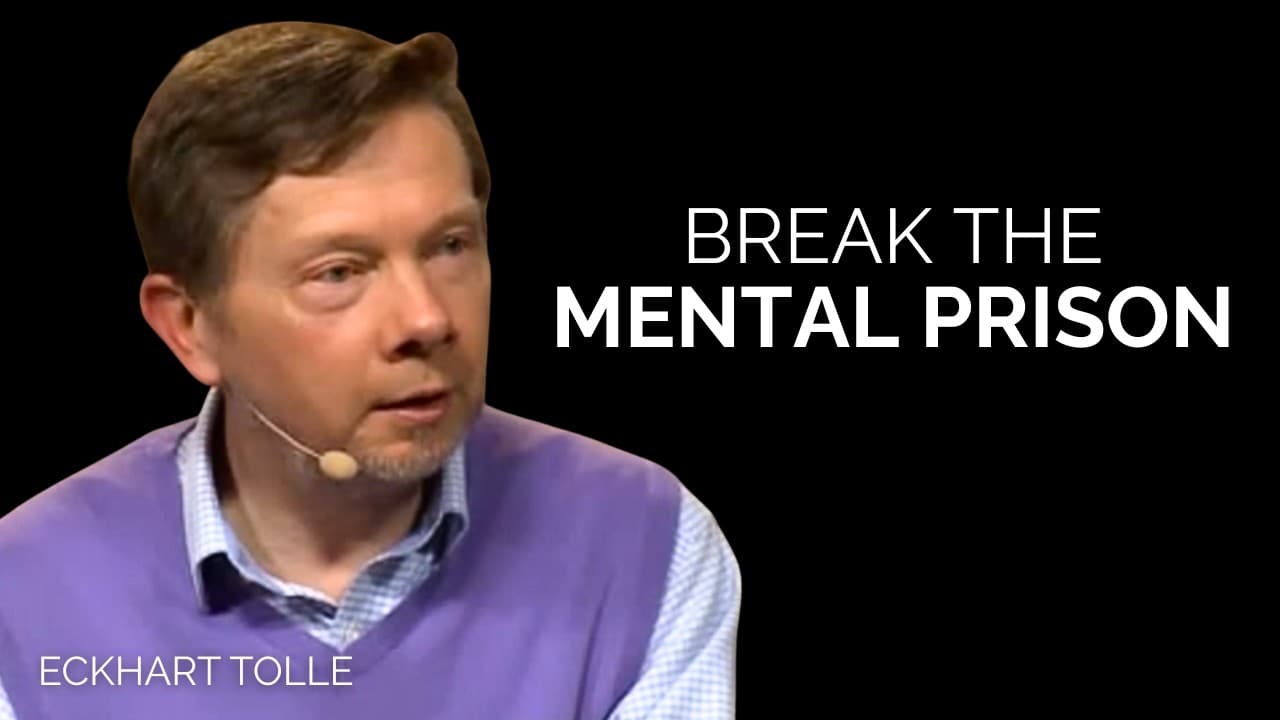
Eckhart Tolle says you escape the prison of the mind by withdrawing identification from the conditioned, mentally and emotionally constructed self. That self is shaped by culture, family background, surroundings, parents, school, and past experiences, while awakening reveals a deeper identity through alert stillness. Read on to understand why changing thought patterns is not enough and how stillness exposes what lies beneath your personal history.
Transcript
The true meaning of retreat is not just leaving your usual surroundings, going into a peaceful place that is conducive to becoming serene. But the real challenge and the it comments according to its conditioning and it it be it this becomes the conditioned me entity that most people are identified with. this conditioned me entity that forms the bas... Read More
Key Insights
- The conditioned self is a mentally and emotionally constructed identity shaped by culture, family background, surroundings, school, personal experiences, and events involving other people. Identification with this construction causes a person to mistake the activity of the mind for who they fundamentally are.
- The voice in the head is often repetitive, even when its opinions, preferences, grievances, and viewpoints appear meaningful or personal. Living closely with someone can make this repetition easier to notice because the same entrenched mental positions and reactions repeatedly emerge.
- Continuous criticism is destructive when it prevents openness, appreciation, and creativity. Critical thinking can be useful up to a point, but a mind immersed in criticism approaches people, literature, and surroundings mainly by finding faults and tearing things down.
- Latent dissatisfaction is a common feature of egoic identification. It waits beneath the surface for an excuse to emerge through complaints such as what others should have done, what circumstances should be, or what a person believes they should have done differently.
- A true retreat is a withdrawal from the usual mentally and emotionally constructed self, not merely a departure from familiar surroundings. A peaceful location can help, but the essential movement is away from identification with habitual thoughts, reactions, and emotions.
- Changing mental conditioning is different from becoming free of identification with it. Improving thoughts and emotional patterns may create greater comfort, but it resembles replacing furniture inside a prison while leaving the bars on the windows unchanged.
- Spiritual awakening is the process of disidentifying from the usual surface self and discovering a deeper dimension of identity. Many people do not recognize this dimension, so they live as though the conditioned personality were the full extent of who they are.
- The deeper self is first encountered through alert stillness rather than conceptual knowledge. Full presence does not require recalling a name or personal history, which shows that being fully oneself can occur without relying on the usual narrative identity.
Install to Summarize YouTube Videos and Get Transcripts
Explore YouTube Video Summarizer or Get YouTube Transcript Extractor
Questions & Answers
Q: How does Eckhart Tolle say you can escape the prison of the mind?
Recognize that the conditioned voice in your head is the working of the mind, not who you are at the deeper level of your being. Freedom comes through disidentification from its repetitive opinions, grievances, criticisms, and emotional patterns. This disidentification is also described as the awakening process.
Q: What is the true meaning of a spiritual retreat?
A true retreat is a retreat from the usual mentally and emotionally constructed self, not merely a trip away from familiar surroundings. A peaceful place can help you become serene, but the central purpose is to let go of identification with the conditioned self and discover what lies underneath it.
Q: What creates the conditioned self?
The conditioned self is formed by culture, family background, surroundings, parents, school, and things that happened to you or were done to you. Its accompanying emotions can amplify its mental patterns. People often mistake this constructed personality for who they truly are.
Q: Why is the voice in the head so repetitive?
The voice follows entrenched conditioning through recurring opinions, likes, dislikes, viewpoints, mental positions, and grievances. Its repetition can become especially noticeable when you live with someone and repeatedly encounter the same reactions and positions.
Q: When does critical thinking become destructive?
Critical thinking becomes destructive when it prevents you from being open to or appreciating anything before criticizing it. A mind immersed in criticism looks for faults in literature, other people, and its surroundings. Tolle says this state can tear things down but contains nothing creative.
Q: Why do people experience continuous dissatisfaction and complaint?
Continuous dissatisfaction arises when the ego is identified with the critical voice in the head. Latent dissatisfaction waits beneath the surface for another excuse to emerge through thoughts about what others should have done. When it cannot be directed at others, it can turn inward as self-criticism about what you should have done.
Q: Is changing your mental conditioning the same as awakening?
No. Workshops may change mental conditioning and make you feel better, but Tolle compares that improvement to putting better furniture inside a prison whose windows still have bars. Awakening means no longer identifying with the conditioning as your self, rather than simply making it more comfortable.
Q: How do you encounter the deeper self?
The deeper self is first encountered through alert stillness, not through conceptual explanation. In stillness, you can be fully present and fully yourself without remembering your name or personal history. The experience may be deep even if you cannot describe it in concepts.
Summary & Key Takeaways
-
The conditioned self is built from thoughts, opinions, preferences, grievances, emotional patterns, family background, culture, school, surroundings, and past experiences. Most people mistake this mentally and emotionally constructed personality for their identity, even though it is repetitive and frequently driven by criticism, complaint, or dissatisfaction.
-
A genuine retreat means stepping back from identification with the usual self, not simply traveling to peaceful surroundings. Changing mental conditioning may make the personality more comfortable, but it does not provide complete freedom. Awakening begins when thoughts and emotions are observed without being treated as the essence of who you are.
-
The deeper self is discovered through direct experience rather than conceptual explanation. Alert stillness reveals that full presence does not require remembering your name or personal history. A person may encounter this deeper dimension profoundly while remaining unable to describe it, because it does not belong to the ordinary world of concepts.
Read in Other Languages (beta)
Share This Summary 📚
Summarize YouTube Videos and Get Video Transcripts with 1-Click
Try YouTube Summary with ChatGPT & Claude or YouTube Transcript Generator
Explore More Summaries from Eckhart Tolle 📚



Summarize YouTube Videos and Get Video Transcripts with 1-Click
Try YouTube Summary with ChatGPT & Claude or YouTube Transcript Generator