What Did Trump Announce About Autism Research?
TL;DR
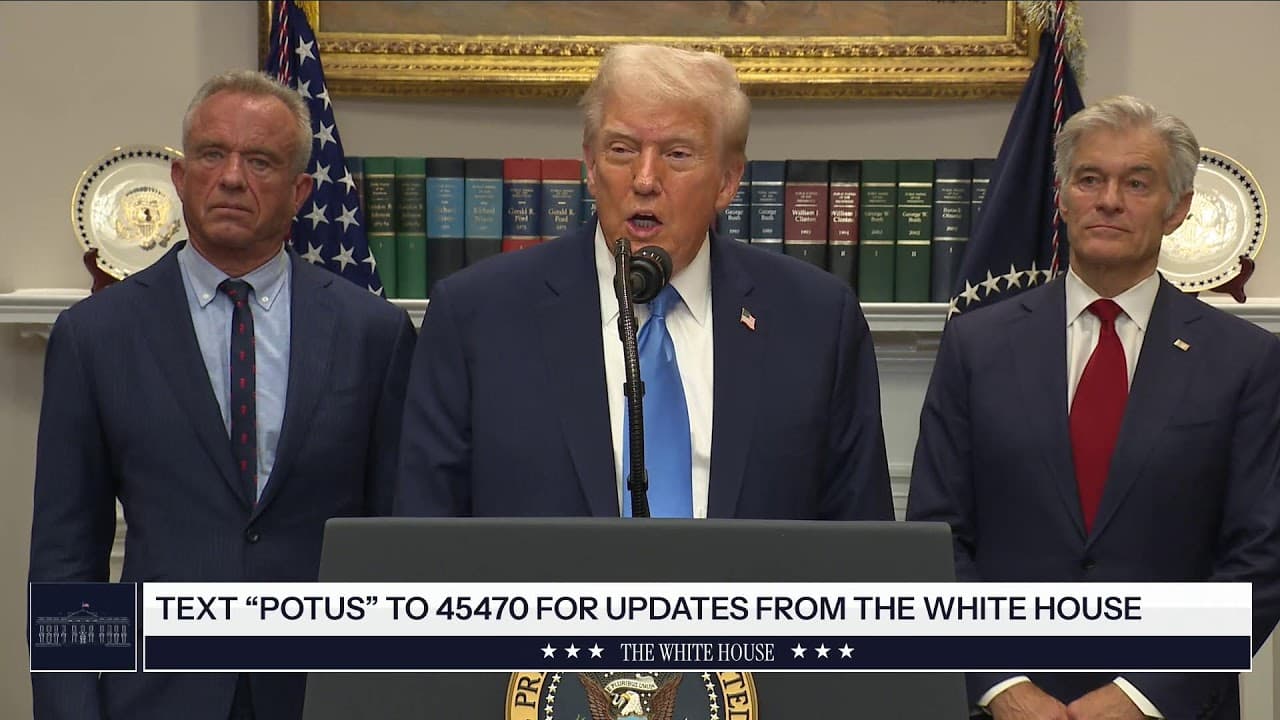
President Trump announced proposed federal actions focused on autism, including updated FDA communications about acetaminophen use during pregnancy, a drug-label change concerning potential symptom benefits, and 13 NIH grant awards. He also advocated limiting Tylenol during pregnancy, changing childhood vaccination practices, and accelerating research, while repeatedly presenting several conclusions as personal beliefs, possible associations, or claims still requiring investigation.
Transcript
Thank you very much. So, I've been waiting for this meeting for 20 years, actually. And it's not that everything's 100% understood or known, but I think we've made a lot of strides. Wish it was done a long time ago. Today, we're delighted to be joined by America's top medical and public health professionals as we announce historic steps to confront... Read More
Key Insights
- The administration's central announcement is a coordinated federal effort to investigate autism's causes, prevention, and treatment. HHS said NIH, FDA, CDC, and CMS would work across traditional agency boundaries, examine toxic and pharmaceutical exposures, and accelerate research and guidance.
- Trump characterized autism prevalence as having increased from one in 10,000 children to one in 31 overall. He also cited one in 12 boys in parts of California and described the reported increase since 2000 as much greater than 400 percent.
- The FDA action described in the remarks is a physician notification concerning an association between acetaminophen use during pregnancy and increased autism risk. Trump said pregnant women should limit Tylenol unless medically necessary and should consult their doctors for additional guidance.
- The medication guidance presented in the announcement allows for acetaminophen when a severe fever makes treatment necessary. Trump emphasized sparing use and a doctor's involvement, while stating that other medicines, including aspirin and Advil, had been proven harmful in this context.
- The childhood vaccination proposal is to divide shots across four or five occasions over a period of years. Trump argued that babies receive too many substances during a single visit, but the transcript presents this position primarily as his recommendation and personal judgment.
- The vaccine formulation proposals include removing mercury and aluminum, separating the measles, mumps, and rubella components, and keeping chickenpox vaccination separate. Trump said mixing vaccines might create problems and argued that separate administration had no downside, while acknowledging the impact might be limited.
- The hepatitis B recommendation presented by Trump is to delay vaccination until age 12. He based that position on his statement that hepatitis B is sexually transmitted and questioned why the vaccine should be given to a baby shortly after birth.
- The treatment-related announcement is an FDA label update for an existing drug to reflect potential benefits in reducing some autism symptoms. Trump described this as a source of hope for families, but the transcript does not identify the drug or quantify its expected benefits.
Install to Summarize YouTube Videos and Get Transcripts
Explore YouTube Video Summarizer or Get YouTube Transcript Extractor
Questions & Answers
Q: What federal actions did Trump announce concerning autism?
Trump announced several autism-related federal actions: an FDA notification to physicians concerning an association between acetaminophen use during pregnancy and increased autism risk, an FDA label update for an existing drug that may reduce some autism symptoms, and 13 NIH grant awards through autism data science initiatives. HHS also described an interagency investigation involving NIH, FDA, CDC, and CMS.
Q: What did Trump say about Tylenol use during pregnancy?
Trump said pregnant women should limit Tylenol, the common name he used for acetaminophen, unless it is medically necessary. He identified a dangerously high fever as a possible reason for using it, recommended using it sparingly, and said medication decisions should ideally involve a doctor. He repeatedly urged avoidance throughout pregnancy but acknowledged that treatment might sometimes be necessary.
Q: What autism prevalence figures were cited in the announcement?
Trump cited a historical prevalence of one in 20,000 children, followed by one in 10,000, and a current overall figure of one in 31. He also mentioned one in 12 boys in parts of California and said autism rates had increased by much more than 400 percent since 2000. These figures were presented in his remarks as evidence of a serious public health problem.
Q: How did Trump propose changing childhood vaccination schedules?
Trump proposed dividing childhood shots across four or five occasions instead of administering many substances during one visit. He suggested spreading smaller doses over a period of years because he believed babies receive too much at once. The transcript presents this as Trump's recommendation and personal assessment, rather than providing supporting study details or a finalized schedule from the agencies represented.
Q: Why did Trump recommend separating the MMR vaccines?
Trump said measles, mumps, and rubella vaccines should be administered separately because he believed combining them could create a problem. He described this view as based on what he felt and argued that separate administration offered no downside. He also noted that chickenpox vaccination was already separate and suggested that mixing vaccines might produce different effects, although he acknowledged the impact could be small.
Q: What did Trump recommend for the hepatitis B vaccine?
Trump recommended waiting until a child is 12 years old before administering the hepatitis B vaccine. He based this recommendation on his statement that hepatitis B is sexually transmitted and argued that a nearly newborn baby did not need the shot. The remarks did not provide additional evidence, exceptions, or a detailed replacement schedule supporting the proposed delay.
Q: What treatment development for autistic children was announced?
Trump said the FDA would update the label of an existing drug to reflect potential benefits in reducing some autism symptoms. He presented the change as hopeful for parents and suggested that some children might improve substantially. However, the transcript does not name the medication, describe the evidence behind the change, identify eligible patients, or specify how much improvement might occur.
Q: How will federal agencies investigate the causes of autism?
HHS said it launched an all-agency effort to identify causes of autism, including possible toxic and pharmaceutical exposures. According to the remarks, NIH, FDA, CDC, and CMS would work together, remove traditional agency silos, accelerate research and guidance, and examine how patients and parents might prevent or reverse the reported trend. NIH was also set to announce 13 autism data science grant awards.
Summary & Key Takeaways
-
Trump described rising autism prevalence as a public health crisis and called for faster investigation into its causes. He cited a change from one in 10,000 children to one in 31 overall, while also mentioning one in 12 boys in parts of California, and argued that environmental or pharmaceutical factors require scrutiny.
-
The announced federal actions included notifying physicians about an association between acetaminophen use during pregnancy and increased autism risk, recommending limited use unless medically necessary, and updating an existing drug's label to reflect potential benefits for some autism symptoms. Pregnant women were advised to discuss medication decisions with their doctors.
-
Trump additionally advocated spreading childhood shots across more visits, removing mercury and aluminum from vaccines, administering the MMR components separately, and delaying hepatitis B vaccination. He identified several of these positions as personal views. HHS also announced an interagency effort and 13 NIH autism data science grant awards.
Read in Other Languages (beta)
Share This Summary 📚
Summarize YouTube Videos and Get Video Transcripts with 1-Click
Try YouTube Summary with ChatGPT & Claude or YouTube Transcript Generator
Explore More Summaries from The White House 📚
Summarize YouTube Videos and Get Video Transcripts with 1-Click
Try YouTube Summary with ChatGPT & Claude or YouTube Transcript Generator