How to Prepare for an Agentic RAG Bootcamp
TL;DR
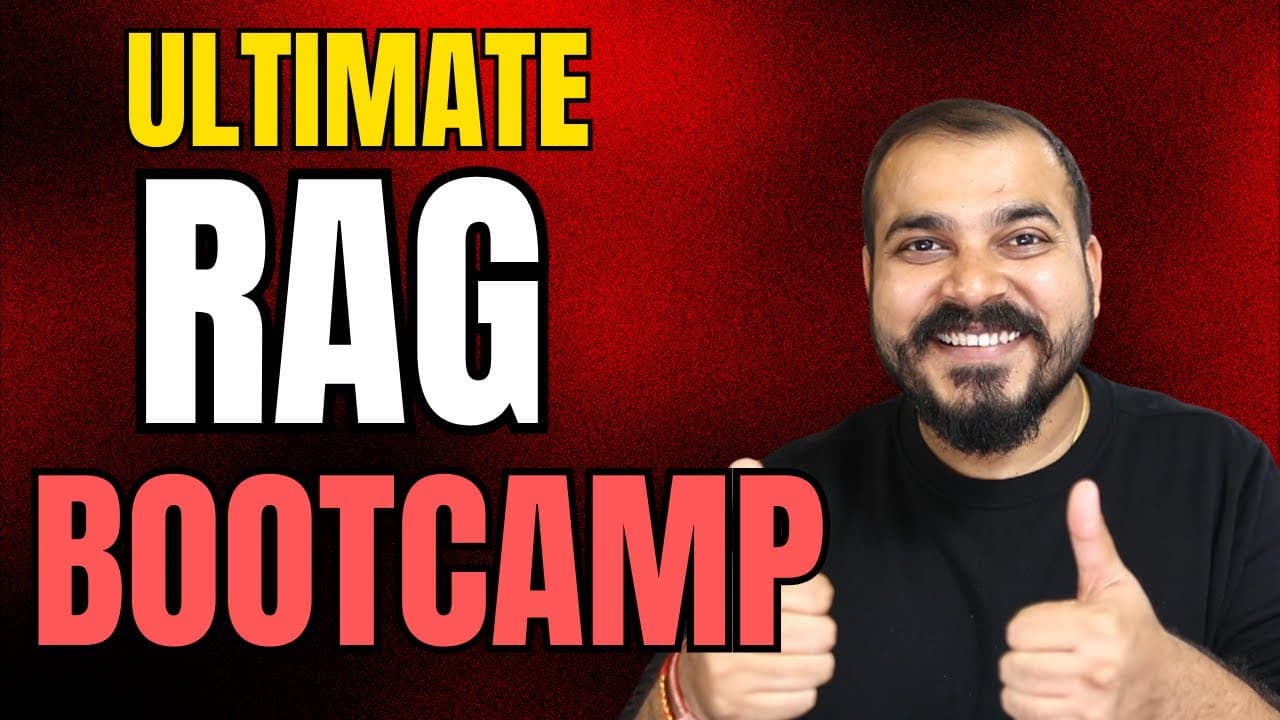
Strong Python skills are required before joining, while basic generative AI and cloud knowledge are sufficient supporting prerequisites. The four-to-five-month program focuses on coding production-grade RAG and agentic AI applications, progressing from foundations and document parsing to advanced techniques, protocols, end-to-end projects, cloud deployment, and access through the academy dashboard or mobile app.
Transcript
Uh hello guys. Uh can I get a quick confirmation everybody? Uh I hope everybody's able to hear me. Yeah, just drop a message like yes. Okay, so welcome to this batch. But I hope uh everybody has got got the link from the dashboard how to join the session each and everything. Yes or no everyone? [cough and clears throat] Let's check out like some pe... Read More
Key Insights
- Good Python programming knowledge is a required prerequisite because the bootcamp will cover modular programming and advanced Python coding. Participants will work with development tools including VS Code and Jupyter notebooks, beginning with the installation of required software in the next session.
- Basic generative AI and cloud knowledge are sufficient supporting prerequisites for getting started. The induction distinguishes these foundational expectations from Python, which is described as essential for following the coding and application-development work planned throughout the batch.
- The curriculum is expected to take approximately four to five months to complete. It progresses from foundational RAG concepts and traditional implementations toward advanced, agentic, and production-oriented systems, concluding with end-to-end projects and deployment work.
- The curriculum includes LangChain, document parsers, LlamaIndex, advanced LlamaIndex techniques, Haystack, and LangGraph. These modules sit alongside enhanced RAG methods, giving participants exposure to several tools and approaches used to construct different retrieval-based applications.
- The advanced syllabus covers multimodal and structured RAG, conversational and contextual RAG, agentic RAG fundamentals, advanced agentic RAG, production RAG systems, cutting-edge RAG techniques, and the Model Context Protocol. Its stated direction is building production-grade applications through coding.
- The community feed works similarly to a LinkedIn feed within the batch group. Participants can publish announcements or learning updates, react to posts, reshare material, repost content, and view knowledge shared by other members of the learning community.
- The workshop section displays scheduled Saturday and Sunday sessions associated with a participant's batch. Students can check session details through the desktop dashboard or mobile application, while class information and joining links are also sent from the academy support email address.
- The academy mobile application provides access to the dashboard and session recordings on Android and iOS devices. The induction presents mobile access as a way for participants to review bootcamp materials and recordings while traveling or away from their computers.
Install to Summarize YouTube Videos and Get Transcripts
Explore YouTube Video Summarizer or Get YouTube Transcript Extractor
Questions & Answers
Q: What prerequisites are needed for the Agentic RAG bootcamp?
Good Python programming knowledge is the main prerequisite because the bootcamp includes modular coding and advanced Python development. Participants should also have basic knowledge of generative AI and some cloud knowledge, which the instructor describes as sufficient for getting started. The course will use VS Code and Jupyter notebooks, with required software installation beginning in the next session.
Q: How long does the RAG bootcamp take to complete?
The complete syllabus is expected to take approximately four to five months. During that period, the program moves from RAG foundations and traditional implementations to advanced and agentic systems. The planned journey also includes production RAG, the Model Context Protocol, multiple end-to-end projects, and deployment, with practical coding and production-grade application development as central priorities.
Q: What topics are covered in the RAG bootcamp syllabus?
The syllabus covers RAG foundations, LangChain, traditional RAG implementation, document parsers, LlamaIndex, advanced LlamaIndex techniques, Haystack, LangGraph, and enhanced RAG techniques. Later topics include multimodal and structured RAG, conversational and contextual RAG, agentic RAG fundamentals, advanced agentic RAG, production systems, cutting-edge techniques, the Model Context Protocol, end-to-end projects, and deployment.
Q: Does the RAG bootcamp focus on practical coding?
Yes. The stated focus is coding and developing production-grade applications rather than limiting instruction to conceptual material. Participants are expected to use Python for modular and advanced coding, work with VS Code and Jupyter notebooks, implement different types of RAG, build agentic AI applications, complete end-to-end projects, and address cloud deployment as part of the curriculum.
Q: How can students find their live bootcamp sessions?
Students can open the workshop section of the academy dashboard to view the sessions assigned to their batch, including scheduled Saturday and Sunday classes. Session information and joining links are also sent by email from the academy support address. The same scheduling details can be checked through the mobile application or through the dashboard on a desktop or laptop.
Q: How does the bootcamp community feed work?
The community feed is a group space for publishing announcements, sharing learning progress, and posting useful knowledge. Its interaction model is compared to a LinkedIn feed. Members can respond with engagement reactions, reshare posts, and repost content. The induction demonstrates this feature by publishing a welcome message to the bootcamp group and asking participants to reload their pages.
Q: Can students access bootcamp recordings on a phone?
Yes. The Krishna Academy mobile application is available for Android and iOS, and students can use it to access their dashboard and recordings. The induction specifically presents this as useful when participants are traveling or otherwise away from a computer. Desktop and laptop access remain available for checking the dashboard, workshop information, and other course-related sections.
Q: What is the main goal of the Agentic RAG bootcamp?
The main goal is to help participants move from traditional RAG implementations toward agentic AI and production-grade RAG applications. The curriculum covers multiple RAG types, advanced frameworks and techniques, contextual and conversational systems, production considerations, and the Model Context Protocol. Participants are also expected to build end-to-end projects and work through cloud deployment as part of the program.
Summary & Key Takeaways
-
The induction outlines a four-to-five-month curriculum covering RAG foundations, LangChain, traditional implementations, document parsers, LlamaIndex, Haystack, LangGraph, enhanced techniques, multimodal and structured RAG, conversational systems, agentic RAG, production systems, cutting-edge methods, the Model Context Protocol, end-to-end projects, and cloud deployment, with a strong emphasis on practical coding.
-
Participants need good Python programming knowledge because the instruction will involve modular and advanced Python coding. The bootcamp will use VS Code and Jupyter notebooks, and the next session will begin by installing the necessary software. Basic generative AI knowledge and some cloud knowledge are described as sufficient supporting preparation.
-
The academy dashboard provides a community feed, workshop schedules, course access, and messaging. Students can use the feed to share knowledge and engage with posts, check their assigned weekend sessions in the workshop area, receive class links through support emails, and access recordings and dashboard features through desktop or mobile applications.
Read in Other Languages (beta)
Share This Summary 📚
Summarize YouTube Videos and Get Video Transcripts with 1-Click
Try YouTube Summary with ChatGPT & Claude or YouTube Transcript Generator
Explore More Summaries from Krish Naik 📚
Summarize YouTube Videos and Get Video Transcripts with 1-Click
Try YouTube Summary with ChatGPT & Claude or YouTube Transcript Generator