How Did Rome Conquer the Mediterranean World?
TL;DR
Rome won by being poor, small and unified, which forced it to be the most militaristic society among warlike neighbors. Open citizenship let conquered peoples become Romans, so Rome could replenish soldiers and lose battle after battle while still winning wars. Carthage hired mercenaries and calculated cost versus benefit; Rome fought with its own citizens to the death.
Transcript
Today we do Rome and um so before we've done Persia um the Jews and the Greeks and these are the three um main civilizations after Brontage collapse and now we will emerge Rome to eclipse all three and build a world empire. Okay. And what I will argue to you today is that Rome is the great anti-ivilization. Um or you can call it just the evil empir... Read More
Key Insights
- Rome's geographic disadvantage was the source of its strength: flat, hard to defend, far from the coast and surrounded by enemies, the city was forced to become the most martial, violent, militaristic and aggressive culture in the Italian peninsula.
- Empires decay because their people become lazy, arrogant and stupid, and then hire others to fight for them. The Etruscans followed this pattern, recruiting Romans as mercenaries, and the Romans gradually rose to become the dominant power.
- Open citizenship was Rome's structural advantage over Athens and Sparta. Because citizenship could be earned by obeying the fathers, the laws and the customs, Rome absorbed conquered peoples and could always replenish its soldiers after defeats.
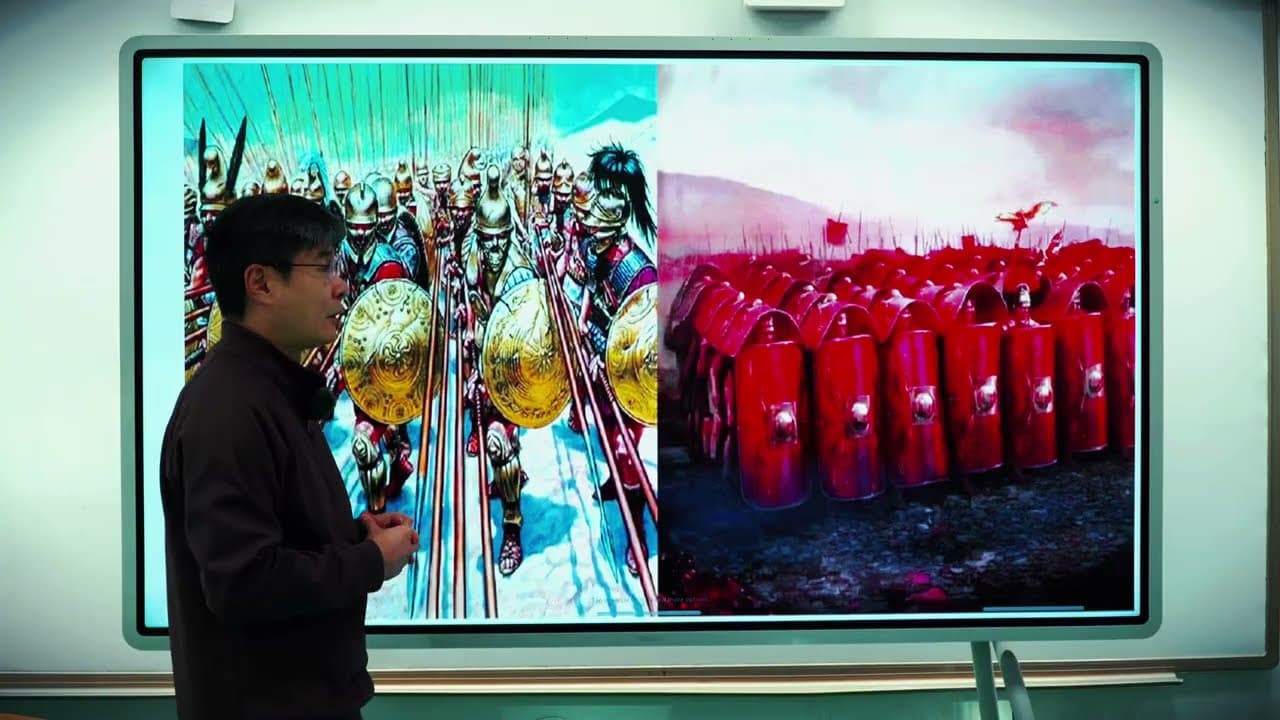
- Roman legions beat Greek hoplites for three reasons: legionaries needed little armor so poor men could serve, they needed little training and could go straight into battle, and their lighter equipment suited fighting in mountainous terrain.
- Greek hoplites had to buy their own heavy armor, shields and helmets, which meant they tended to be small landowners, and they spent years honing the skills needed to fight in formation on flat land.
- The typical Roman soldier was a peasant who farmed most of the time and went to war when required, rather than a full-time professional soldier.
- Pyrrhus of Epirus defeated the Romans battle after battle, then concluded that one more victory would leave him with no more soldiers. Rome does not win many battles, but it wins most of its wars.
- Poverty beat wealth in the Punic Wars. Rich Carthage hired mercenaries and did cost-benefit analysis, surrendering when war looked too expensive, while poor Rome fought with its own increasingly tough and unified citizens.
- Rome expanded through military conquest followed by road building, a large effort in hilly Italy, but the roads let Rome consolidate and navigate the territory it had taken.
Install to Summarize YouTube Videos and Get Transcripts
Explore YouTube Video Summarizer or Get YouTube Transcript Extractor
Questions & Answers
Q: Why did Rome become the dominant power in the Italian peninsula?
Rome started in the most disadvantaged location: on flat land that was not easily defensible, not really by the coast so trade was difficult, and surrounded by many warlike peoples much like itself in a poor region where everyone fought over resources. That disadvantage forced Rome to become the most martial, violent, militaristic and aggressive of them all, with its entire society built around war. Rome first served as mercenaries for the Etruscans, then gradually emerged as the great power, conquering the peninsula and expanding into the Mediterranean.
Q: What is the difference between Greek and Roman concepts of liberty?
The Greeks believed liberty is the right to speak your mind in front of others. Roman liberty meant obedience: obedience to the fathers, to history and to culture, because only through that obedience could the Romans survive as a people in their harsh, poor and surrounded position. This difference had a practical consequence. In Greece, citizenship passed from family to family, but in Rome citizenship could be earned, because the qualification was obeying the fathers, the laws and the customs rather than being born into the right family.
Q: How did open citizenship help Rome win wars?
Because citizenship in Rome could be earned rather than only inherited, Rome incorporated different peoples into its culture as it expanded. That gave Rome an advantage Athens and Sparta did not have: it could always replenish its soldiers. As a result Rome could afford to lose war after war after war, and with each defeat it learned and grew stronger. The speaker calls this the secret to Rome's ultimate victory, summed up in the observation that the Romans did not win many battles but won most of their wars.
Q: What is the difference between Roman legions and Greek hoplites?
There are three main differences. First, cost: hoplites were heavily armored and each man bought his own armor, so hoplites tended to be small landowners with some wealth, while legionaries needed little armor and so could be poor. Second, training: becoming a hoplite took years of honing skills because you fought in formation, while a legionary needed little training and could go straight into battle. Third, terrain: legionaries were lighter because they were developed to hike up mountains in formation, while Greeks fought more on flat land. Over time the legions overwhelmed the hoplites.
Q: Why did Carthage lose the Punic Wars to Rome?
The decisive difference was that Carthage was rich and Rome was poor. Being rich, Carthage could hire mercenaries to fight its wars. Being poor, Rome had to use its own citizens, so over time those citizens became much tougher and more unified while the Carthaginians grew more corrupt and decadent. The Romans were more invested and would fight to the end. The Carthaginians were business people and traders known for sharp business skills, so they ran cost-benefit analysis and concluded surrender was cheaper than war. They surrendered in the first and second Punic Wars and were wiped out in the third.
Q: What did Hannibal Barca do in the Second Punic War?
Hannibal Barca was a Carthaginian general based in Spain who decided to destroy Rome. He did it by crossing the Alps, mountains that people had long thought formed a natural barrier, bringing his war elephants and his army into Italy to attack Rome. In three decisive battles Hannibal destroyed and wiped out the entire Roman army. He then sent an envoy to the Senate saying that since Rome had no soldiers left, he was willing to talk peace terms. The Senate refused, telling him in effect to come and get them.
Q: Why was the Roman Senate not corrupt in the early Republic?
The Senate was the heart and center of Roman society, where the leading families came together to discuss the fate of Rome. While Rome was poor, this arrangement caused no problem because everyone knew each other and there was no real inequality, so there could be no corruption, and the senators genuinely represented the best interests of all Romans. The problem came later. As Rome became wealthier and wealthier, the new wealth went to those same leading families, and Rome became much more corrupt along with its growing riches.
Q: How did the war with Pyrrhus of Epirus show Rome's military advantage?
As Rome expanded toward the coast it pressed on Greek colonies, and those Greeks called for help from their compatriots across the sea. King Pyrrhus of Epirus took the opportunity to try to conquer Italy and sailed over with hoplites. He defeated the Romans battle after battle, then realized that one more victory would leave him with no soldiers at all. That illustrates the core difference: Greek fighting relied on specialized forces that could win over time, while the Romans could keep replenishing their forces indefinitely.
Q: What role did roads play in the Roman Empire's expansion?
Rome expanded first through military conquest and then by building roads. The speaker calls this impressive because Italy is very hilly, so constructing roads took tremendous effort. The payoff was control: once the roads existed, Rome could consolidate its gains and navigate its empire, holding together territory that stretched from the Italian peninsula out across the Mediterranean. Road building was therefore not a side project but the second half of the conquest method itself.
Q: Who were the Etruscans and how did they influence Rome?
The Etruscans were an advanced civilization very similar to the Mycenaean Greeks, expanding throughout the Italian peninsula. As a sea-faring people they were heavily in contact with the Egyptians, the Greeks and the peoples around them, and they were constantly at war. They are the civilization that most heavily influenced the Romans. Rome emerged at the borderlands of the Etruscan cultural empire, and as the Etruscans became wealthier they recruited Romans to fight for them as mercenaries, which is how Rome's rise began.
Q: Why does the speaker call Rome an anti-civilization?
The lecture's central argument is that Rome is the great anti-civilization, or as the speaker also puts it, the evil empire. The case rests on Rome's war mentality: its entire society was based on war, and its approach to enemies was to fight to the death and, upon winning, to kill every one of them. Carthage is the example, surrendering in the first two Punic Wars and being wiped out in the third. In the lecture's sequence, Rome follows Persia, the Jews and the Greeks as the three main civilizations after the Bronze Age collapse, then eclipses all three to build a world empire.
Q: What was daily life like for a typical Roman soldier?
The typical Roman fighter was a peasant rather than a professional. He spent most of his time farming, and when it was required of him he went to war. He was not a full-time soldier. This fits the wider pattern the lecture describes: because Rome was poor, it could not pay others to fight, so ordinary citizens carried the burden of war themselves, which is precisely what made the Roman fighting force tougher and more unified than the mercenary armies it faced.
Summary & Key Takeaways
-
Rome emerged at the borderlands of Etruscan civilization, a wealthy sea-faring culture in contact with Egypt and Greece. As the Etruscans grew rich, they recruited Romans as mercenaries to fight for them. Rome's location was disadvantaged: flat, hard to defend, away from the coast, surrounded by warlike peoples competing for scarce resources in a poor mountainous region.
-
Roman liberty meant obedience to the fathers, to history and to culture, unlike the Greek idea of liberty as the right to speak your mind. Because obedience to laws and customs was the qualification, citizenship in Rome could be earned rather than only inherited family to family as in Greece, letting Rome absorb new peoples as it expanded.
-
The Senate, where leading families met to decide Rome's fate, worked well while Rome was poor and everyone knew each other, since there was little inequality and therefore little room for corruption. As Rome grew wealthier, the wealth concentrated among the senators, and Rome became far more corrupt over time.
Read in Other Languages (beta)
Share This Summary 📚
Summarize YouTube Videos and Get Video Transcripts with 1-Click
Try YouTube Summary with ChatGPT & Claude or YouTube Transcript Generator
Explore More Summaries from Predictive History 📚






Summarize YouTube Videos and Get Video Transcripts with 1-Click
Try YouTube Summary with ChatGPT & Claude or YouTube Transcript Generator