The Physics of Racing Games
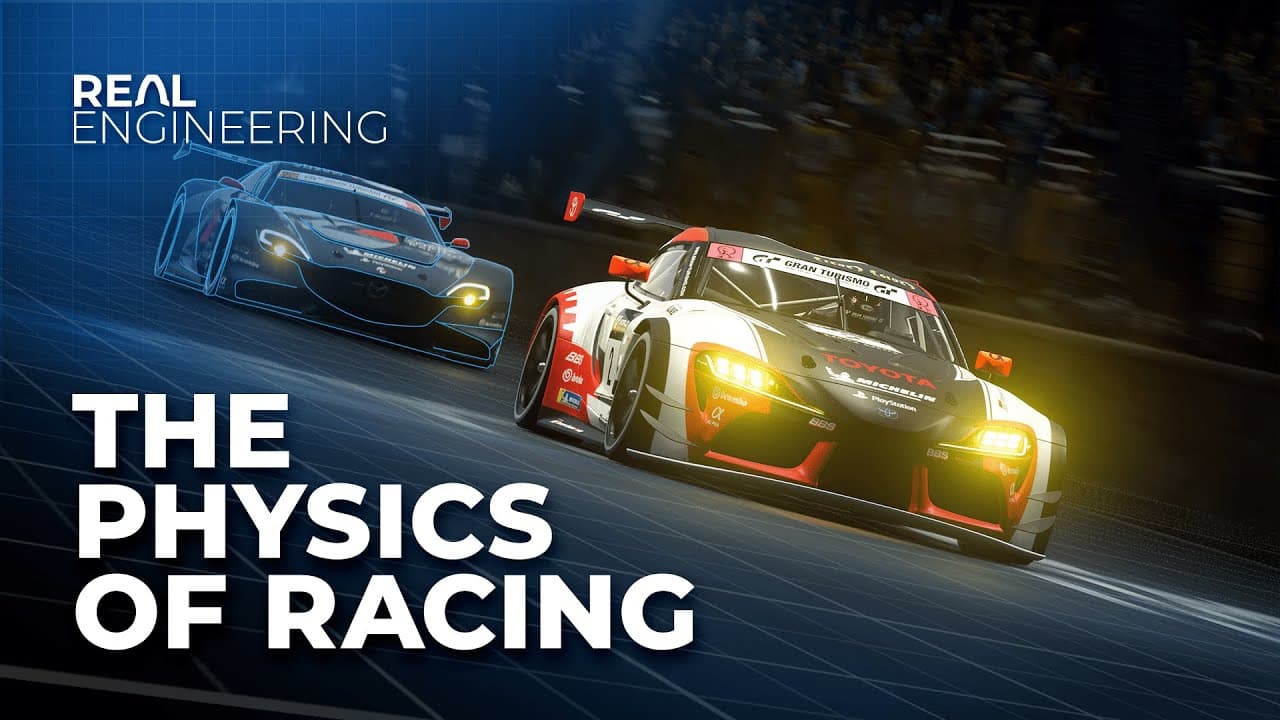
TL;DR
Exploring the physics behind vehicle performance in racing games.
Transcript
Motor vehicles come in a huge variety of shapes and designs each tailored for a specific purpose. Whether that be simply getting you from A to B in comfort and safety, travelling around a well paved race track in the shortest time possible, crossing difficult terrain, or sliding sideways around a corner. Each have been carefully crafted by their en... Read More
Key Insights
- Vehicle designs are tailored for specific purposes, such as comfort, speed, or terrain handling, and each has unique engineering to excel in its domain.
- In racing games, the physics model is separate from the 3D model, allowing developers to simulate realistic vehicle behavior while customizing aesthetics.
- Suspension systems in vehicles affect performance in games, with soft suspensions for off-road vehicles and stiff suspensions for track cars to optimize handling.
- Traction is a critical factor in racing games, influencing how vehicles interact with the road; developers adjust traction to create a balance between realism and gameplay.
- Engine performance in games is simulated by inputting real-world parameters like torque curves, allowing vehicles to perform similarly to their real-life counterparts.
- Developers balance realism and fun in racing games by adjusting physics variables, such as traction, to enhance the gaming experience.
- Racing games like The Crew 2 offer a blend of arcade and simulation experiences, allowing for exaggerated actions like taking high-speed jumps without damage.
- The Crew 2 developers use real-world physics concepts, such as drag and torque, to closely replicate vehicle performance while allowing creative freedom in gameplay.
Install to Summarize YouTube Videos and Get Transcripts
Explore YouTube Video Summarizer or Get YouTube Transcript Extractor
Questions & Answers
Q: How do developers separate physics and 3D models in racing games?
In racing games, developers separate the physics model from the 3D model to allow for realistic vehicle behavior while customizing the vehicle's appearance. The physics model includes independent physics objects for components like wheels, with specific properties such as friction and mass. This separation enables developers to simulate real-world physics without being restricted by the visual design of the vehicle.
Q: What role does suspension play in vehicle performance in games?
Suspension systems significantly impact vehicle performance in racing games. Off-road vehicles typically have soft suspensions to handle rugged terrain, while track cars have stiff suspensions to maintain tire contact and traction. The suspension model affects how the vehicle handles bumps and corners, contributing to the game's realism by simulating the transfer of weight and the vehicle's stability during maneuvers.
Q: How is traction modeled in racing games?
Traction in racing games is a critical factor that determines how vehicles interact with the road surface. Developers adjust traction by modifying the coefficient of friction applied to the tires, affecting the traction force. This adjustment helps balance realism and gameplay, allowing for different driving experiences. In more realistic games, traction is modeled closely to real life, while arcade-style games may enhance traction for easier handling and more fun.
Q: How do developers simulate engine performance in racing games?
Developers simulate engine performance by inputting real-world parameters, such as torque curves, into the game's vehicle parameters. This ensures that vehicles perform similarly to their real-life counterparts. The game accounts for factors like engine torque, gear ratios, and wheel radius to calculate the force applied to the ground, allowing for realistic acceleration and top speed. This approach helps maintain the relative performance accuracy between different vehicles in the game.
Q: What is the balance between realism and fun in racing games?
The balance between realism and fun in racing games involves adjusting physics variables to create an enjoyable gaming experience while maintaining a connection to real-world physics. Developers may enhance traction, modify steering mechanics, or allow for exaggerated vehicle actions to make the game more accessible and entertaining. This balance is crucial for appealing to a wide range of players, from simulation enthusiasts to casual gamers.
Q: How does The Crew 2 blend arcade and simulation elements?
The Crew 2 blends arcade and simulation elements by offering a mix of realistic physics modeling and exaggerated gameplay features. The game simulates real-world vehicle performance using physics concepts like drag and torque while allowing for creative actions, such as high-speed jumps and seamless transitions between different vehicle types. This approach provides a diverse gaming experience that caters to both simulation fans and those seeking a more arcade-style adventure.
Q: How do developers ensure vehicles perform accurately in games?
Developers ensure vehicles perform accurately in games by inputting detailed real-world parameters, such as torque curves and drag coefficients, into the game's physics engine. These parameters allow the game to simulate realistic acceleration, top speed, and handling characteristics. By closely modeling these aspects, developers maintain the relative performance accuracy between different vehicles, ensuring that the gaming experience aligns with players' expectations of how these vehicles should behave.
Q: What impact does traction have on vehicle handling in games?
Traction significantly impacts vehicle handling in games, affecting how vehicles respond to steering, acceleration, and braking. Developers adjust traction to influence the vehicle's grip on the road, which can alter the driving experience. For instance, higher traction may result in more stable handling, while lower traction can lead to increased drifting and sliding. By manipulating traction, developers can create diverse driving experiences, ranging from realistic simulations to more arcade-like gameplay.
Summary & Key Takeaways
-
Racing games simulate vehicle performance by separating the physics model from the 3D model, allowing developers to create realistic behavior while customizing aesthetics. Suspension systems play a significant role in vehicle handling, with different setups for off-road and track vehicles to optimize performance.
-
Traction is a key element in racing games, influencing vehicle-road interaction. Developers adjust traction to balance realism and gameplay, creating a mix of simulation and arcade experiences. The Crew 2 exemplifies this approach, allowing for high-speed jumps and exaggerated vehicle actions.
-
Engine performance in games is modeled using real-world parameters like torque curves, ensuring vehicles perform similarly to their real-life counterparts. Developers balance realism and fun by adjusting physics variables, enhancing the gaming experience while maintaining a connection to real-world physics.
Read in Other Languages (beta)
Share This Summary 📚
Summarize YouTube Videos and Get Video Transcripts with 1-Click
Try YouTube Summary with ChatGPT & Claude or YouTube Transcript Generator
Explore More Summaries from Real Engineering 📚






Summarize YouTube Videos and Get Video Transcripts with 1-Click
Try YouTube Summary with ChatGPT & Claude or YouTube Transcript Generator