Why Do Some Heart Attacks Happen Without Risk Factors?
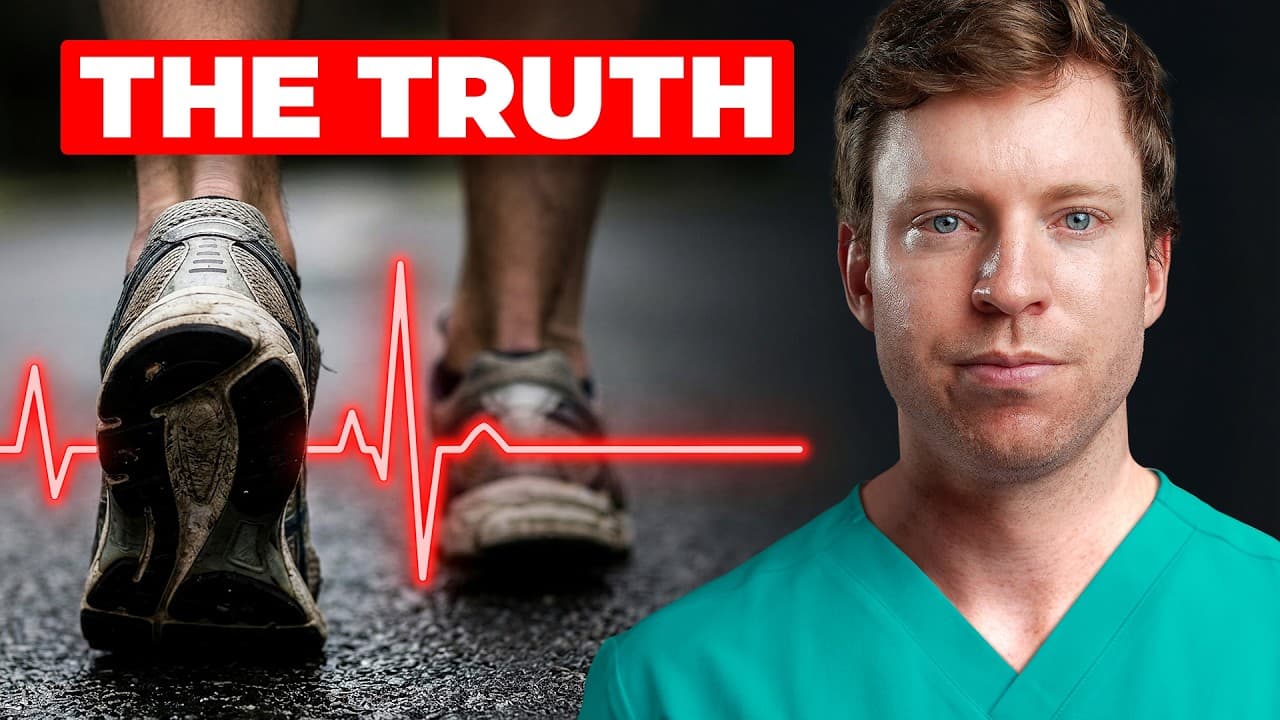
TL;DR
Most heart attacks are linked to non optimal risk factors that accumulate over time. Yet some patients seem risk-free because risk factors are under diagnosed or thresholds used in earlier studies were too high. A new approach shows that nearly all first heart attacks occur after exposure to at least one non optimal risk factor.
Transcript
On July 20th, 1984, Jim Fixx, the man who's best-selling book on running had inspired millions of Americans to get in shape, dropped dead of a massive heart attack during his daily run on a quiet Vermont road. He was 52. He had quit smoking, he'd lost 60 lb, and he ran 10 miles a day. It's the kind of story that makes us all quietly wonder, is it p... Read More
Key Insights
- The Smurfless phenomenon claimed up to 23 percent of serious heart attacks occur without documented risk factors.
- A new approach tracked health data over years and found over 9.3 million people studied in Korea and the US.
- More than 99 percent of first heart attack patients had at least one non optimal risk factor at some point before the event.
- At least two non optimal risk factors were present in the majority of cases in both cohorts.
- The discrepancy between studies arises from answering different questions—diagnosed risk factors versus exposure.
- Under diagnosis and thresholds define risk in different ways, affecting how patients are classified.
- Continuous risk factors matter even when readings are below clinical thresholds, influencing long term cardiovascular risk.
- ApoB testing is highlighted as an important tool in assessing risk beyond traditional factors.
Install to Summarize YouTube Videos and Get Transcripts
Explore YouTube Video Summarizer or Get YouTube Transcript Extractor
Questions & Answers
Q: A real search query question about the video (e.g. 'How to...', 'What is...', 'Why does...', 'When should...'). Question 1
What is the Smurfless phenomenon and how did it arise in early heart attack research It described reports that up to 23 percent of serious heart attacks occurred in people with no documented risk factors. The concept prompted researchers to re evaluate how risk factors are diagnosed and treated and to consider non optimal risk factors that may go undetected.
Q: Question 2
How does the new study differ in approach from the Smurfless findings It follows individuals over time, using data from large cohorts in Korea and the US, to check if non optimal risk factors were ever present before a cardiovascular event rather than relying on a single diagnostic snapshot.
Q: Question 3
Why do the two bodies of research seem contradictory The apparent contradiction comes from different questions: one asks if a diagnosis of risk factors ever existed, while the other asks whether a person had exposure to non optimal risk factors at any time prior to the event.
Q: Question 4
What thresholds define non optimal risk factors in the new framework Non optimal blood pressure is above 120 systolic or above 80 diastolic, non optimal cholesterol is total cholesterol above 200 mg per deciliter, and non optimal fasting glucose is above 100 mg per deciliter, with past or current smoking counted.
Q: Question 5
What does under diagnosis imply for prevention If many people with elevated but undiagnosed blood pressure or cholesterol are not treated, they can accumulate vascular damage over time, increasing heart attack risk even without a formal diagnosis.
Q: Question 6
How do continuous risk factors differ from binary risk factors in risk assessment Continuous risk factors influence risk on a gradient, meaning that small elevations still contribute to damage over years, unlike binary diagnosed yes/no classifications.
Q: Question 7
What was Jim Fixx’s case used to illustrate The video uses Fixx to show how someone can seem risk free in a Smurfless analysis but have multiple non optimal risk factors when lifetime exposure is considered.
Q: Question 8
What role does ApoB testing play The presentation suggests ApoB testing as an important tool in assessing risk beyond traditional factors, reinforcing the need to measure lipid-related risk more comprehensively to predict cardiovascular events.
Summary & Key Takeaways
-
A large, long term analysis re examined how risk factors relate to heart attacks, showing that many cases have prior non optimal risk factors.
-
The study emphasizes a methodological gap between diagnosed risk factors and exposure to risk factors over a lifetime.
-
The findings reinforce the importance of continuous risk factors and broader testing, including ApoB, for better prevention.
Read in Other Languages (beta)
Share This Summary 📚
Summarize YouTube Videos and Get Video Transcripts with 1-Click
Try YouTube Summary with ChatGPT & Claude or YouTube Transcript Generator
Explore More Summaries from Dr Brad Stanfield 📚






Summarize YouTube Videos and Get Video Transcripts with 1-Click
Try YouTube Summary with ChatGPT & Claude or YouTube Transcript Generator